


Tumor histology in lymph vessels and lymph nodes for the accurate prediction of outcome among breast cancer patients treated with neoadjuvant chemotherapy
- PMID: 19604245
- PMCID: PMC11158533
- DOI: 10.1111/j.1349-7006.2009.01264.x
Tumor histology in lymph vessels and lymph nodes for the accurate prediction of outcome among breast cancer patients treated with neoadjuvant chemotherapy
Abstract
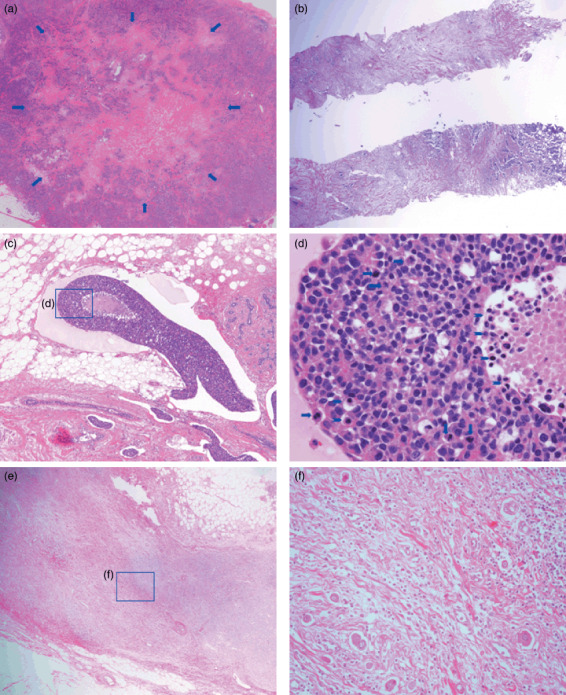
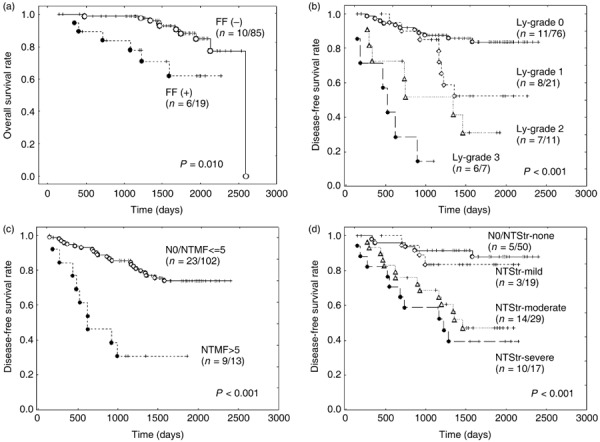
The present study investigated fibrotic foci (FFs), the grading system for lymph vessel tumor emboli (LVTEs), and the histological characteristics of nodal metastatic tumors that were significantly associated with the outcomes of 115 patients with invasive ductal carcinoma (IDC) who had received neoadjuvant chemotherapy. We compared the outcome predictive power of FFs, the grading system for LVTEs, and the histological characteristics of metastatic tumors in lymph nodes with the well-known clinicopathological characteristics of tumor recurrence and tumor-related death in multivariate analyses. The presence of FFs, as assessed by a biopsy performed before neoadjuvant chemotherapy, significantly increased the hazard rates (HRs) for tumor-related death in all the cases and in cases with nodal metastasis. The grading system for LVTEs, which was assessed using surgical specimens obtained after neoadjuvant chemotherapy, was significantly associated with increasing hazard rates (HRs) for tumor recurrence and tumor-related death in all the cases and in cases with nodal metastasis. Moderate to severe stroma in nodal metastatic tumors and five or more mitotic figures in nodal metastatic tumors were significantly associated with elevated HRs for tumor recurrence and tumor-related death among all the cases. These results indicated that FFs, the grading system for LVTEs, and the histological characteristics of tumor cells in lymph nodes play important roles in predicting the tumor progression of IDCs of the breast in patients treated with neoadjuvant chemotherapy.
Figures
References
-
- Ragaz J, Baird R, Rebbeck P, Goldie A, Coldman A, Spinelli J. Preoperative adjuvant chemotherapy (neoadjuvant) for carcinoma of the breast: rationale and safety report. Recent Results Cancer Res 1985; 98: 99–105. - PubMed
-
- Ragaz J. Preoperative (neoadjuvant) chemotherapy for breast cancer: outline of the British Columbia Trial. Recent Results Cancer Res 1986; 103: 85–94. - PubMed
-
- Ferriere JP, Assier I, Cure H et al . Primary chemotherapy in breast cancer: correlation between tumor response and patient outcome. Am J Clin Oncol 1998; 21: 117–20. - PubMed
-
- Daidone MG, Silvestrini R, Luisi A et al . Changes in biological markers after primary chemotherapy for breast cancers. Int J Cancer 1995; 61: 301–5. - PubMed
-
- Cavailles V, Gompel A, Portois MC et al . Comparative activity of pulsed or continuous estradiol exposure on gene expression and proliferation of normal and tumoral human breast cells. J Mol Endocrinol 2002; 28: 165–75. - PubMed
Publication types
MeSH terms
Substances
LinkOut - more resources
Full Text Sources
Medical
