


T helper type 17-related cytokine expression is increased in the bronchial mucosa of stable chronic obstructive pulmonary disease patients
- PMID: 19604272
- PMCID: PMC2730858
- DOI: 10.1111/j.1365-2249.2009.03965.x
T helper type 17-related cytokine expression is increased in the bronchial mucosa of stable chronic obstructive pulmonary disease patients
Abstract
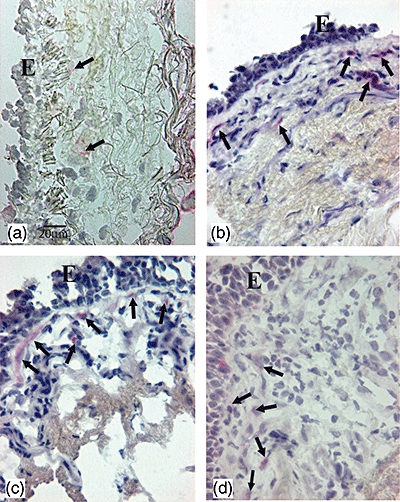
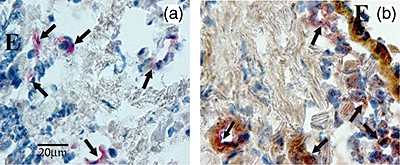
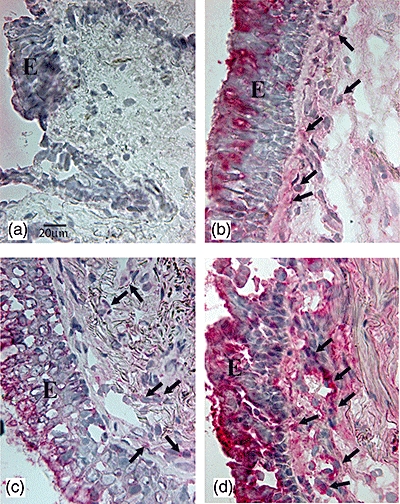
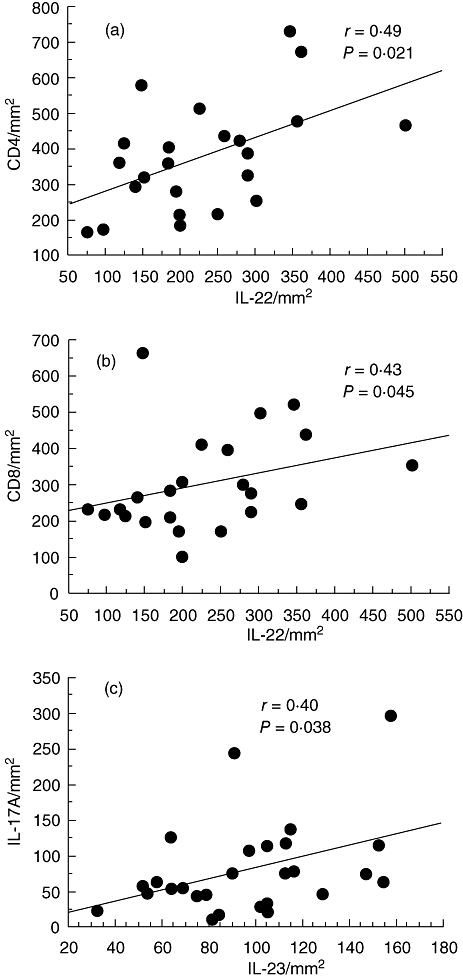
There are increased numbers of activated T lymphocytes in the bronchial mucosa of stable chronic obstructive pulmonary disease (COPD) patients. T helper type 17 (Th17) cells release interleukin (IL)-17 as their effector cytokine under the control of IL-22 and IL-23. Furthermore, Th17 numbers are increased in some chronic inflammatory conditions. To investigate the expression of interleukin (IL)-17A, IL-17F, IL-21, IL-22 and IL-23 and of retinoic orphan receptor RORC2, a marker of Th17 cells, in bronchial biopsies from patients with stable COPD of different severity compared with age-matched control subjects. The expression of IL-17A, IL-17F, IL-21, IL-22, IL-23 and RORC2 was measured in the bronchial mucosa using immunohistochemistry and/or quantitative polymerase chain reaction. The number of IL-22(+) and IL-23(+) immunoreactive cells is increased in the bronchial epithelium of stable COPD compared with control groups. In addition, the number of IL-17A(+) and IL-22(+) immunoreactive cells is increased in the bronchial submucosa of stable COPD compared with control non-smokers. In all smokers, with and without disease, and in patients with COPD alone, the number of IL-22(+) cells correlated significantly with the number of both CD4(+) and CD8(+) cells in the bronchial mucosa. RORC2 mRNA expression in the bronchial mucosa was not significantly different between smokers with normal lung function and COPD. Further, we report that endothelial cells express high levels of IL-17A and IL-22. Increased expression of the Th17-related cytokines IL-17A, IL-22 and IL-23 in COPD patients may reflect their involvement, and that of specific IL-17-producing cells, in driving the chronic inflammation seen in COPD.
Figures

References
-
- Global Initiative for Chronic Obstructive Lung Disease. Global Strategy for the Diagnosis, Management and Prevention of Chronic Obstructive Pulmonary Disease. NHLBI/WHO workshop report. NIH Publication no. 2701:1-100. Bethesda, MD: National Heart, Lung and Blood Institute, April. Last update 2008. Available at: http://www.goldcopd.com (accessed 12 March 2009.
-
- Barnes PJ. Chronic obstructive pulmonary disease. N Engl J Med. 2000;343:269–80. - PubMed
-
- Di Stefano A, Caramori G, Ricciardolo FLM, Capelli A, Adcock IM, Donner CF. Cellular and molecular mechanisms in chronic obstructive pulmonary disease: an overview. Clin Exp Allergy. 2004;34:1156–67. - PubMed
-
- Hogg JC, Chu F, Utokaparch S, et al. The nature of small-airway obstruction in chronic obstructive pulmonary disease. N Engl J Med. 2004;350:2645–53. - PubMed
-
- Di Stefano A, Capelli A, Lusuardi M, et al. Severity of airflow limitation is associated with severity of airway inflammation in smokers. Am J Respir Crit Care Med. 1998;158:1277–85. - PubMed
Publication types
MeSH terms
Substances
Grants and funding
LinkOut - more resources
Full Text Sources
Other Literature Sources
Medical
Research Materials
