. 2009;2009(6):853-885.
doi: 10.1055/s-0028-1088213.

In Pursuit of an Ideal C-C Bond-Forming Reaction: Development and Applications of the Hydrovinylation of Olefins

Affiliations

In Pursuit of an Ideal C-C Bond-Forming Reaction: Development and Applications of the Hydrovinylation of Olefins

T V Rajanbabu. Synlett. 2009.

Abstract

Attempts to introduce the highly versatile vinyl group into other organic molecules in a chemo-, regio- and stereoselective fashion via catalytic activation of ethylene provided challenging opportunities to explore new ligand and salt effects in homogeneous catalysis. This review provides a personal account of the development of enantioselective reactions involving ethylene.


Figures
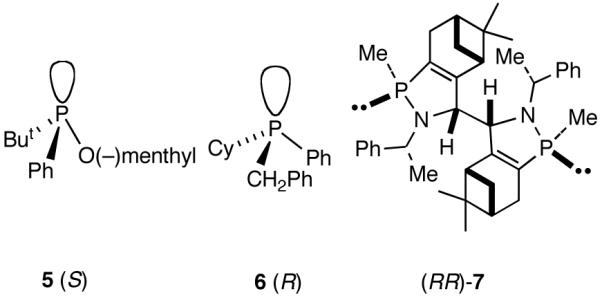
Figure 1
Figure 1
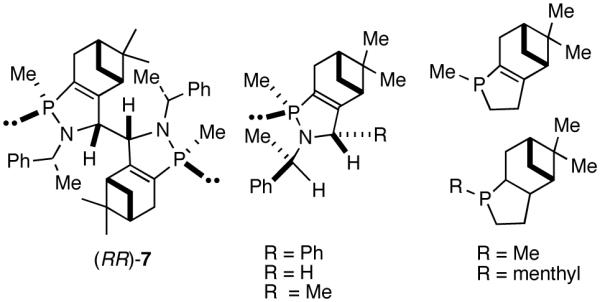
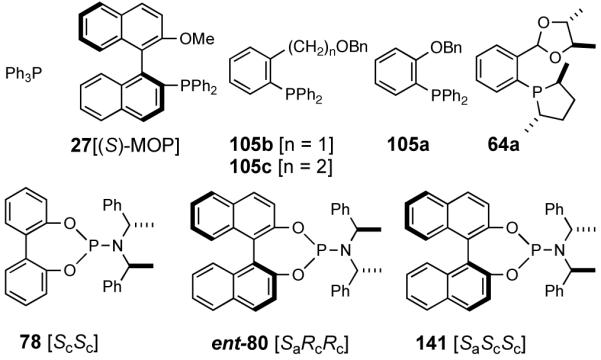
Assorted Ligands Useful for Asymmetric Hydrovinylation
Figure 2
Figure 2
Phospholene Ligands for Asymmetric Hydrovinylation
Figure 3
Figure 3
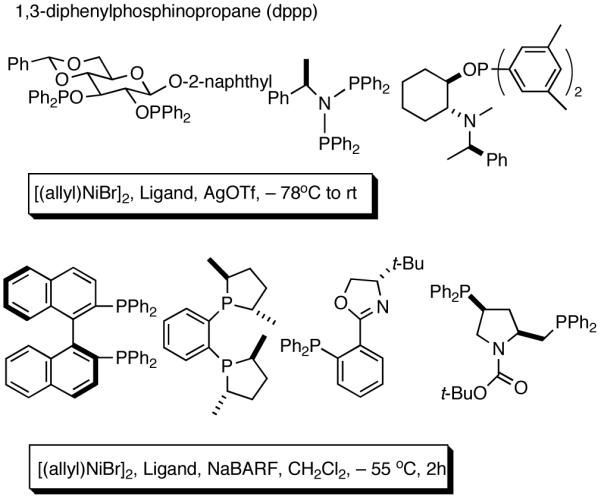
Chelating Ligands Examined for the Ni-catalyzed Hydrovinylation Reactions
Figure 4
Figure 4
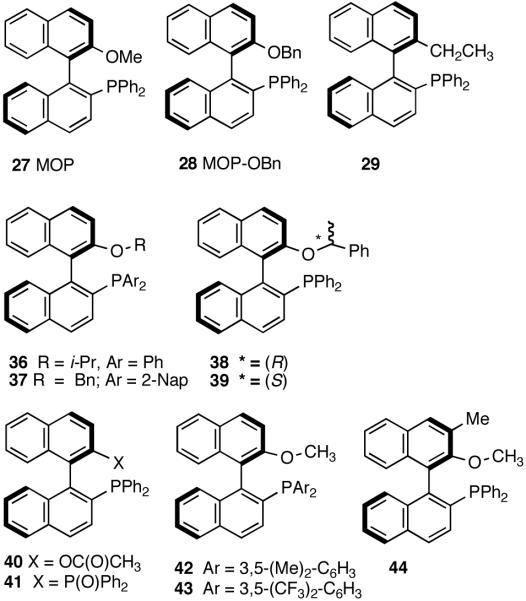
2,2′-Disubstituted-1,1′-Binaphtthyl Ligands for Asymmetric Hydrovinylation
Figure 5
Figure 5
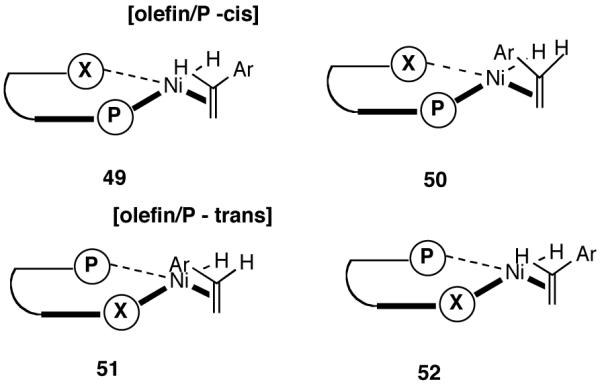
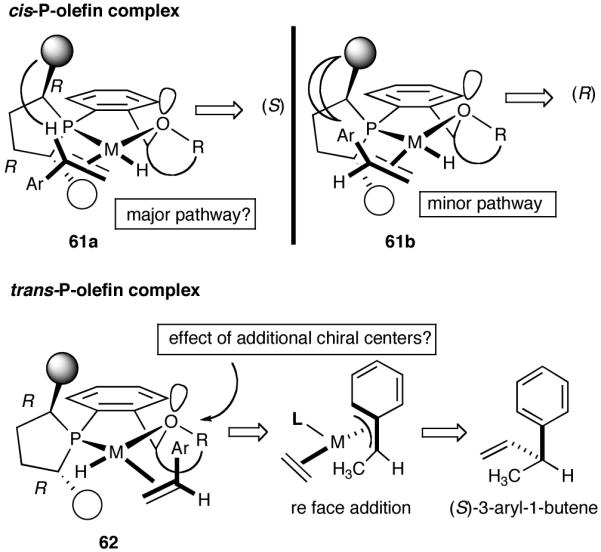
Possible Modes of Olefin Complexation to [Ni(II)-H]+. X Represents the Hemilabile Coordination Site
Figure 6
Figure 6
A Model for Asymmetric Induction in the HV of a Vinylarene Using an R-MOP-Ni-Complex
Figure 7
Figure 7
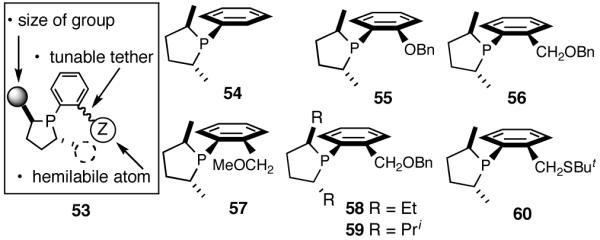
Elements of a Minimalist Ligand for Asymmetric Hydrovinylation and Some Examples
Figure 8
Figure 8
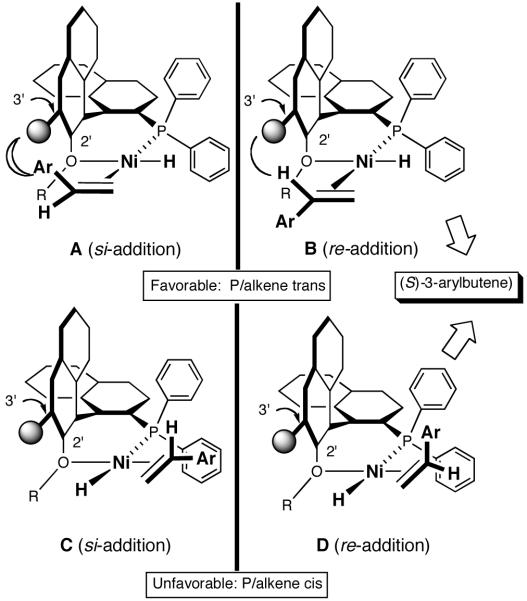
A Working Model for Asymmetric Induction in (Phospholane)Ni(II) Catalysis
Figure 9
Figure 9
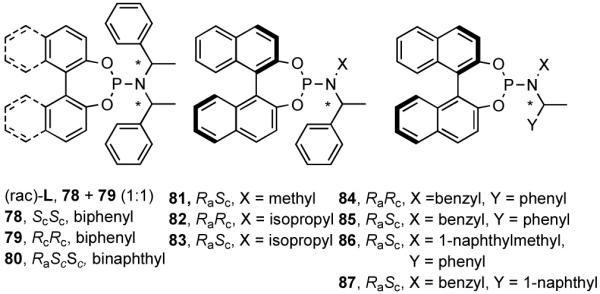
Selected Phosphoramidite Ligands Used for Hydrovinylation
Figure 10
Figure 10
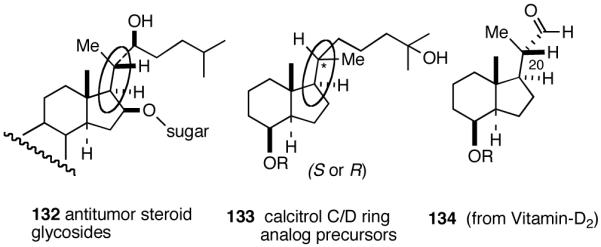
Steroids with Functionalized D-Rings
Figure 11
Figure 11
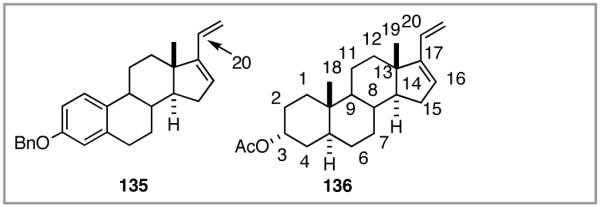
Prototypical Steroidal Dienes for Hydrovinylation
Figure 12
Figure 12
Ligands for HV of Steroidal Dienes
Scheme 1
Scheme 1
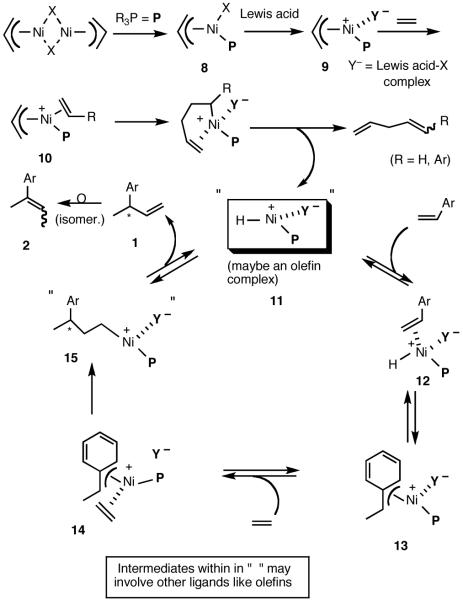
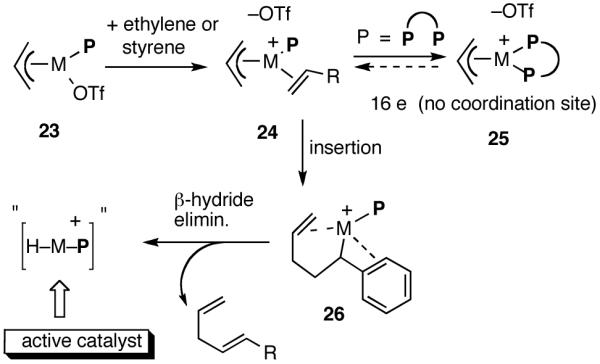
Proposed Mechanism for the Hydrovinylation of Styrene
Scheme 2
Scheme 2
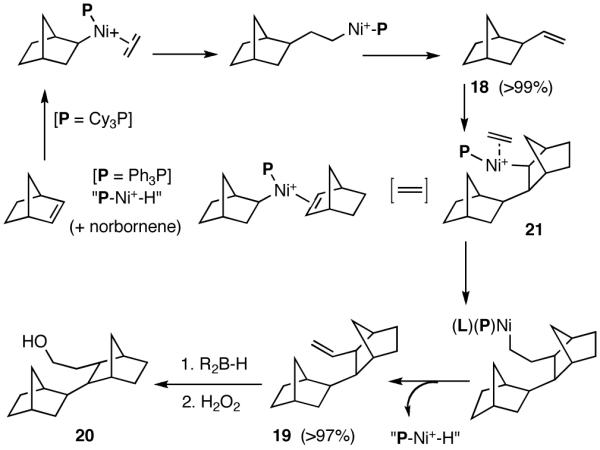
Ligand Dependence in the Hydrovinylation of Norbornene
Scheme 3
Scheme 3
Why a Chelating Ligand Maybe Unsuitable for Hydrovinylation of a Vinylarene
Scheme 4
Scheme 4
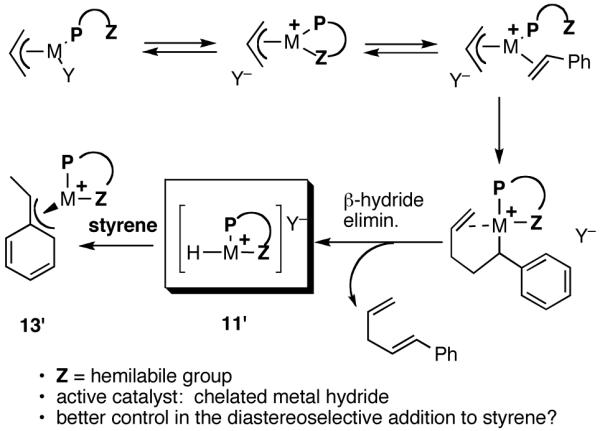
Use of a Chelated Metal Hydride: Better Diastereoselectivity?
Scheme 5
Scheme 5
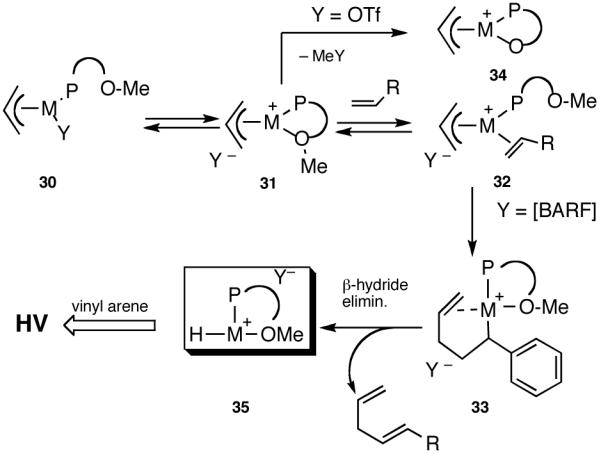
Effect of Conterions on NiII[MOP]-Mediated Hydrovinylation
Scheme 6
Scheme 6
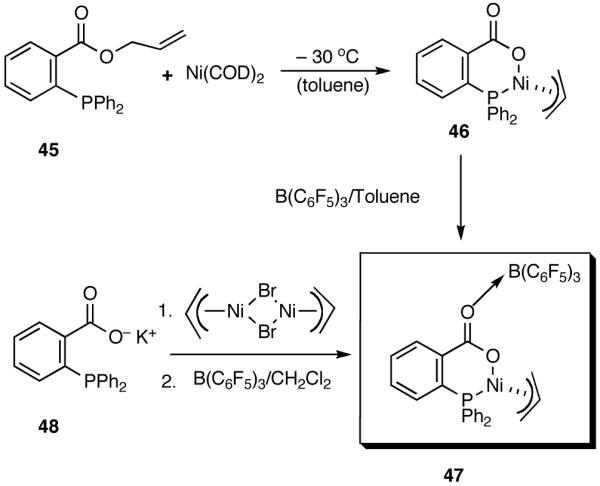
A Single Component Catalyst for Hydrovinylation of Styrene
Scheme 7
Scheme 7
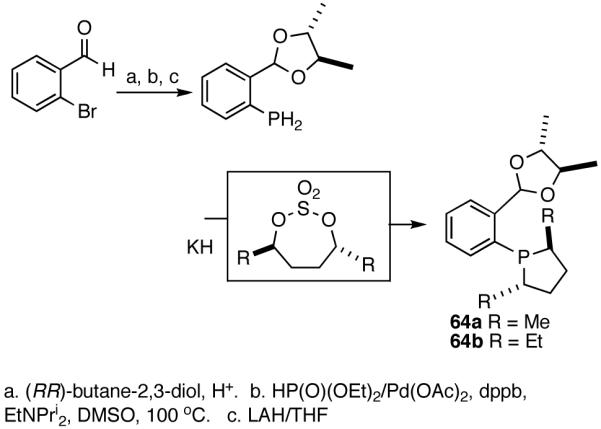
Synthesis of a Prototypical Phospholane/Acetal Ligand 64
Scheme 8
Scheme 8
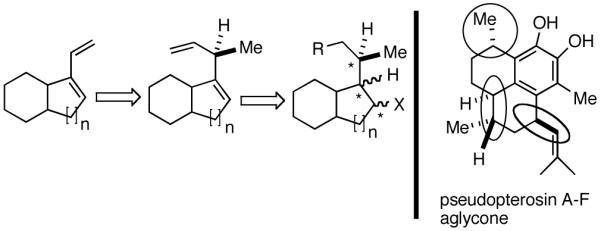
Hydrovinylation of 1,3-Dienes and Control of Exocyclic Stereochemistry
Scheme 9
Scheme 9
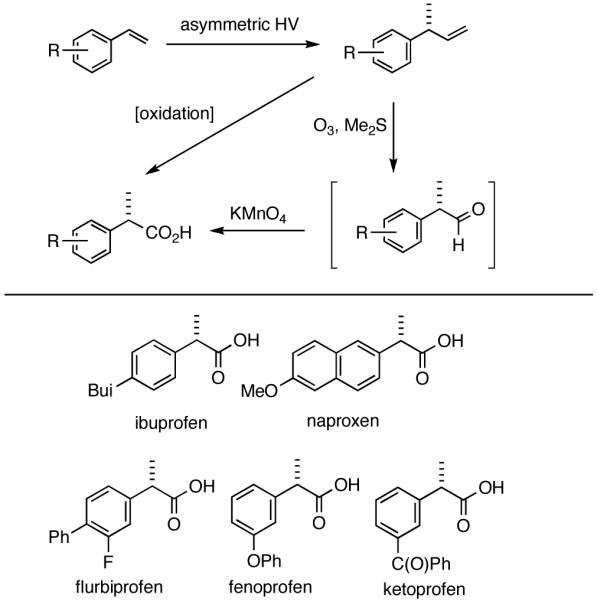
A General Synthesis of 2-Arylpropionic Acids
Scheme 10
Scheme 10
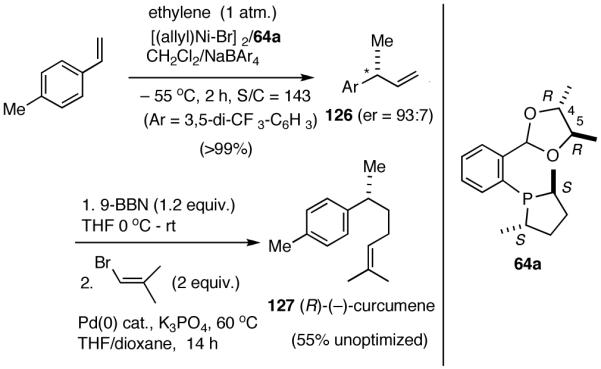
Synthesis of α-Curcumene from 4-Methylstyrene
Scheme 11
Scheme 11
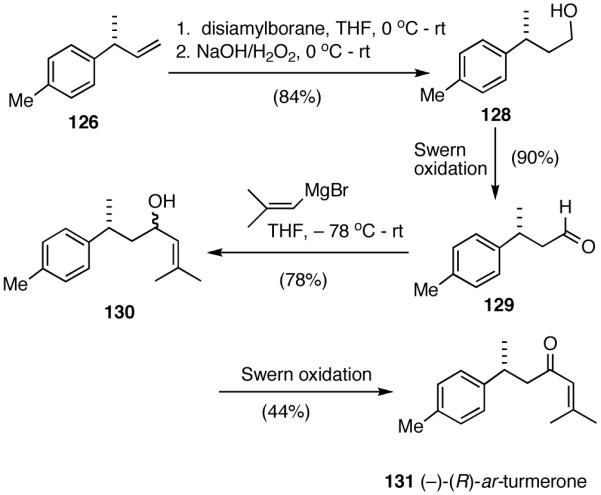
Synthesis of (-)-(R)-ar-Turmerone
Scheme 12
Scheme 12
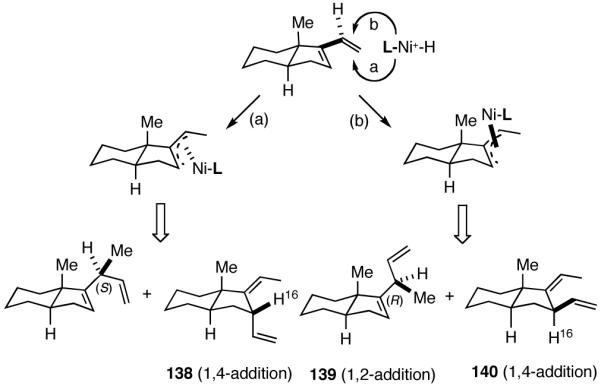
Origin of 1,2- and 1,4-Adducts in Hydrovinylation Reactions of Steroidal Dienes
Scheme 13
Scheme 13
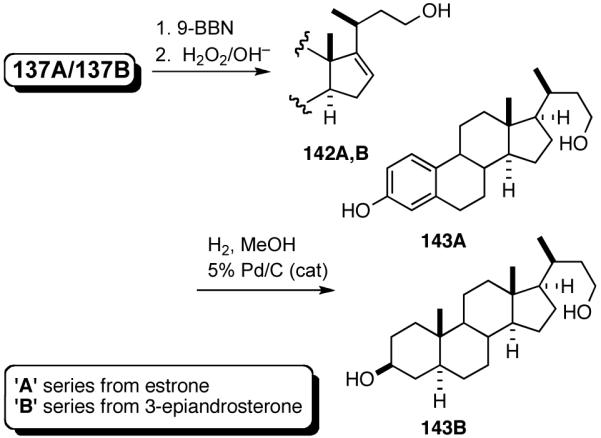
Steroid D-ring Functionalization

References

    1. Wilke G. Angew. Chem. Int. Ed. Engl. 1988;27:185.
    1. Chauvin Y, Olivier H. Dimerization and Codimerization. In: Cornils B, Herrmann WA, editors. Applied Homogeneous Catalysis with Organometallic Compounds. Vol. 1. VCH; New York: 1996. pp. 258–268.
    1. Bogdanov’c B, Spliethoff B, Wilke G. Angew. Chem. Int. Ed. 1980;19:622.
    1. For a summary of early results, see:RajanBabu TV. Chem. Rev. 2003;103:2845.Other pertinent reviews:Bogdanov’c B. Adv. Organomet. Chem. 1979;17:105.Jolly PW, Wilke G. Hydrovinylation. In: Cornils B, Herrmann WA, editors. Applied Homogeneous Catalysis with Organometallic Compounds. Vol. 2. VCH; New York: 1996. pp. 1024–1048.RajanBabu TV, Nomura N, Jin J, Radetich B, Park H, Nandi M. Chem. Eur. J. 1999;5:1963.Gooßen LJ. Angew. Chem. Int. Ed. 2002;41:3775.

    1. Rieu J-P, Boucherle A, Cousse H, Mouzin G. Tetrahedron. 1986;42:4095.
    2. Sonawane HR, Bellur NS, Ahuja JR, Kulkarni DG. Tetrahedron: Asymmetry. 1992;3:163.
    3. Stahly GP, Starrett RM. In: Chirality in Industry II. Collins AN, Sheldrake GN, Crosby J, editors. Wiley; Chichester: 1997. p. 19.

LinkOut - more resources