Percent total attrition: a poor metric for study rigor in hosted intervention designs
- PMID: 19608965
- PMCID: PMC2724469
- DOI: 10.2105/AJPH.2008.134767
Percent total attrition: a poor metric for study rigor in hosted intervention designs
Abstract
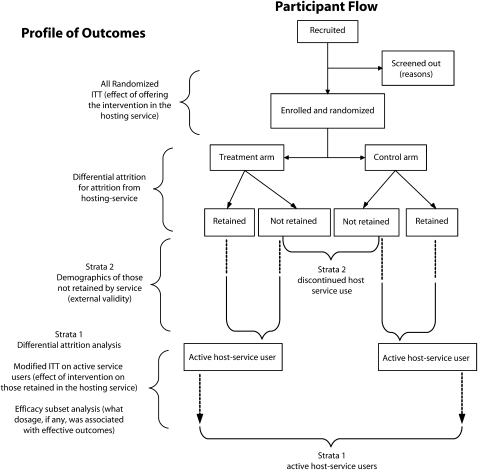
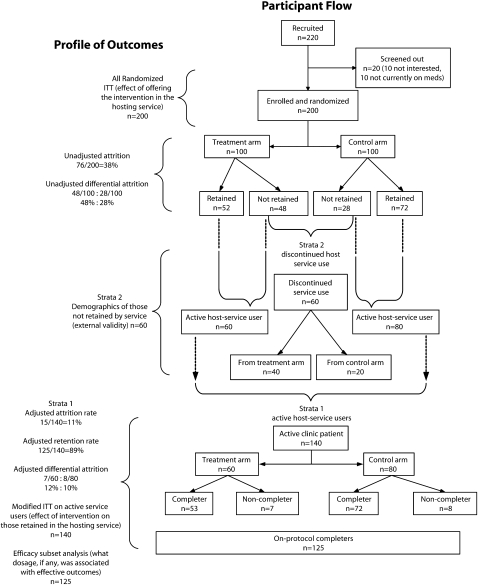
Health behavior interventions delivered at point of service include those that yoke an intervention protocol with existing systems of care (e.g., clinical care, social work, or case management). Though beneficial in a number of ways, such "hosted" intervention studies may be unable to retain participants that specifically discontinue their use of the hosting service. In light of recent practices that use percent total attrition as indicative of methodological flaws, hosted interventions targeting hard-to-reach populations may be excluded from consideration in effective intervention compendiums or research synthesis because of high attrition rates that may in fact be secondary to the natural flow of service use or unrelated to differential attrition or internal design flaws. Better methods to characterize rigor are needed.
Figures
References
-
- Alexander P. The differential effects of abuse characteristics and attachment in the prediction of long-term effects of sexual abuse. J Interpers Violence 1993;8:346–362
-
- Cook TD, Campbell DT. Quasi-experimentation: Design and Analysis Issues for Field Settings. New York, NY: Houghton-Mifflin; 1979
-
- Goodman J, Blum T. Assessing the non-random sampling effects of subject attrition in longitudinal research. J Manage 1996;22:627–652
-
- Little RJA. Modeling the drop-out mechanism in repeated-measures studies. J Am Stat Assoc 1995;90:1112–1121
-
- Miller R, Wright D. Detecting and correcting attrition bias in longitudinal family research. J Marriage Fam 1995;57:921–946
Publication types
MeSH terms
LinkOut - more resources
Full Text Sources