


Changes in childhood risk taking and safety behavior after a peer group media intervention
- PMID: 19609178
- PMCID: PMC3107682
- DOI: 10.1097/NNR.0b013e3181ac12dd
Changes in childhood risk taking and safety behavior after a peer group media intervention
Abstract
Background: Risk taking is a significant health-compromising behavior among children that often is portrayed unrealistically in the media as consequence-free. Physical risk taking can lead to injury, and injury is a leading cause of hospitalization and death during childhood.
Objective: The aim of this study was to examine the effectiveness of a 4-week program for school-age children in reducing risk-taking behaviors and increasing safety behaviors.
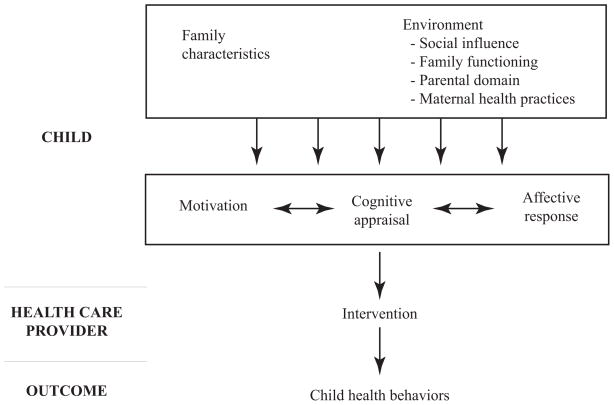
Methods: A two-group, experimental, repeated-measures design was used to compare 122 White and Latino children randomly assigned to an intervention group or a wait-list group at baseline and at 1, 3, and 6 months after intervention. Children received a behaviorally based intervention delivered in four 2-hour segments conducted over consecutive weeks. The thematic concept of each week (choices, media, personal risk taking, and peer group risk taking) moved from the general to the specific, focusing on knowledge and awareness, the acquisition of new skills and behaviors, and the supportive practice and application of skills.
Results: Participants increased their safety behaviors (p = .006), but risk-taking behaviors remained unchanged. Families in the intervention group increased their consistent use of media rules (p = .022), but decreases in media alternatives suggest difficulty in taking up other habits and activities. Coping effectiveness was predictive of safety behaviors (p = .005) at 6 months, and coping effectiveness plus television watching was predictive of risk taking (p = .03).
Conclusions: Findings from this study suggest that interventions that influence children's media experiences help enhance safety behaviors and that strategies to aid parents in finding media alternatives are relevant to explore.
Figures
References
-
- Bass JL, Mehta KA. Developmentally-oriented safety surveys: Reported parental and adolescent practices. Clinical Pediatrics. 1980;19(5):350–356. - PubMed
-
- Bernardo LM. Parent-reported injury-associated behaviors and life events among injured, ill, and well preschool children. Journal of Pediatric Nursing. 1996;11(2):100–110. - PubMed
-
- Carter KF, Kulbok PA. Evaluation of the interaction model of client health behavior through the first decade of research. ANS: Advances in Nursing Science. 1995;18(1):62–73. - PubMed
-
- Chen JL, Kennedy C. Cultural variations in children’s coping behaviour, TV viewing time, and family functioning. International Nursing Review. 2005;52(3):186–195. - PubMed
Publication types
MeSH terms
Grants and funding
LinkOut - more resources
Full Text Sources
Medical
