


Atrial fibrillation in patients with constrictive pericarditis: the significance of pericardial calcification
- PMID: 19614637
- PMCID: PMC6932116
- DOI: 10.1111/j.1542-474X.2009.00307.x
Atrial fibrillation in patients with constrictive pericarditis: the significance of pericardial calcification
Abstract
Background: Although atrial fibrillation (AF) is commonly encountered in patients with constrictive pericarditis (CP), little has been done to clarify its associated predisposing factors. Our aim was to evaluate the association of age, gender, disease duration, and pericardial calcification with AF in these patients.
Methods: The medical records of 44 patients with CP were reviewed. There were 13 (29.5%) with AF and 31 (70.5%) with sinus rhythm. The two groups were compared for demographic variables, disease duration, and the presence of pericardial calcification.
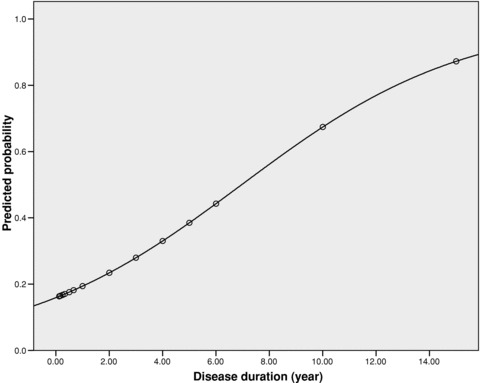
Results: The male-to-female ratio was 3.4:1. Calcification was seen in 11 (25%) of the entire group. AF was much more common in those with calcification than those with sinus rhythm (odds ratio, 7.87 [95% CI, 1.73-35.78], P=0.008). There was no association between the presence of AF and the age (P=0.156) or gender (P approximately 1.00). Logistic regression, however, showed that the chance of developing AF increased by 27% by each year of increase in disease duration (P=0.025).
Conclusion: It seems that in patients with CP, the presence of pericardial calcification and the increasing disease duration are associated with a higher chance of developing AF.
Figures
References
-
- Talreja DR, Edwards WD, Danielson GK, et al Constrictive pericarditis in 26 patients with histologically normal pericardial thickness. Circulation 2003;108:1852–1857. - PubMed
-
- Goldstein JA. Cardiac tamponade, constrictive pericarditis and restrictive cardiomyopathy. Curr Probl Cardiol 2004;29:503–567. - PubMed
-
- Ling LH, Oh JK, Breen JF, et al Calcific constrictive pericarditis: Is it still with us? Ann Intern Med 2000;132:444–450. - PubMed
-
- Rienmüller R, Gurgan M, Erdmann E, et al CT and MR evaluation of pericardial constriction: A new diagnostic and therapeutic concept. J Thorac Imaging 1993;8:108–121. - PubMed
-
- Cameron J, Oesterle SN, Baldwin JC, et al The etiologic spectrum of constrictive pericarditis. Am Heart J 1987;113:354–360. - PubMed
MeSH terms
LinkOut - more resources
Full Text Sources
Medical
Miscellaneous
