


Disruption of neuroendocrine stress responses to acute ferret odor by medial, but not central amygdala lesions in rats
- PMID: 19615352
- PMCID: PMC2753207
- DOI: 10.1016/j.brainres.2009.07.011
Disruption of neuroendocrine stress responses to acute ferret odor by medial, but not central amygdala lesions in rats
Abstract
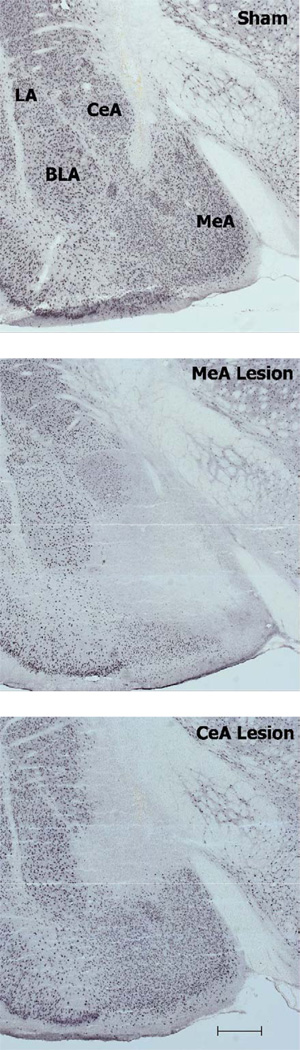
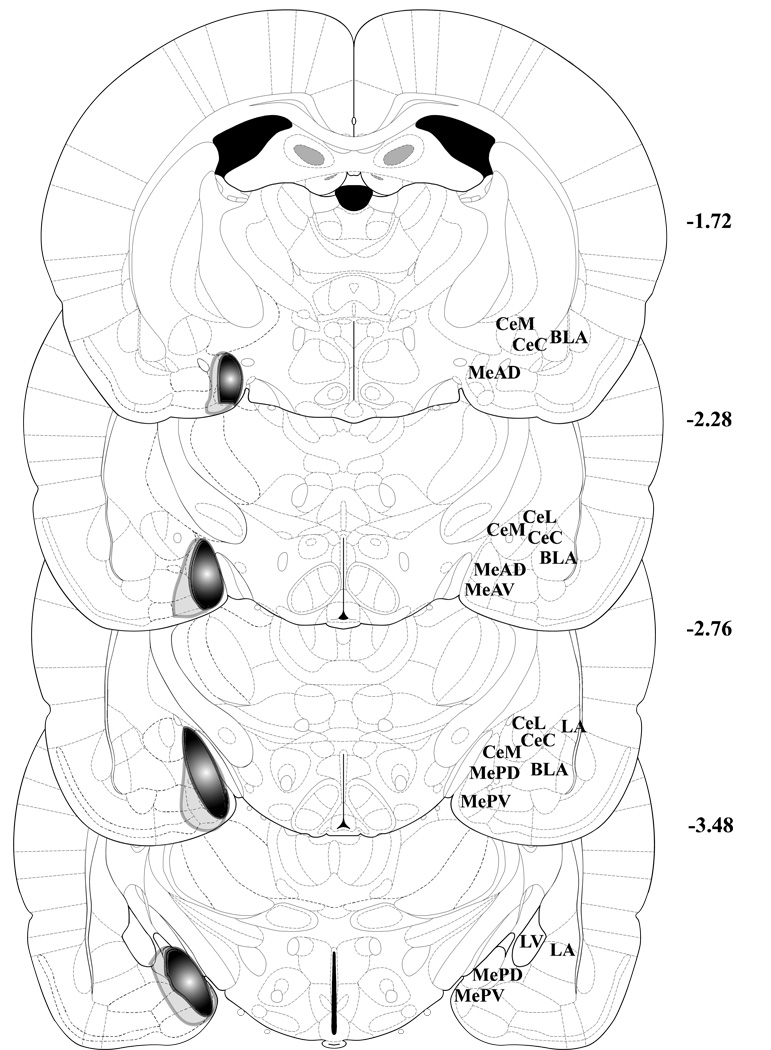
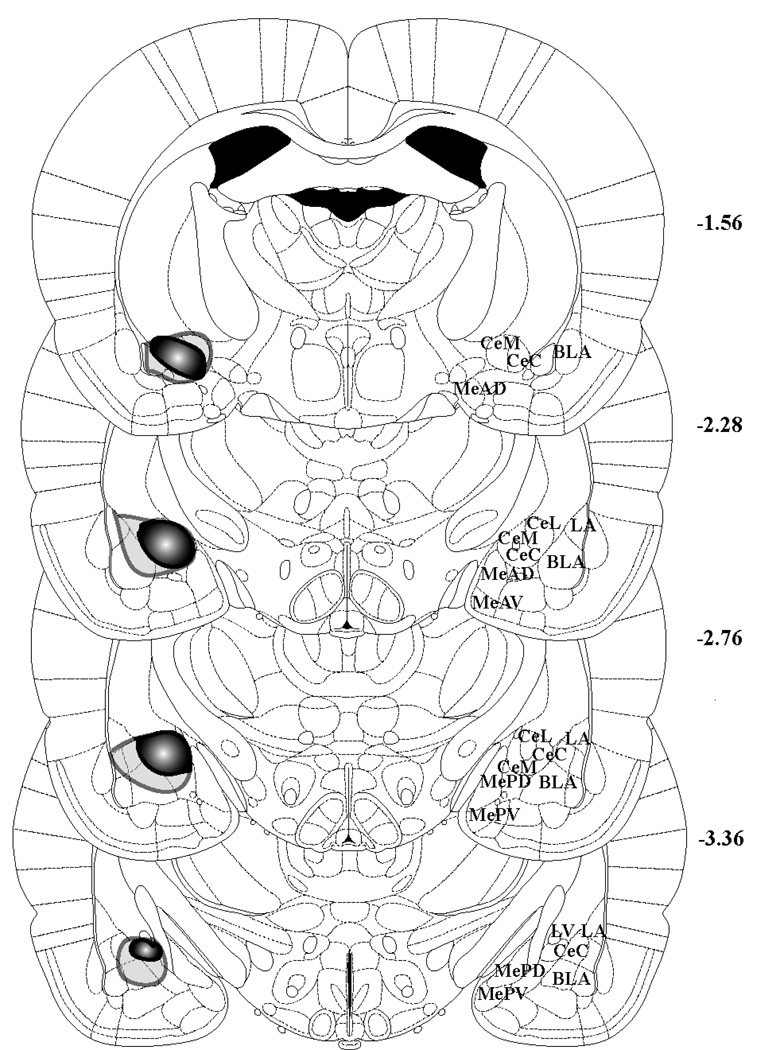
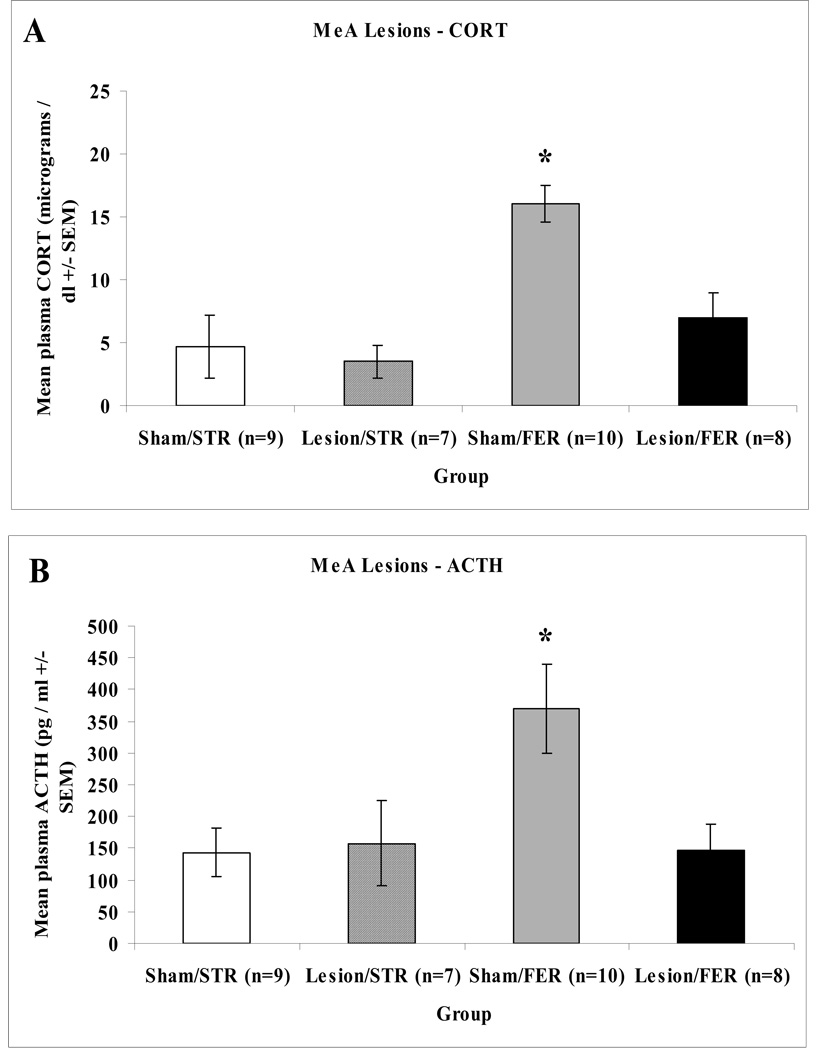
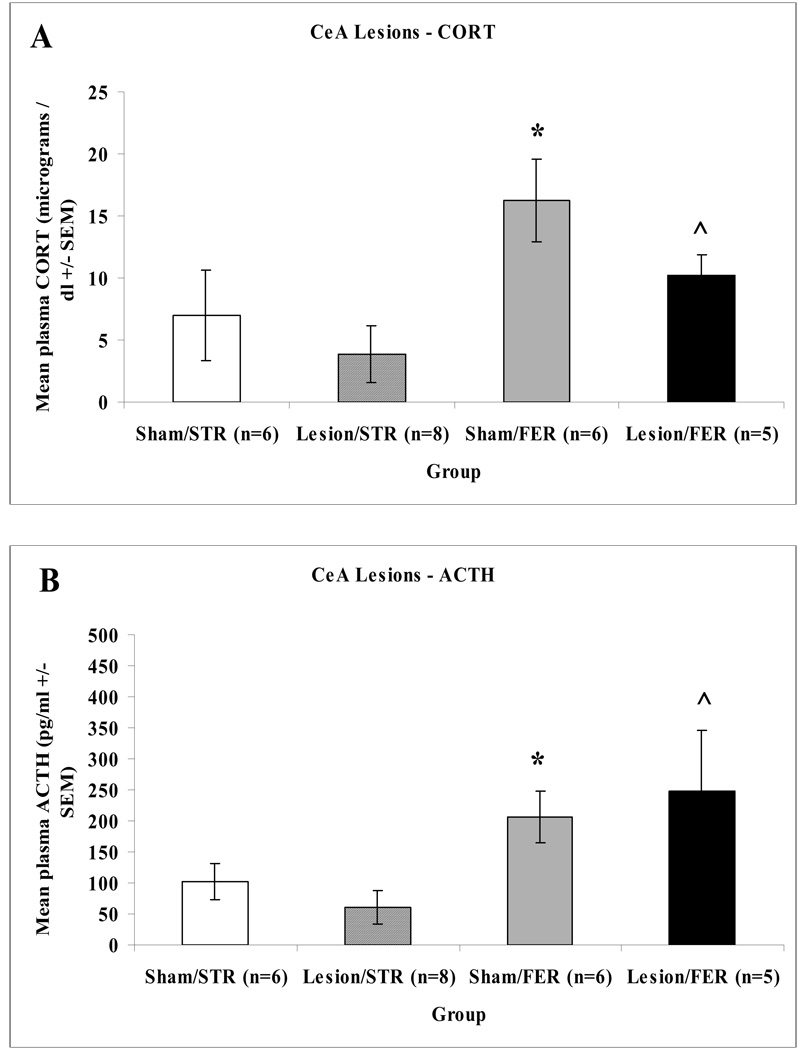
Investigations of the neural pathways associated with responses to predators have implicated the medial amygdala (MeA) as an important region involved in defensive behaviors. To our knowledge, however, the involvement of the MeA in neuroendocrine responses to predator odor exposure has not been investigated. Therefore, the present study examined the effects of MeA disruption in rats exposed to ferret or control odor on hypothalamo-pituitary-adrenocortical (HPA) axis activation. Bilateral lesions of the MeA were made in Sprague-Dawley rats with the neurotoxin ibotenic acid (10 microg/microl; 0.3 microl / side). As a control for regional specificity, additional groups of rats were given lesions in the central amygdala (CeA). One week after recovery, the rats were exposed to ferret or strawberry control towels in small cages to examine HPA axis responses as determined by plasma corticosterone and adrenocorticotropin hormone (ACTH) levels. Rats with complete bilateral MeA but not CeA lesions displayed significantly less corticosterone and ACTH release compared to sham-operated control rats only in the ferret odor conditions. These results suggest that the MeA is an important structure involved in the HPA axis responses to predator odors, in support of previous studies investigating behavioral responses under similar conditions.
Figures
References
-
- Adamec R. Transmitter systems involved in neuroplasticity underlying increased anxiety and defense following traumatic stress. Neurosci Biobehav Rev. 1997;21:755–765. - PubMed
-
- Adamec R, Kent P, Anisman H, Shallow T, Merali Z. Neural plasticity, neuropeptides and anxiety in animals: implications for understanding and treating affective disorder following traumatic stress in humans. Neurosci Biobehav Rev. 1998;23:301–318. - PubMed
-
- Adamec R, Muir C, Grimes M, Pearcey K. Involvement of noradrenergic and corticoid receptors in the consolidation of the lasting anxiogenic effects of predator stress. Behav Brain Res. 2007;179:192–207. - PubMed
-
- Anisman H, Lu ZW, Song C, Kent P, McIntyre DC, Merali Z. Influence of psychogenic and neurogenic stressors on endocrine and immune activity: differential effects in fast and slow seizing rat strains. Brain Behav Immun. 1997;11:63–74. - PubMed
-
- Blanchard RJ, Blanchard DC. Effects of hippocampal lesions on the rat’s reaction to a cat. J Comp Physiol Psychol. 1972;78:77–82. - PubMed
Publication types
MeSH terms
Substances
Grants and funding
LinkOut - more resources
Full Text Sources
Medical
Research Materials
