


Behavioral effects of hindbrain vasotocin in goldfish are seasonally variable but not sexually dimorphic
- PMID: 19616564
- PMCID: PMC3628676
- DOI: 10.1016/j.neuropharm.2009.07.018
Behavioral effects of hindbrain vasotocin in goldfish are seasonally variable but not sexually dimorphic
Abstract
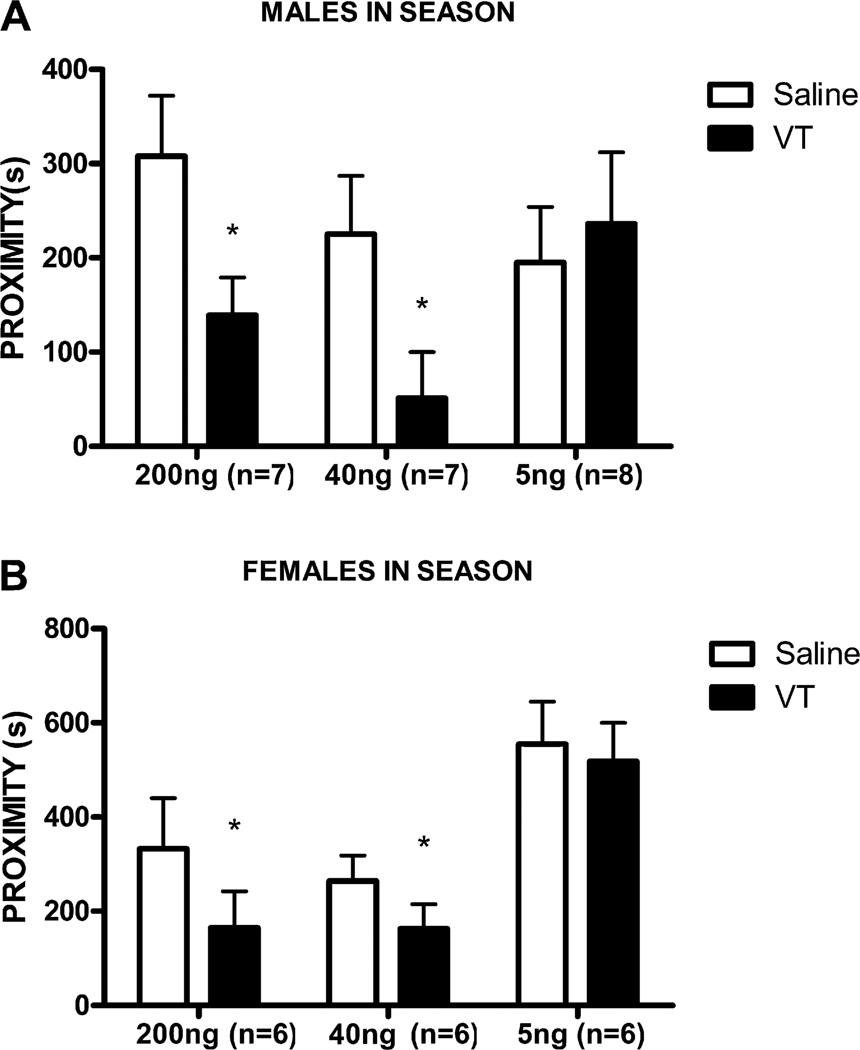
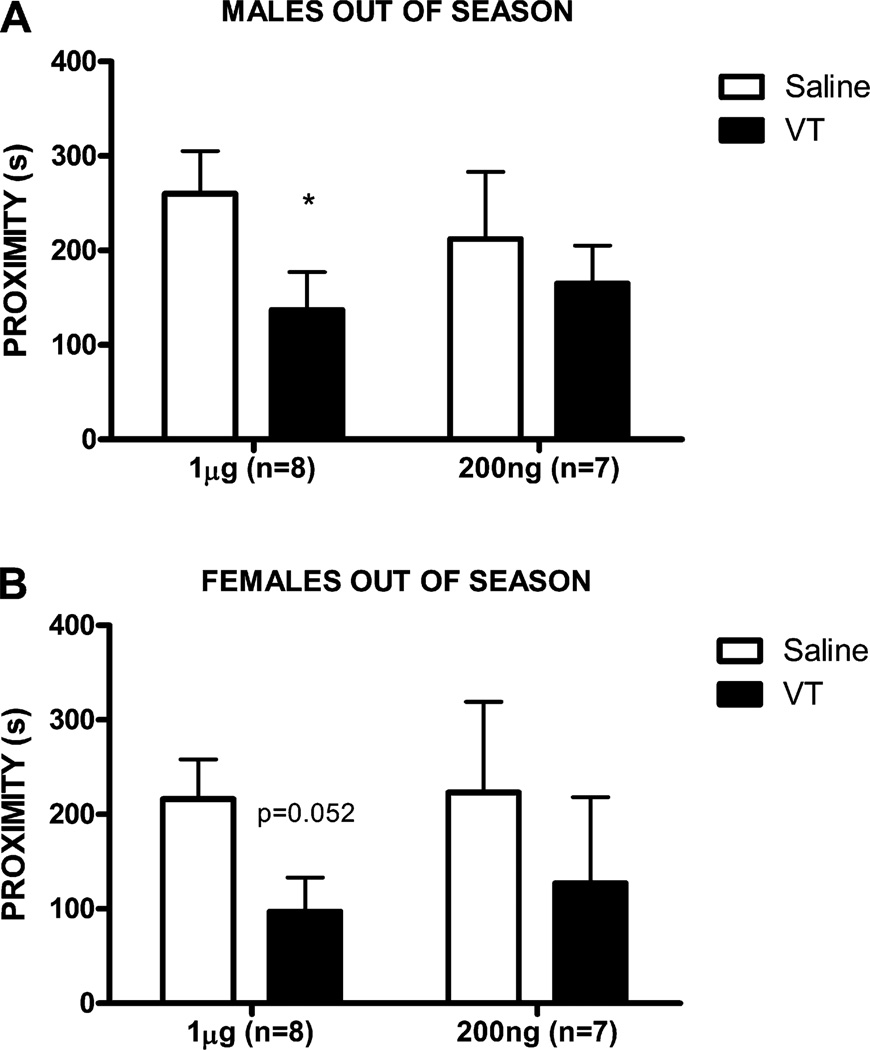
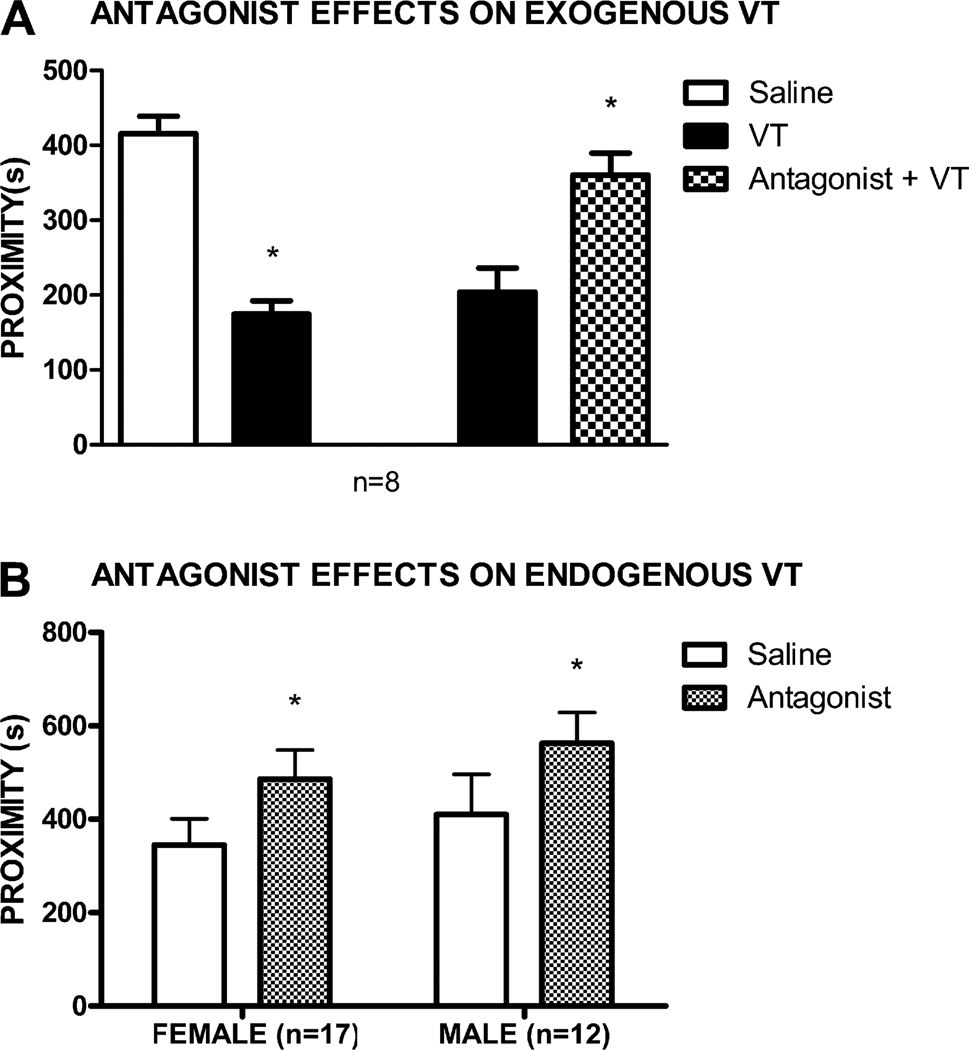
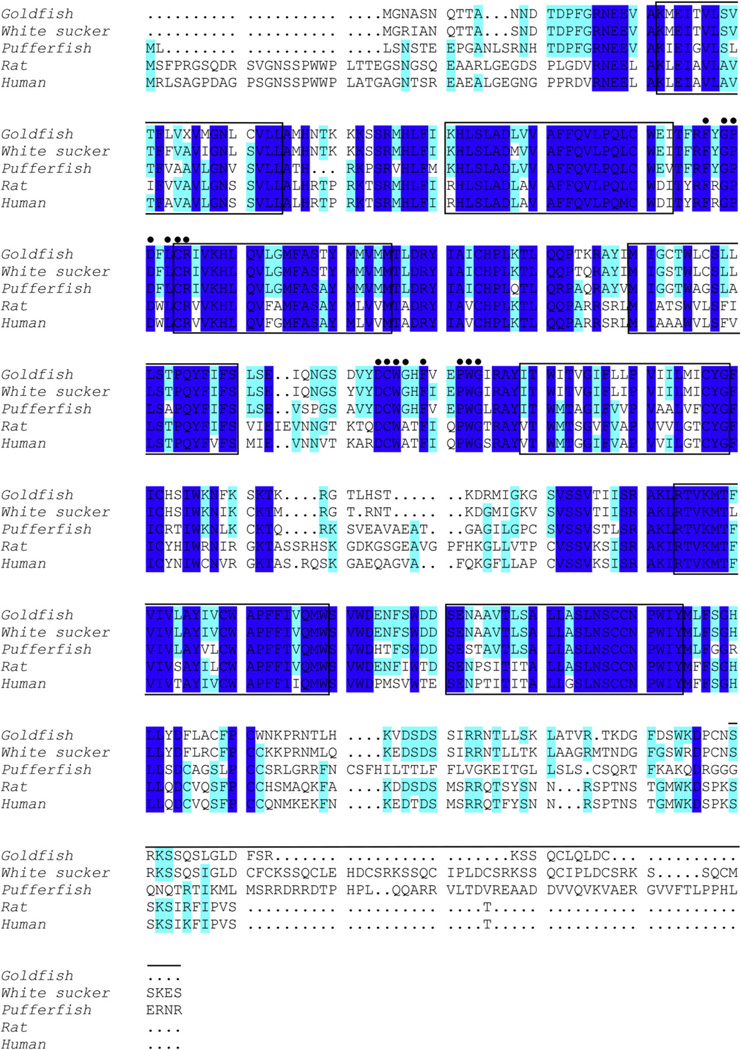
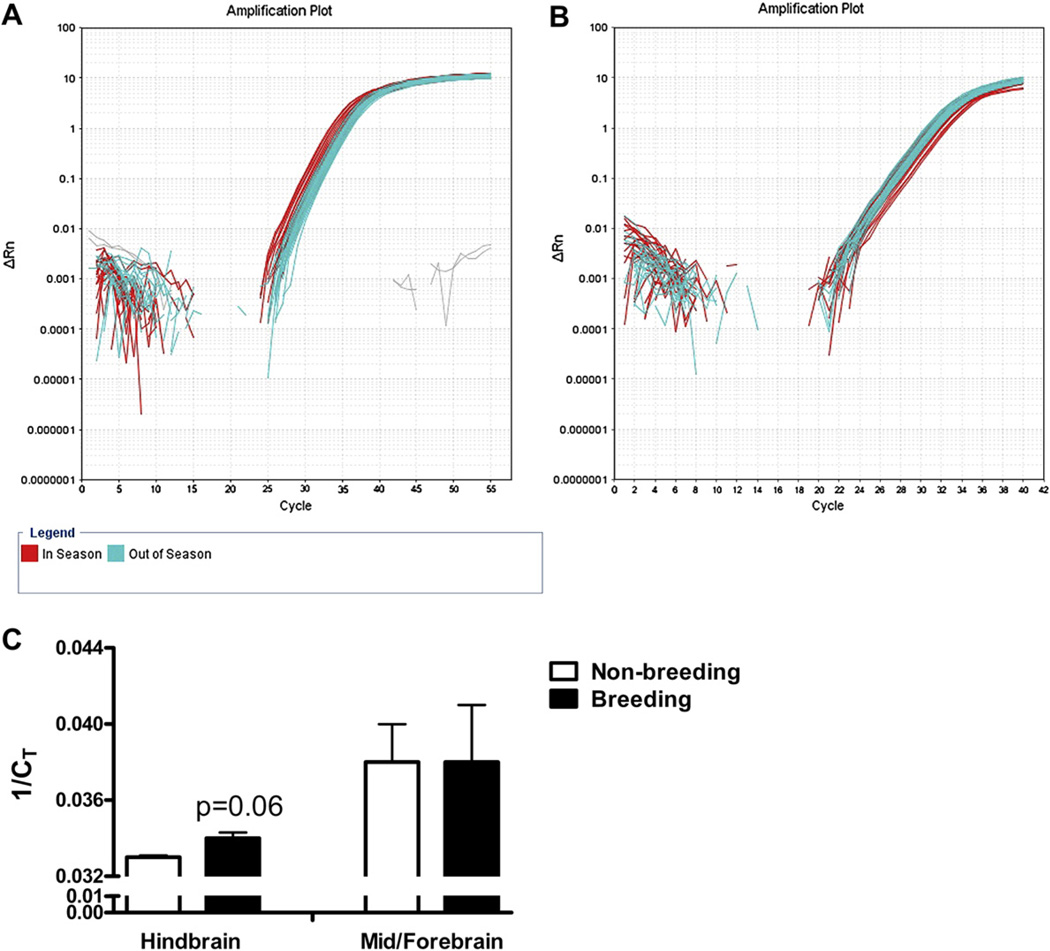
We have previously demonstrated that centrally administered vasotocin (VT) inhibits social approach toward same-sex conspecifics in male and female goldfish, and that this behavioral effect is dependent upon VT projections to the hindbrain. We now show that there are no sex differences in sensitivity to the behavioral effects of VT, though differences do exist in responsiveness across seasons in both sexes. A central dose of 1 microg, but not 200 ng, inhibited social approach in goldfish in non-reproductive condition, whereas a dose as low as 40 ng inhibited social approach in fish in full reproductive condition. In males and females in full reproductive condition, social approach behavior was facilitated by central administration of 500 ng of a V(1A) specific antagonist. In addition, the behavioral effects of exogenously administered central VT were blocked by central administration of 1 microg of a V(1A) antagonist. These results demonstrate that the propensity to approach a conspecific, a simple behavior underlying many social interactions, is controlled by a V(1A)-like receptor, and that VT's behavioral effects depend on reproductive context. Quantitative real-time PCR showed that the seasonal changes in behavioral responsiveness to VT are associated with changes in the expression of a V(1A)-like receptor in the hindbrain, but not the mid- or forebrain, indicating that the seasonal regulation of social approach behavior likely depends on the local modulation of the expression of this receptor within a primitive peptide circuit in this species.
Figures
References
-
- Beiderbeck DI, Neumann ID, Veenema AH. Differences in intermale aggression are accompanied by opposite vasopressin release patterns within the septum in rats bred for low and high anxiety. Eur. J. Neurosci. 2007;26:3597–3605. - PubMed
-
- Bielsky IF, Hu SB, Szegda KL, Westphal H, Young LJ. Profound impairment in social recognition and reduction in anxiety-like behavior in vasopressin V1a receptor knockout mice. Neuropsychopharmacology. 2004;29:483–493. - PubMed
-
- Blanchard RJ, Griebel G, Farrokhi C, Markham C, Yang M, Blanchard DC. AVP V1b selective antagonist SSR149415 blocks aggressive behaviors in hamsters. Pharmacol. Biochem. Behav. 2005;80:189–194. - PubMed
-
- Boyd SK, Moore FL. Gonadectomy reduces the concentrations of putative receptors for arginine vasotocin in the brain of an amphibian. Brain Res. 1991;541:193–197. - PubMed
Publication types
MeSH terms
Substances
Grants and funding
LinkOut - more resources
Full Text Sources
