


GLUT1 gene is a potential hypoxic marker in colorectal cancer patients
- PMID: 19619276
- PMCID: PMC3087329
- DOI: 10.1186/1471-2407-9-241
GLUT1 gene is a potential hypoxic marker in colorectal cancer patients
Abstract
Background: Tumor hypoxia is an important factor related to tumor resistance to radiotherapy and chemotherapy. This study investigated molecules synthesized in colorectal cancer cells during hypoxia to explore the possibility of developing molecular probes capable of detecting cell death and/or the efficiency of radiotherapy and chemotherapy.
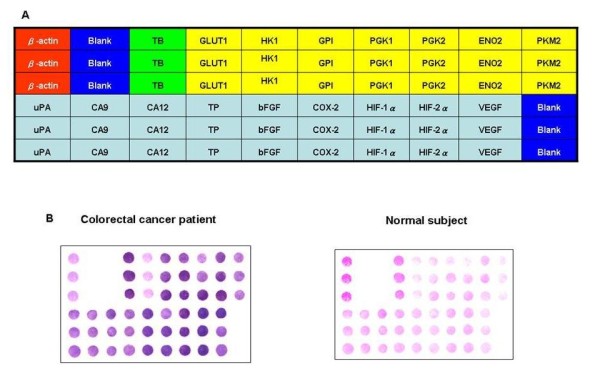
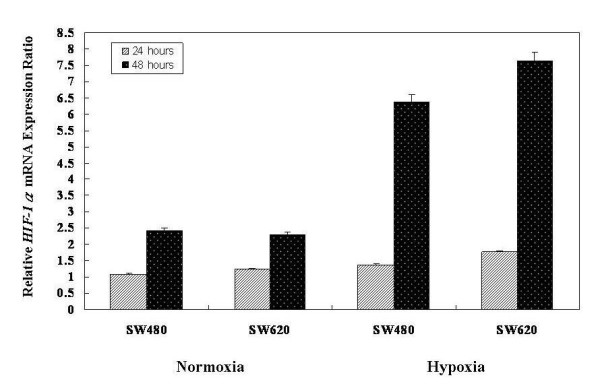
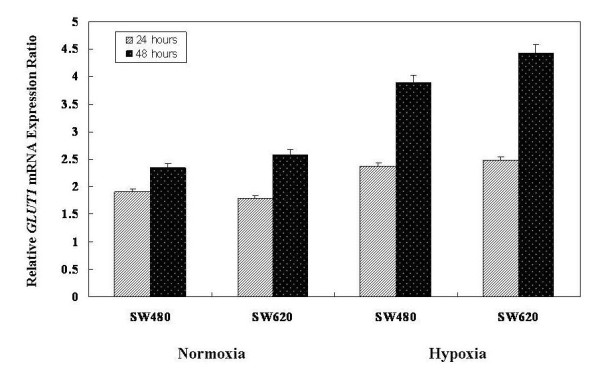
Methods: At first, we incubated two human colorectal adenocarcinoma cell lines SW480 (UICC stage II) and SW620 (UICC stage III) cells in hypoxic (< or =2% O2, 93% N2, and 5% CO2) and normoxic conditions (20% O2, 75% N2, and 5% CO2) for 24 h and 48 h. The relative expression ratio of GLUT1 mRNA in hypoxic conditions was analyzed by RT-PCR. Ten cancerous tissues collected from human colorectal cancer patients were examined. HIF-1alpha and HIF-2alpha levels were measured to indicate the degree of hypoxia, and gene expression under hypoxic conditions was determined. As a comparison, HIF-1alpha, HIF-2alpha, and GLUT1 levels were measured in the peripheral blood of 100 CRC patients.
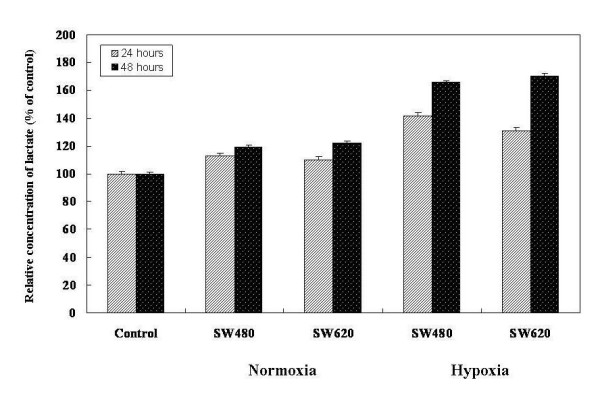
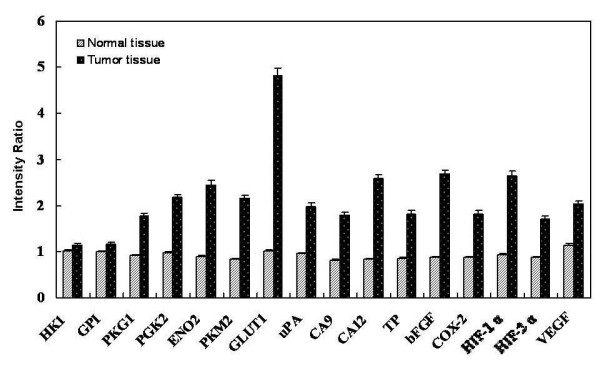
Results: Hypoxia-induced lactate was found to be elevated 3.24- to 3.36-fold in SW480 cells, and 3.06- to 3.17-fold in SW620 cells. The increased relative expression ratio of GLUT1 mRNA, under hypoxic conditions was higher in SW620 cells (1.39- to 1.72-fold elevation) than in SW480 cells (1.24- to 1.66-fold elevation). HIF-1alpha and HIF-2alpha levels were elevated and GLUT1 genes were significantly overexpressed in CRC tissue specimens. The elevated ratio of GLUT1 was higher in stage III and IV CRC tissue specimens than in the stage I and II (2.97-4.73 versus 1.44-2.11). GLUT1 mRNA was also increased in the peripheral blood of stage II and III CRC patients as compared to stage I patients, suggesting that GLUT1 may serve as a hypoxic indicator in CRC patients.
Conclusion: In conclusion, this study demonstrated that GLUT1 has the potential to be employed as a molecular marker to indicate the degree of hypoxia experienced by tumors circulating in the blood of cancer patients.
Figures

References
-
- Coleman CN. Modulating the radiation response. Stem Cells. 1996;14(1):10–15. - PubMed
-
- Tredan O, Galmarini CM, Patel K, Tannock IF. Drug resistance and the solid tumor microenvironment. J Natl Cancer Inst. 2007;99(19):1441–1454. - PubMed
-
- Brizel DM, Scully SP, Harrelson JM, Layfield LJ, Bean JM, Prosnitz LR, Dewhirst MW. Tumor oxygenation predicts for the likelihood of distant metastases in human soft tissue sarcoma. Cancer Res. 1996;56(5):941–943. - PubMed
-
- Tatum JL, Kelloff GJ, Gillies RJ, Arbeit JM, Brown JM, Chao KS, Chapman JD, Eckelman WC, Fyles AW, Giaccia AJ. et al. Hypoxia: importance in tumor biology, noninvasive measurement by imaging, and value of its measurement in the management of cancer therapy. Int J Radiat Biol. 2006;82(10):699–757. - PubMed
-
- Birner P, Schindl M, Obermair A, Plank C, Breitenecker G, Oberhuber G. Overexpression of hypoxia-inducible factor 1alpha is a marker for an unfavorable prognosis in early-stage invasive cervical cancer. Cancer Res. 2000;60(17):4693–4696. - PubMed
Publication types
MeSH terms
Substances
LinkOut - more resources
Full Text Sources
Medical
Miscellaneous
