


Isolation and characterization of Mycobacterium bovis strains from indigenous Zambian cattle using Spacer oligonucleotide typing technique
- PMID: 19619309
- PMCID: PMC2719650
- DOI: 10.1186/1471-2180-9-144
Isolation and characterization of Mycobacterium bovis strains from indigenous Zambian cattle using Spacer oligonucleotide typing technique
Abstract
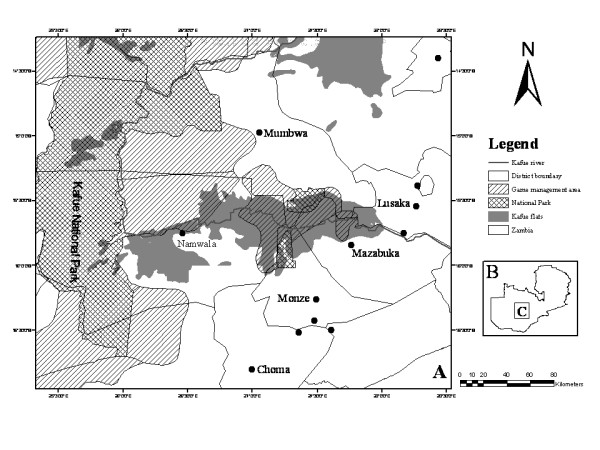
Background: Bovine tuberculosis (BTB), caused by Mycobacterium bovis, has remained a major source of concern to public health officials in Zambia. Previous investigations have used traditional epidemiological methods that are unable to identify the causative agent and from which dynamics of disease dispersion is difficult to discern. The objective of this study was to isolate, characterize and determine the genetic diversity and relatedness of M. bovis from major cattle rearing districts in Zambia by spoligotyping. A total of 695 carcasses were examined and 98 tissues had gross post-mortem lesions compatible with BTB.
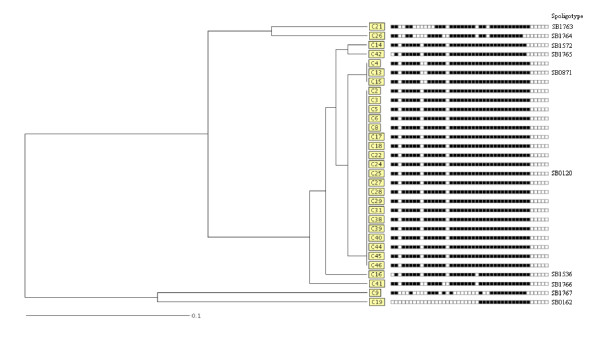
Results: Forty-two out of the ninety-eight suspected tissues examined had culture properties characteristic of mycobacteria from which 31 isolates yielded interpretable spoligotypes. This technique showed good discriminatory power (HGDI = 0.98), revealing 10 different spoligotype patterns. Twenty-seven isolates belonged to one cluster with more than 95% similarity and inside the cluster, one predominant spoligotype was found in 20 (64.5%) of the isolates tested. The highest number of spoligotypes was observed among samples from Namwala district. Spoligotypes from 26 (83.9%) of the isolates belonged to five spoligotypes that have been reported before while the remaining 5 (16.1%) isolates had unique spoligotypes that are being reported for the first time; these have been assigned numbers SB1763 to SB1767. Five of the 6 districts had the predominant spoligotype (SB0120).
Conclusion: The study has described the dispersion patterns of M. bovis in Zambian cattle for the first time and has identified 5 spoligotype patterns specific to Zambia. The observation of an overlap in the spoligotype pattern SB0120 in 5 of the 6 districts suggests the probability of sharing a common source of infection.
Figures
References
-
- Munyeme M, Muma JB, Skjerve E, Nambota AM, Phiri IG, Samui KL, Dorny P, Tryland M. Risk factors associated with bovine tuberculosis in traditional cattle of the livestock/wildlife interface areas in the Kafue basin of Zambia. Prev Vet Med. 2008;85(3–4):317–328. doi: 10.1016/j.prevetmed.2008.03.006. - DOI - PubMed
-
- Munyeme M, Muma JB, Samui KL, Skjerve E, Nambota AM, Phiri IG, Rigouts L, Tryland M. Prevalence of bovine tuberculosis and animal level risk factors for indigenous cattle under different grazing strategies in the livestock/wildlife interface areas of Zambia. Trop Anim Health Prod. 2009;41(3):345–352. doi: 10.1007/s11250-008-9195-5. - DOI - PubMed
-
- Sitima AC. MSc Thesis. Lusaka: University of Zambia; 1997. Variability of Mycobacterium bovis in traditionally processed sour milk and the prevalence of bovine tuberculosis in Namwala district of Zambia.
Publication types
MeSH terms
Substances
LinkOut - more resources
Full Text Sources
