


KSP inhibitor ARRY-520 as a substitute for Paclitaxel in Type I ovarian cancer cells
- PMID: 19619321
- PMCID: PMC2719595
- DOI: 10.1186/1479-5876-7-63
KSP inhibitor ARRY-520 as a substitute for Paclitaxel in Type I ovarian cancer cells
Abstract
Background: We previously described a sub-population of epithelial ovarian cancer (EOC) cells with a functional TLR-4/MyD88/NF-kappaB pathway (Type I EOC cells), which confers the capacity to respond to Paclitaxel, a known TLR-4 ligand, by enhancing NF-kappaB activity and upregulating cytokine secretion - events that are known to promote tumor progression. It is therefore important to distinguish those patients that should not receive Paclitaxel; it is also important to identify alternative chemotherapy options that would benefit this sub-group of patients. The objective of this study is to determine if the KSP inhibitor, ARRY-520, can be a substitute for Paclitaxel in patients with Type I EOC.
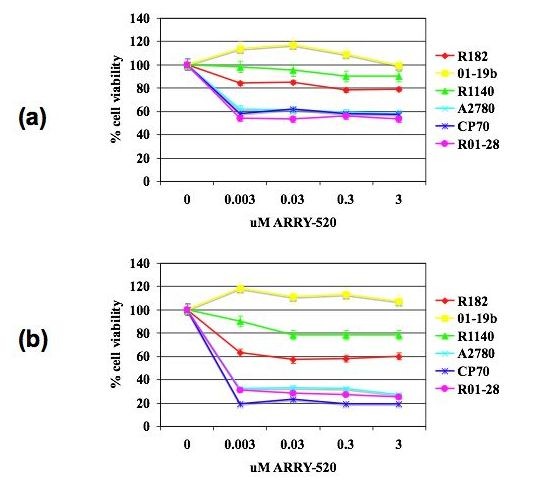
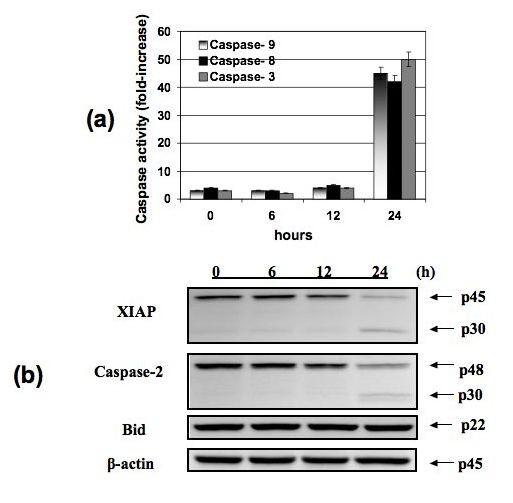
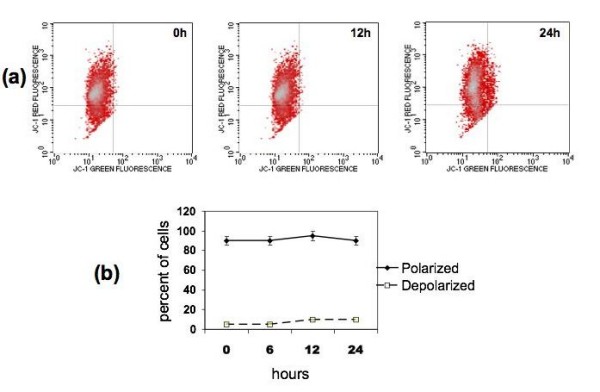
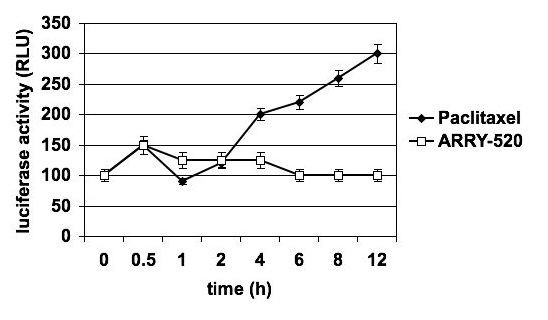
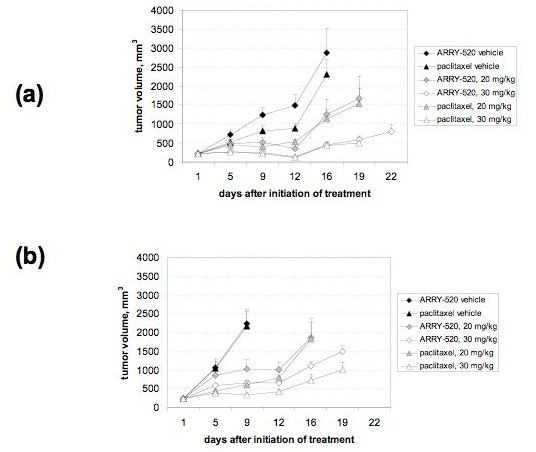
Methods: EOC cells isolated from either ascites or tumor tissue were treated with increasing concentrations of ARRY-520 or Paclitaxel and cell viability determined. Activation of the apoptotic pathway was determined using Western blot analysis. Mitochondrial integrity was quantified using JC1 dye. Cytokine profiling was performed from supernatants using xMAP technology. NF-kappaB activity was measured using a Luciferase reporter system. In vivo activity was determined using a subcutaneous xenograft mouse model.
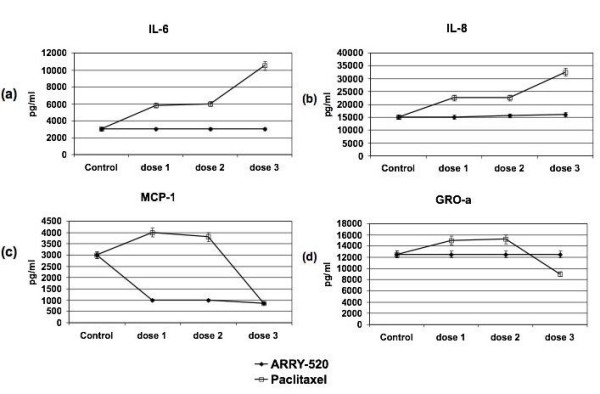
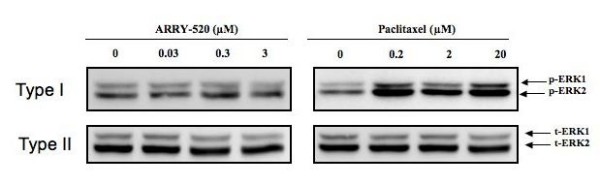
Results: ARRY-520 and Paclitaxel exhibited the same cytotoxic effect on Type I and II cells. The GI50 at 48 h for Type II EOC cells was 0.0015 microM and 0.2 microM for ARRY-520 and Paclitaxel, respectively. For Type I EOC cells, the GI50 at 48 h was > 3 microM and >20 microM for ARRY-520 and Paclitaxel, respectively. Decrease in the number of viable cells was accompanied by mitochondrial depolarization and caspase activation. Unlike Paclitaxel, ARRY-520 did not induce NF-kappaB activation, did not enhance cytokine secretion, nor induce ERK phosphorylation in Type I EOC cells.
Conclusion: Administration of Paclitaxel to patients with high percentage Type I cancer cells could have detrimental effects due to Paclitaxel-induced enhancement of NF-kappaB and ERK activities, and cytokine production (e.g. IL-6), which promote chemoresistance and tumor progression. ARRY-520 has similar anti-tumor activity in EOC cells as that of Paclitaxel. However, unlike Paclitaxel, it does not induce these pro-tumor effects in Type I cells. Therefore, the KSP inhibitor ARRY-520 may represent an alternative to Paclitaxel in this subgroup of EOC patients.
Figures
References
-
- Schwartz PE. Current diagnosis and treatment modalities for ovarian cancer. Cancer Treat Res. 2002;107:99–118. - PubMed
-
- Berchuck A, Elbendary A, Havrilesky L, Rodriguez GC, Bast RC., Jr Pathogenesis of ovarian cancers. J Soc Gynecol Investig. 1994;1:181–190. - PubMed
-
- Mutch DG. Surgical management of ovarian cancer. Semin Oncol. 2002;29:3–8. - PubMed
-
- Kelly MG, Alvero AB, Chen R, Silasi DA, Abrahams VM, Chan S, Visintin I, Rutherford T, Mor G. TLR-4 signaling promotes tumor growth and paclitaxel chemoresistance in ovarian cancer. Cancer Res. 2006;66:3859–3868. - PubMed
Publication types
MeSH terms
Substances
Grants and funding
LinkOut - more resources
Full Text Sources
Other Literature Sources
Medical
Miscellaneous
