


Wnt/beta-catenin signaling: components, mechanisms, and diseases
- PMID: 19619488
- PMCID: PMC2861485
- DOI: 10.1016/j.devcel.2009.06.016
Wnt/beta-catenin signaling: components, mechanisms, and diseases
Abstract
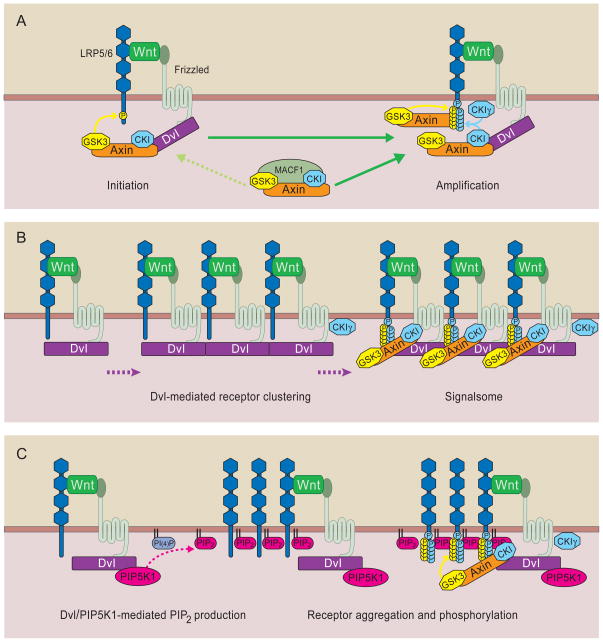
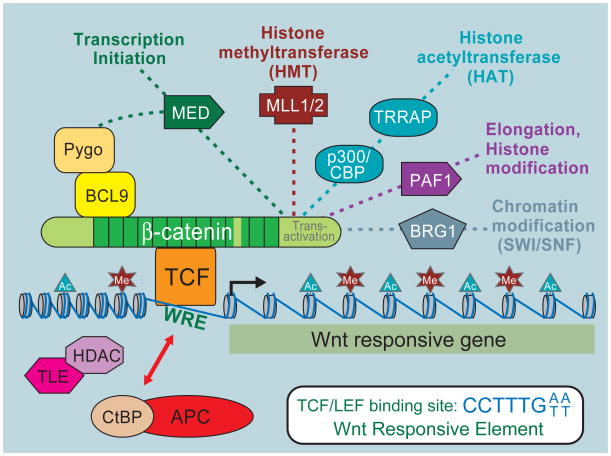
Signaling by the Wnt family of secreted glycolipoproteins via the transcriptional coactivator beta-catenin controls embryonic development and adult homeostasis. Here we review recent progress in this so-called canonical Wnt signaling pathway. We discuss Wnt ligands, agonists, and antagonists, and their interactions with Wnt receptors. We also dissect critical events that regulate beta-catenin stability, from Wnt receptors to the cytoplasmic beta-catenin destruction complex, and nuclear machinery that mediates beta-catenin-dependent transcription. Finally, we highlight some key aspects of Wnt/beta-catenin signaling in human diseases including congenital malformations, cancer, and osteoporosis, and discuss potential therapeutic implications.
Figures
References
-
- Angers S, Thorpe CJ, Biechele TL, Goldenberg SJ, Zheng N, MacCoss MJ, Moon RT. The KLHL12-Cullin-3 ubiquitin ligase negatively regulates the Wnt-beta-catenin pathway by targeting Dishevelled for degradation. Nature cell biology. 2006;8:348–357. - PubMed
-
- Arce L, Yokoyama NN, Waterman ML. Diversity of LEF/TCF action in development and disease. Oncogene. 2006;25:7492–7504. - PubMed
Publication types
MeSH terms
Substances
Grants and funding
LinkOut - more resources
Full Text Sources
Other Literature Sources
Medical
Molecular Biology Databases
