


Induction of periostin-like factor and periostin in forearm muscle, tendon, and nerve in an animal model of work-related musculoskeletal disorder
- PMID: 19620321
- PMCID: PMC2762884
- DOI: 10.1369/jhc.2009.954081
Induction of periostin-like factor and periostin in forearm muscle, tendon, and nerve in an animal model of work-related musculoskeletal disorder
Abstract
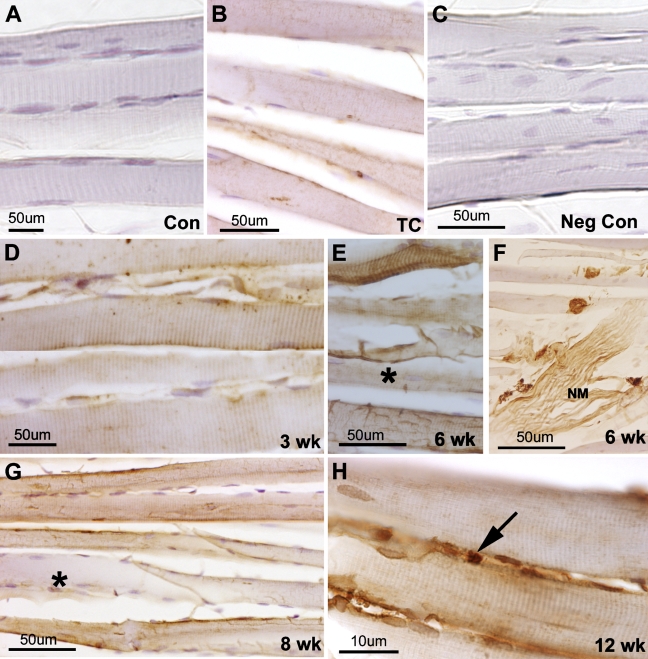
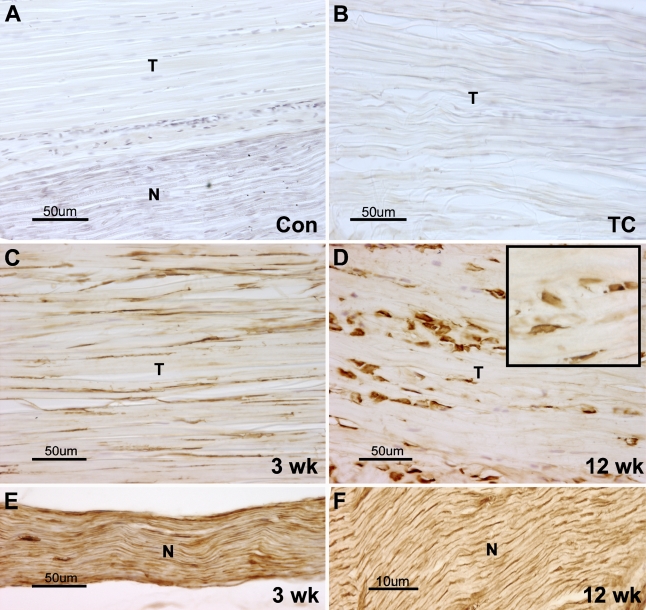
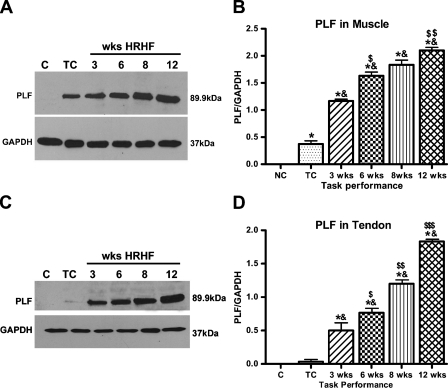
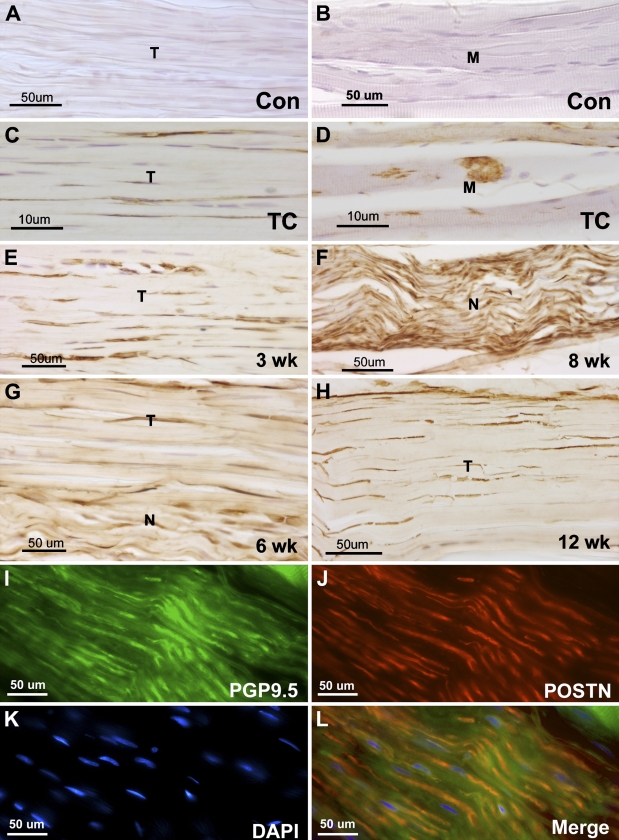
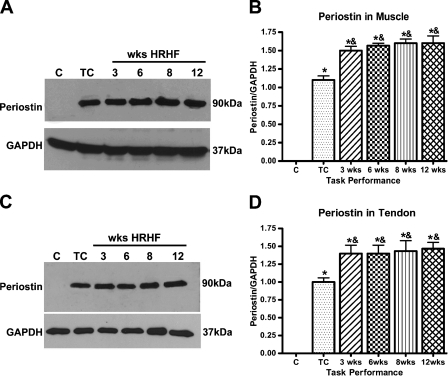
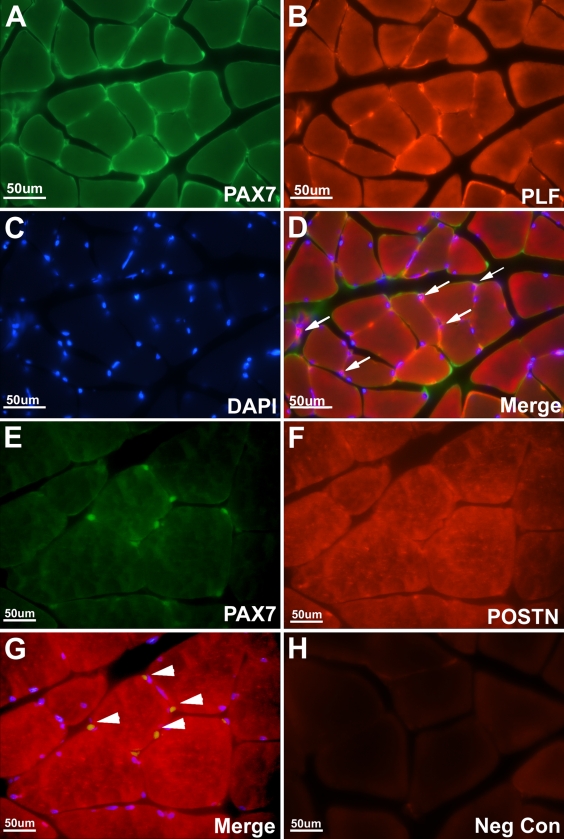
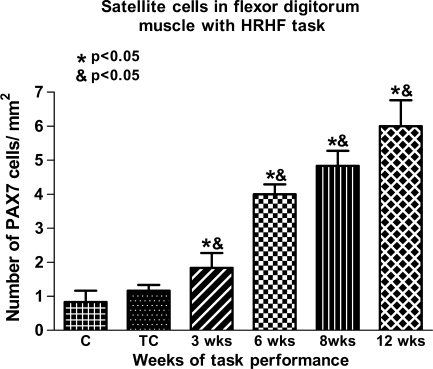
Work-related musculoskeletal disorders (WMSDs), also known as repetitive strain injuries of the upper extremity, frequently cause disability and impairment of the upper extremities. Histopathological changes including excess collagen deposition around myofibers, cell necrosis, inflammatory cell infiltration, and increased cytokine expression result from eccentric exercise, forced lengthening, exertion-induced injury, and repetitive strain-induced injury of muscles. Repetitive tasks have also been shown to result in tendon and neural injuries, with subsequent chronic inflammatory responses, followed by residual fibrosis. To identify mechanisms that regulate tissue repair in WMSDs, we investigated the induction of periostin-like factor (PLF) and periostin, proteins induced in other pathologies but not expressed in normal adult tissue. In this study, we examined the level of PLF and periostin in muscle, tendon, and nerve using immunohistochemistry and Western blot analysis. PLF increased with continued task performance, whereas periostin was constitutively expressed. PLF was located in satellite cells and/or myoblasts, which increased in number with continued task performance, supporting our hypothesis that PLF plays a role in muscle repair or regeneration. Periostin, on the other hand, was not present in satellite cells and/or myoblasts.
Figures
References
-
- Allampallam K, Chakraborty J, Bose KK, Robinson J (1996) Explant culture, immunoflourescence and electron-microscopic study of flexor retinaculum in carpal tunnel syndrome. J Occup Environ Med 38:264–271 - PubMed
-
- Archambault JM, Hart DA, Herzog W (2001) Response of rabbit Achilles tendon to chronic repetitive loading. Connect Tissue Res 42:13–23 - PubMed
-
- Archambault JM, Jelinsky SA, Lake SP, Hill AA, Glaser DL, Soslowsky LJ (2007) Rat supraspinatus tendon expresses cartilage markers with overuse. J Orthop Res 25:617–624 - PubMed
-
- Bao S, Ouyang G, Bai X, Huang Z, Ma C, Liu M, Shao R, et al. (2004) Periostin potently promotes metastatic growth of colon cancer by augmenting cell survival via the Akt/PKB pathway. Cancer Cell 5:329–339 - PubMed
MeSH terms
Substances
Grants and funding
LinkOut - more resources
Full Text Sources
Molecular Biology Databases
