


The genetic basis of transgressive ovary size in honeybee workers
- PMID: 19620393
- PMCID: PMC2766328
- DOI: 10.1534/genetics.109.105452
The genetic basis of transgressive ovary size in honeybee workers
Abstract
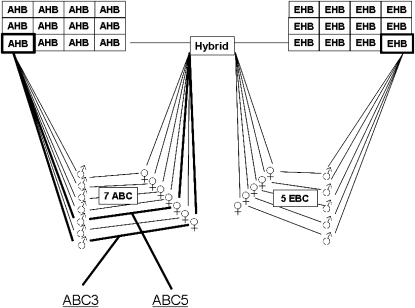
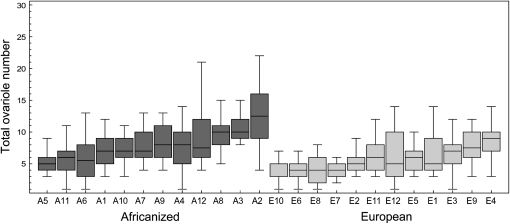
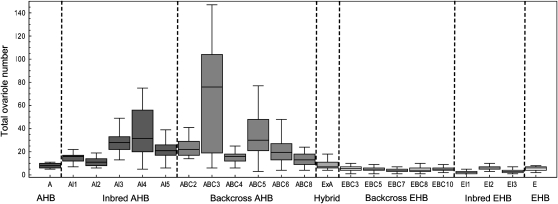
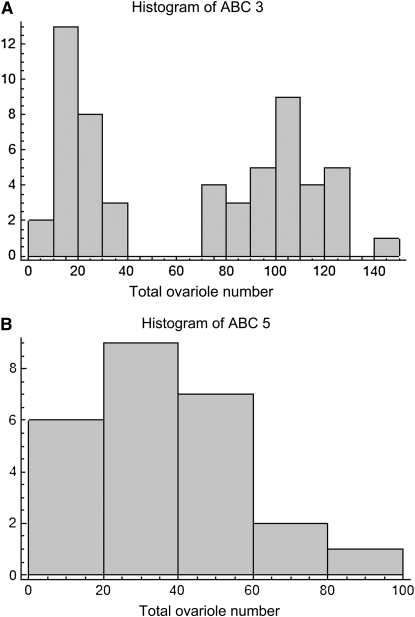
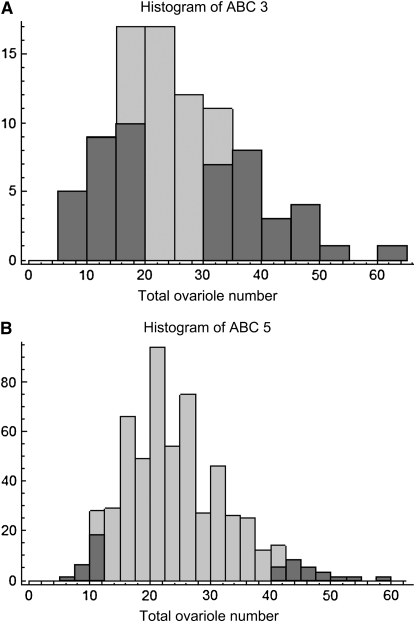
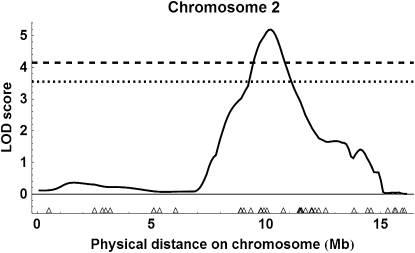
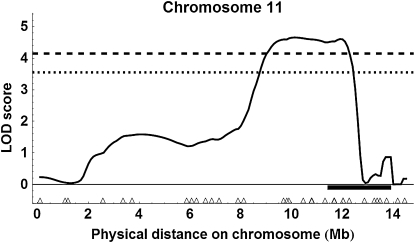
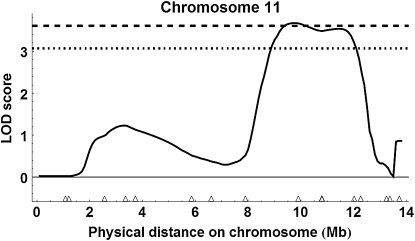
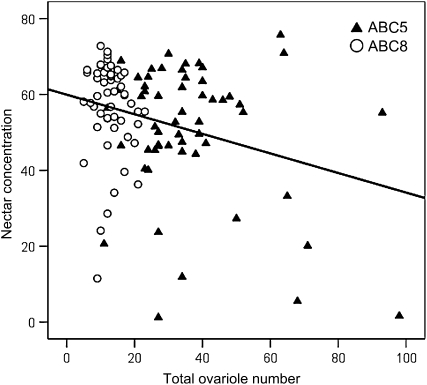
Ovarioles are the functional unit of the female insect reproductive organs and the number of ovarioles per ovary strongly influences egg-laying rate and fecundity. Social evolution in the honeybee (Apis mellifera) has resulted in queens with 200-360 total ovarioles and workers with usually 20 or less. In addition, variation in ovariole number among workers relates to worker sensory tuning, foraging behavior, and the ability to lay unfertilized male-destined eggs. To study the genetic architecture of worker ovariole number, we performed a series of crosses between Africanized and European bees that differ in worker ovariole number. Unexpectedly, these crosses produced transgressive worker phenotypes with extreme ovariole numbers that were sensitive to the social environment. We used a new selective pooled DNA interval mapping approach with two Africanized backcrosses to identify quantitative trait loci (QTL) underlying the transgressive ovary phenotype. We identified one QTL on chromosome 11 and found some evidence for another QTL on chromosome 2. Both QTL regions contain plausible functional candidate genes. The ovariole number of foragers was correlated with the sugar concentration of collected nectar, supporting previous studies showing a link between worker physiology and foraging behavior. We discuss how the phenotype of extreme worker ovariole numbers and the underlying genetic factors we identified could be linked to the development of queen traits.
Figures
References
-
- Allsopp, M. H., J. N. M. Calis and W. J. Boot, 2003. Differential feeding of worker larvae affects caste characters in the Cape honeybee, Apis mellifera capensis. Behav. Ecol. Sociobiol. 54: 555–561.
-
- Amdam, G. V., K. E. Ihle and R. E. Page, 2009. Regulation of honey bee (Apis mellifera) life histories by vitellogenin, in Hormones, Brain and Behavior, Ed 2, edited by S. Fahrbach. Elsevier, San Diego, CA (in press).
-
- Anderson, K. E., T. A. Linksvayer and C. R. Smith, 2008. The causes and consequences of genetic caste determination in ants (Hymenoptera: Formicidae). Myrmecol. News 11: 119–132.
Publication types
MeSH terms
Substances
Grants and funding
LinkOut - more resources
Full Text Sources
