


Population increase and environmental deterioration correspond with microlithic innovations in South Asia ca. 35,000 years ago
- PMID: 19620737
- PMCID: PMC2718386
- DOI: 10.1073/pnas.0810842106
Population increase and environmental deterioration correspond with microlithic innovations in South Asia ca. 35,000 years ago
Abstract
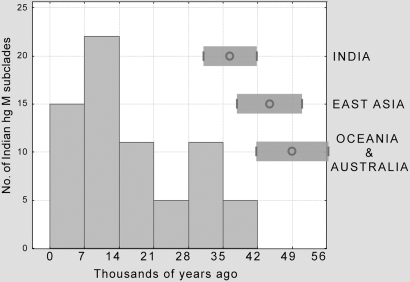
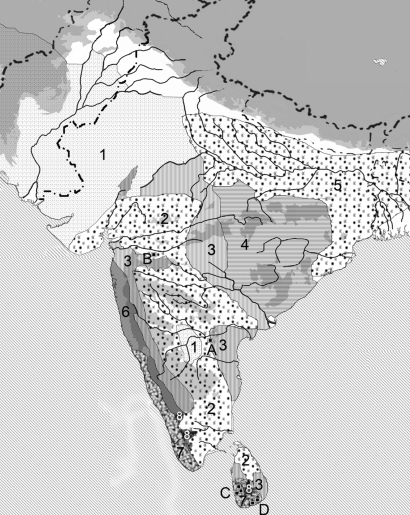
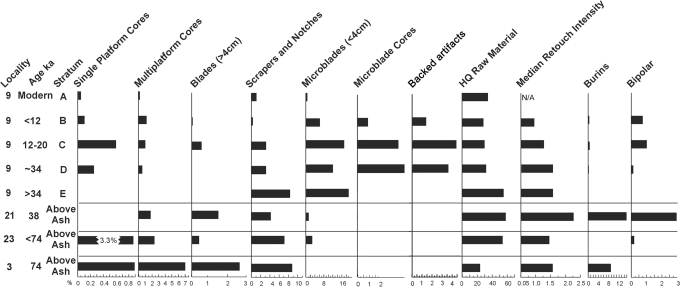
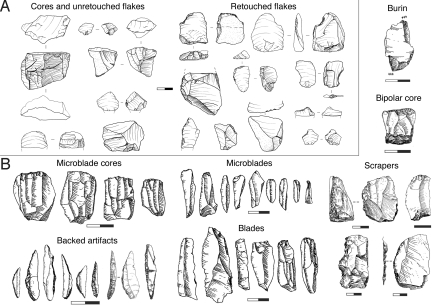
Genetic studies of South Asia's population history have led to postulations of a significant and early population expansion in the subcontinent, dating to sometime in the Late Pleistocene. We evaluate this argument, based on new mtDNA analyses, and find evidence for significant demographic transition in the subcontinent, dating to 35-28 ka. We then examine the paleoenvironmental and, particularly, archaeological records for this time period and note that this putative demographic event coincides with a period of ecological and technological change in South Asia. We document the development of a new diminutive stone blade (microlithic) technology beginning at 35-30 ka, the first time that the precocity of this transition has been recognized across the subcontinent. We argue that the transition to microlithic technology may relate to changes in subsistence practices, as increasingly large and probably fragmented populations exploited resources in contracting favorable ecological zones just before the onset of full glacial conditions.
Conflict of interest statement
The authors declare no conflict of interest.
Figures
References
-
- Atkinson QD, Gray RD, Drummond AJ. mtDNA variation predicts population size in humans and reveals a major Southern Asian chapter in human prehistory. Mol Biol Evol. 2008;25:468–474. - PubMed
-
- Maccaulay V, et al. Single, rapid coastal settlement of Asia revealed by analysis of complete mitochondrial genomes. Science. 2005;308:1034–1036. - PubMed
-
- Stringer C. Coasting out of Africa. Nature. 2000;405:24–27. - PubMed
-
- Mellars P. Going east: New genetic and archaeological perspectives on the modern human colonization of Eurasia. Science. 2006;313:796–800. - PubMed
-
- Petraglia MD, et al. Middle Paleolithic assemblages from the Indian subcontinent before and after the Toba super-eruption. Science. 2007;317:114–116. - PubMed
Publication types
MeSH terms
Substances
LinkOut - more resources
Full Text Sources
