


Stable encoding of task structure coexists with flexible coding of task events in sensorimotor striatum
- PMID: 19625536
- PMCID: PMC2775375
- DOI: 10.1152/jn.00522.2009
Stable encoding of task structure coexists with flexible coding of task events in sensorimotor striatum
Abstract
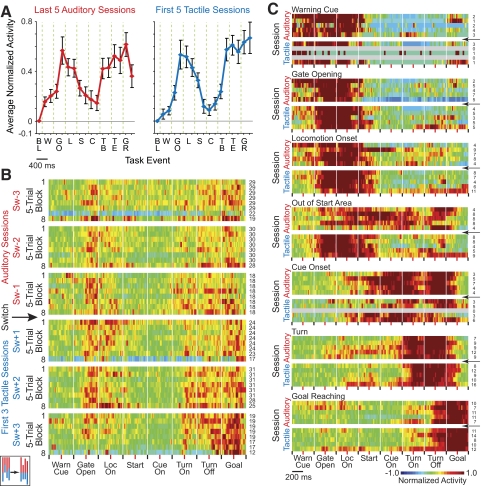
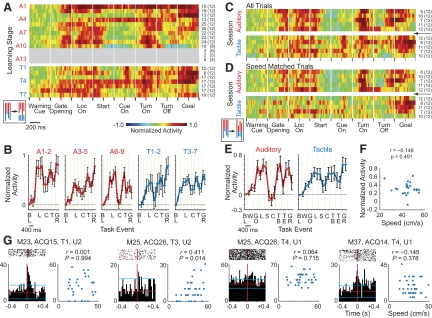
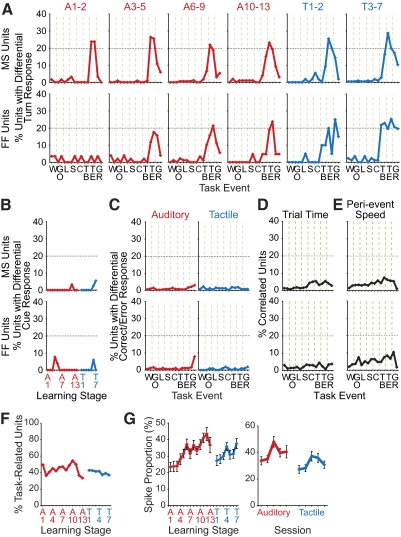
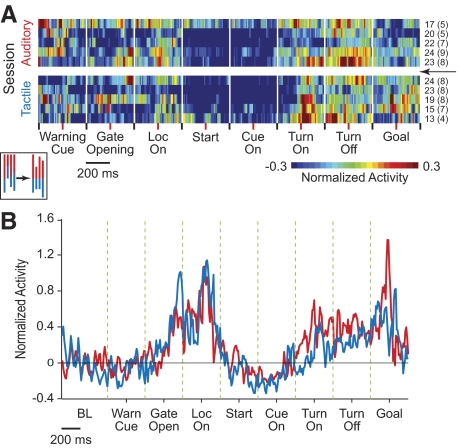
The sensorimotor striatum, as part of the brain's habit circuitry, has been suggested to store fixed action values as a result of stimulus-response learning and has been contrasted with a more flexible system that conditionally assigns values to behaviors. The stability of neural activity in the sensorimotor striatum is thought to underlie not only normal habits but also addiction and clinical syndromes characterized by behavioral fixity. By recording in the sensorimotor striatum of mice, we asked whether neuronal activity acquired during procedural learning would be stable even if the sensory stimuli triggering the habitual behavior were altered. Contrary to expectation, both fixed and flexible activity patterns appeared. One, representing the global structure of the acquired behavior, was stable across changes in task cuing. The second, a fine-grain representation of task events, adjusted rapidly. Such dual forms of representation may be critical to allow motor and cognitive flexibility despite habitual performance.
Figures
References
-
- Aldridge JW, Berridge KC, Rosen AR. Basal ganglia neural mechanisms of natural movement sequences. Can J Physiol Pharmacol 82: 732–739, 2004 - PubMed
-
- Alloway KD, Lou L, Nwabueze-Ogbo F, Chakrabarti S. Topography of cortical projections to the dorsolateral neostriatum in rats: multiple overlapping sensorimotor pathways. J Comp Neurol 499: 33–48, 2006 - PubMed
-
- Atallah HE, Lopez-Paniagua D, Rudy JW, O'Reilly RC. Separate neural substrates for skill learning and performance in the ventral and dorsal striatum. Nat Neurosci 10: 126–131, 2007 - PubMed
Publication types
MeSH terms
Grants and funding
LinkOut - more resources
Full Text Sources
