


Sucrose synthase affects carbon partitioning to increase cellulose production and altered cell wall ultrastructure
- PMID: 19625620
- PMCID: PMC2722352
- DOI: 10.1073/pnas.0900188106
Sucrose synthase affects carbon partitioning to increase cellulose production and altered cell wall ultrastructure
Abstract
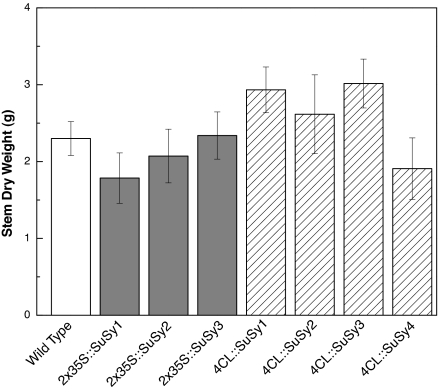
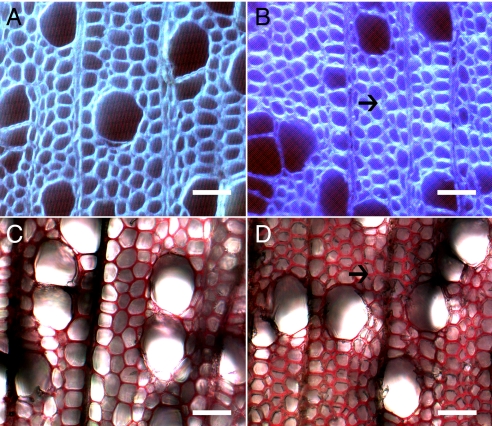
Overexpression of the Gossypium hirsutum sucrose synthase (SuSy) gene under the control of 2 promoters was examined in hybrid poplar (Populus alba x grandidentata). Analysis of RNA transcript abundance, enzyme activity, cell wall composition, and soluble carbohydrates revealed significant changes in the transgenic lines. All lines showed significantly increased SuSy enzyme activity in developing xylem. This activity manifested in altered secondary cell wall cellulose content per dry weight in all lines, with increases of 2% to 6% over control levels, without influencing plant growth. The elevated concentration of cellulose was associated with an increase in cell wall crystallinity but did not alter secondary wall microfibril angle. This finding suggests that the observed increase in crystallinity is a function of altered carbon partitioning to cellulose biosynthesis rather than the result of tension wood formation. Furthermore, the augmented deposition of cellulose in the transgenic lines resulted in thicker xylem secondary cell wall and consequently improved wood density. These findings clearly implicate SuSy as a key regulator of sink strength in poplar trees and demonstrate the tight association of SuSy with cellulose synthesis and secondary wall formation.
Conflict of interest statement
The authors declare no conflict of interest.
Figures
References
-
- Zrenner R, Salanoubat M, Willmitzer L, Sonnewald U. Evidence of the crucial role of sucrose synthase for sink strength using transgenic potato plants (Solanum tuberosum L.) Plant J. 1995;7(1):97–107. - PubMed
Publication types
MeSH terms
Substances
LinkOut - more resources
Full Text Sources
Other Literature Sources
Miscellaneous
