


Sleep timing and circadian phase in delayed sleep phase syndrome
- PMID: 19625733
- PMCID: PMC3689431
- DOI: 10.1177/0748730409339611
Sleep timing and circadian phase in delayed sleep phase syndrome
Abstract
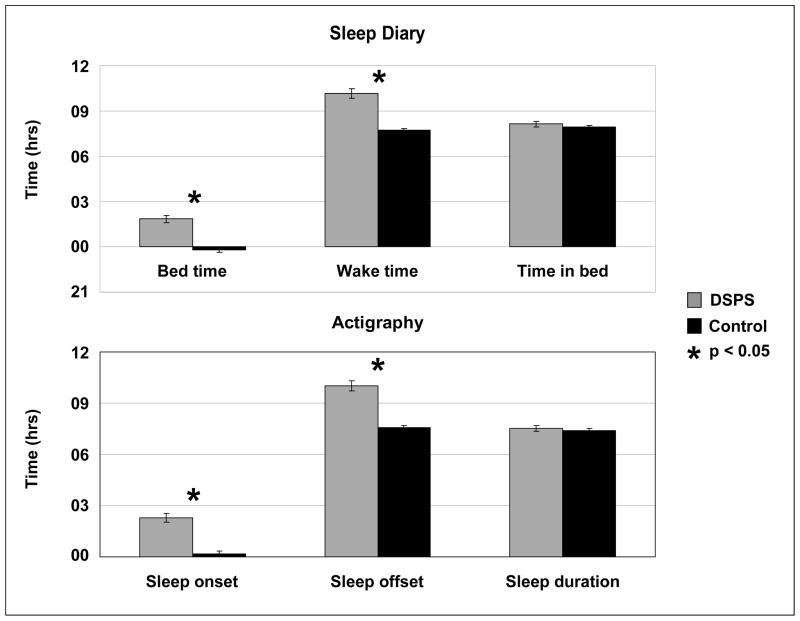
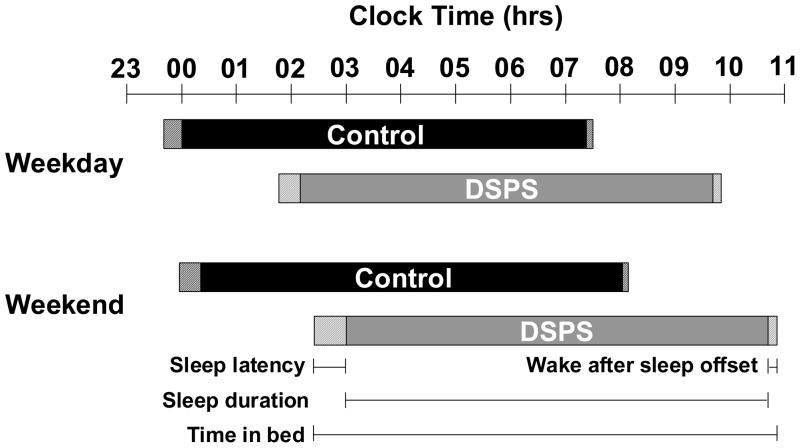
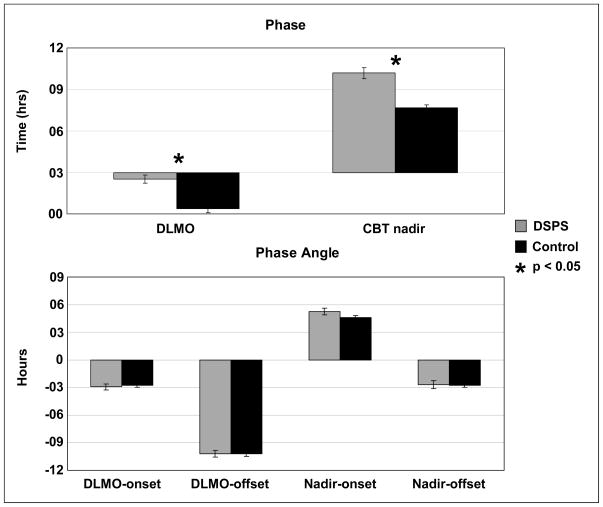
Delayed sleep phase syndrome (DSPS) is a circadian rhythm sleep disorder in which the timing of the sleep episode occurs later than desired and is associated with difficulty falling asleep, problems awakening on time (e.g., to meet work or school obligations), and daytime sleepiness. The phase relationship between the timing of sleep and endogenous circadian rhythms is critical to the initiation and maintenance of sleep, and significant alteration leads to impairment of sleep quality and duration. The aim of this retrospective study was to determine the phase relationship between sleep-wake times and physiological markers of circadian timing in clinic patients with DSPS. Objective and subjective measures of sleep timing and circadian phase markers (core body temperature and melatonin) were measured in patients with DSPS and compared with age-matched controls. As expected, significant delays in the timing of the major sleep episode and circadian phase of body temperature and melatonin rhythms were seen in the DSPS group when allowed to sleep at their own habitual schedules, but the phase relationship between sleep-wake times and circadian phase was similar between the 2 groups. These results suggest that the symptoms of insomnia and excessive daytime sleepiness in DSPS patients living under entrained real-life conditions cannot be explained by an alteration in the phase relationship between sleep-wake patterns and other physiological circadian rhythms.
Figures
References
-
- The International Classification of Sleep Disorders. Revised: Diagnostic and coding manual. American Academy of Sleep Medicine; Rochester, Minnesota: 2000.
-
- American Psychiatric Association. Diagnostic and Statistical Manual of Mental Disorders. 4. American Psychiatric Association; Washington, D.C: 2000. (DSM-IV)
-
- Ando K, Kripke DF, Ancoli-Israel S. Delayed and advanced sleep phase symptoms. Isr J Psychiatry Relat Sci. 2001;39:81–88. - PubMed
-
- Archer SN, Robilliard DL, Skene DJ, Smits M, Williams A, Arendt J, von schantz M. A length polymorphism in the circadian clock gene Per3 is linked to delayed sleep phase syndrome and extreme diurnal preference. Sleep. 2003;26:413–415. - PubMed
-
- Baehr EK, Eastman CI, Revelle W, Losee Olson SH, Wolfe LF, Zee PC. Circadian phase-shifting effects of nocturnal exercies in older compared to young adults. American Journal of Physiology: Regulatory, Integrative, and Comparative Physiology 2003 - PubMed
Publication types
MeSH terms
Substances
Grants and funding
LinkOut - more resources
Full Text Sources
Other Literature Sources
Research Materials
