


Dysregulation of histone acetylation in the APP/PS1 mouse model of Alzheimer's disease
- PMID: 19625751
- PMCID: PMC8962655
- DOI: 10.3233/JAD-2009-1134
Dysregulation of histone acetylation in the APP/PS1 mouse model of Alzheimer's disease
Abstract
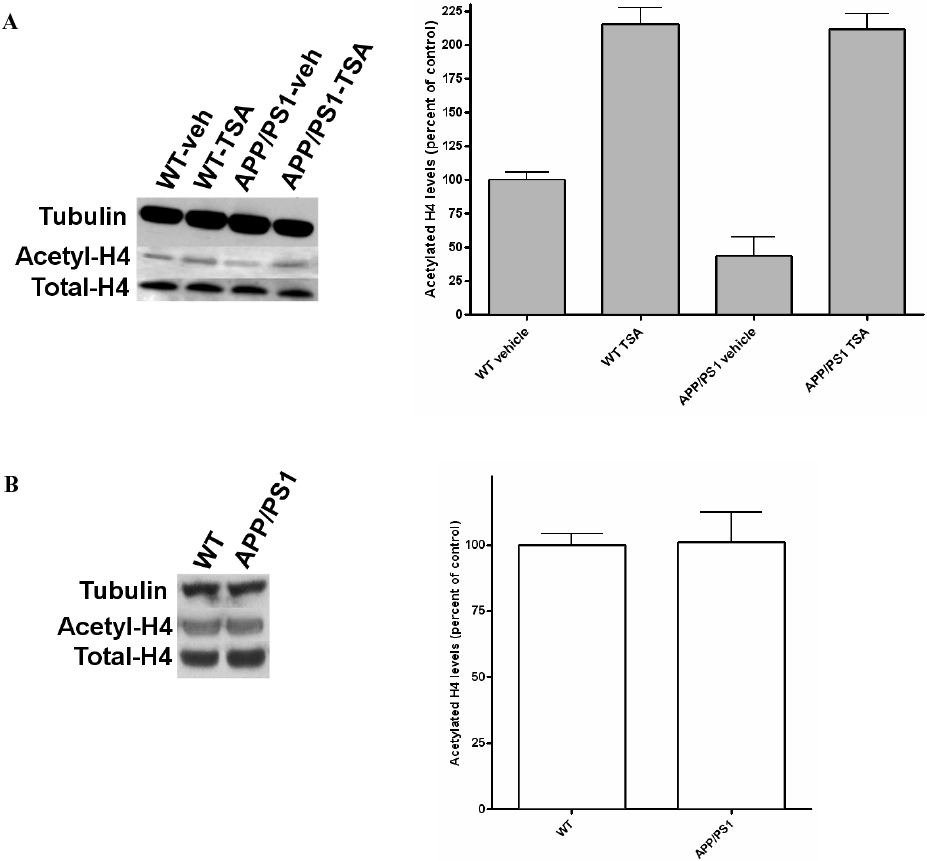
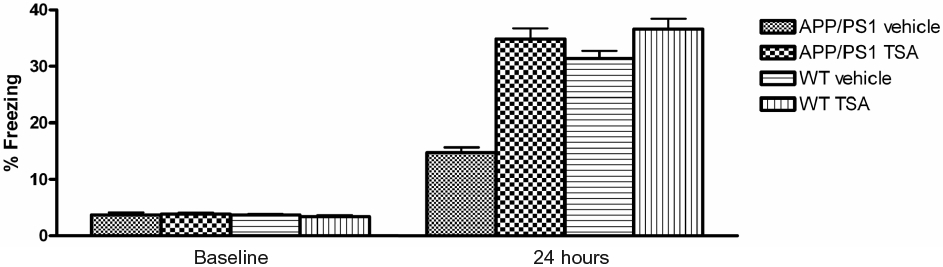
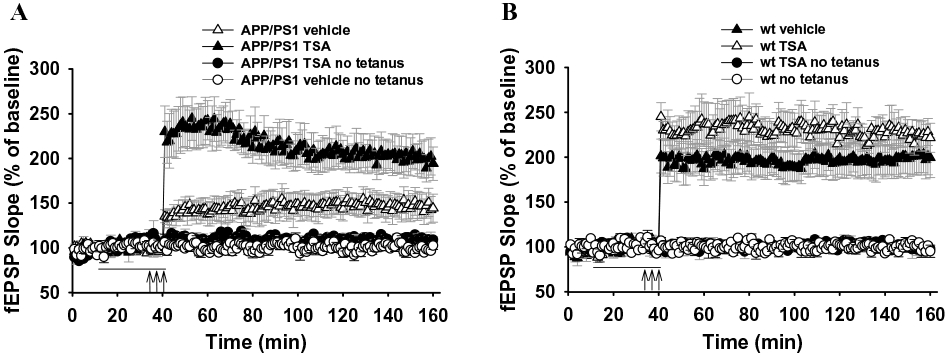
Epigenetic mechanisms such as post-translational histone modifications are increasingly recognized for their contribution to gene activation and silencing in the brain. Histone acetylation in particular has been shown to be important both in hippocampal long-term potentiation (LTP) and memory formation in mice. The involvement of the epigenetic modulation of memory formation has also been proposed in neuropathological models, although up to now no clear-cut connection has been demonstrated between histone modifications and the etiology of Alzheimer's disease (AD). Thus, we have undertaken preclinical studies in the APP/PS1 mouse model of AD to determine whether there are differences in histone acetylation levels during associative memory formation. After fear conditioning training, levels of hippocampal acetylated histone 4 (H4) in APP/PS1 mice were about 50% lower than in wild-type littermates. Interestingly, acute treatment with a histone deacetylase inhibitor, Trichostatin A (TSA), prior to training rescued both acetylated H4 levels and contextual freezing performance to wild-type values. Moreover, TSA rescued CA3-CA1 LTP in slices from APP/PS1 mice. Based on this evidence, we propose the hypothesis that epigenetic mechanisms are involved in the altered synaptic function and memory associated with AD. In this respect, histone deacetylase inhibitors represent a new therapeutic target to effectively counteract disease progression.
Figures
References
-
- Levenson JM, Sweatt JD (2005) Epigenetic mechanisms in memory formation. Nat Rev Neurosci 6, 108–118. - PubMed
-
- Masliah E (1995) Mechanisms of synaptic dysfunction in Alzheimer’s disease. Histol Histopathol 10, 509–519. - PubMed
-
- Kang J, Lemaire HG, Unterbeck A, Salbaum JM, Masters CL, Grzeschik KH, Multhaup G, Beyreuther K, Muller-Hill B (1987) The precursor of Alzheimer’s disease amyloid A4 protein resembles a cell-surface receptor. Nature 325, 733–736. - PubMed
-
- Czech C, Tremp G, Pradier L (2000) Presenilins and Alzheimer’s disease: biological functions and pathogenic mechanisms. Prog Neurobiol 60, 363–384. - PubMed
Publication types
MeSH terms
Substances
Grants and funding
LinkOut - more resources
Full Text Sources
Other Literature Sources
Medical
Research Materials
Miscellaneous
