


Meta-analysis: treatment of attention-deficit/hyperactivity disorder in children with comorbid tic disorders
- PMID: 19625978
- PMCID: PMC3943246
- DOI: 10.1097/CHI.0b013e3181b26e9f
Meta-analysis: treatment of attention-deficit/hyperactivity disorder in children with comorbid tic disorders
Abstract
Objective: The Food and Drug Administration currently requires the package inserts of most psychostimulant medications to list the presence of a tic disorder as a contraindication to their use. Approximately half of children with Tourette's syndrome experience comorbid attention-deficit/hyperactivity disorder (ADHD). We sought to determine the relative efficacy of different medications in treating ADHD and tic symptoms in children with both Tourette's syndrome and ADHD.
Method: We conducted a PubMed search to identify all double-blind, randomized, placebo-controlled trials examining the efficacy of medications in the treatment of ADHD in the children with comorbid tics. We used a random effects meta-analysis with standardized mean difference as our primary outcome to estimate the effect size of pharmaceutical agents in the treatment of ADHD symptoms and tics.
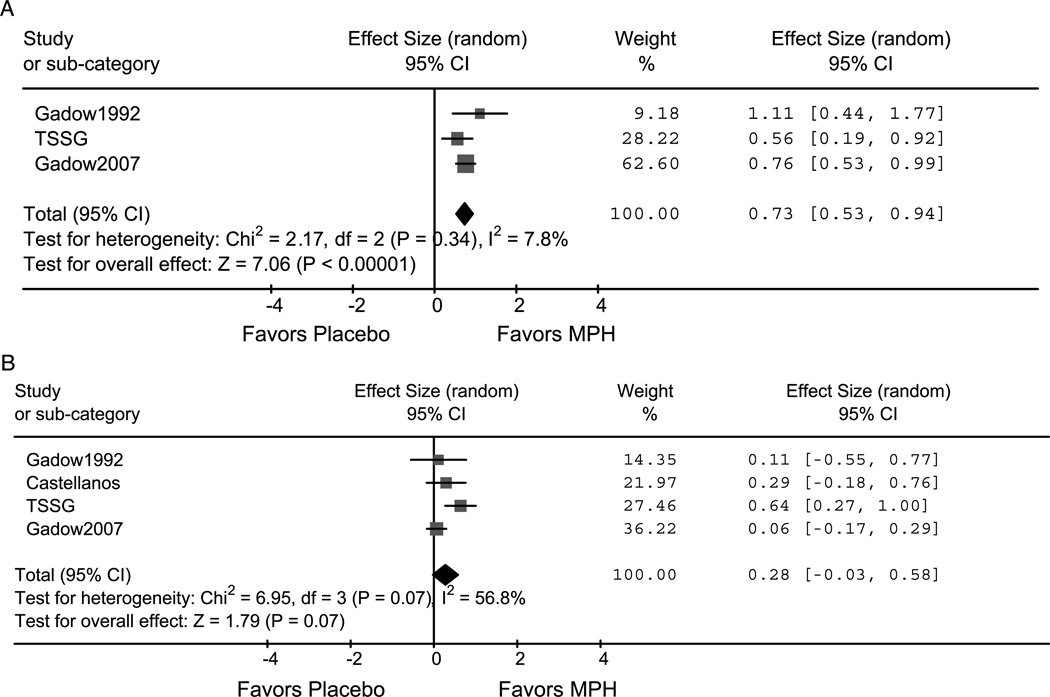
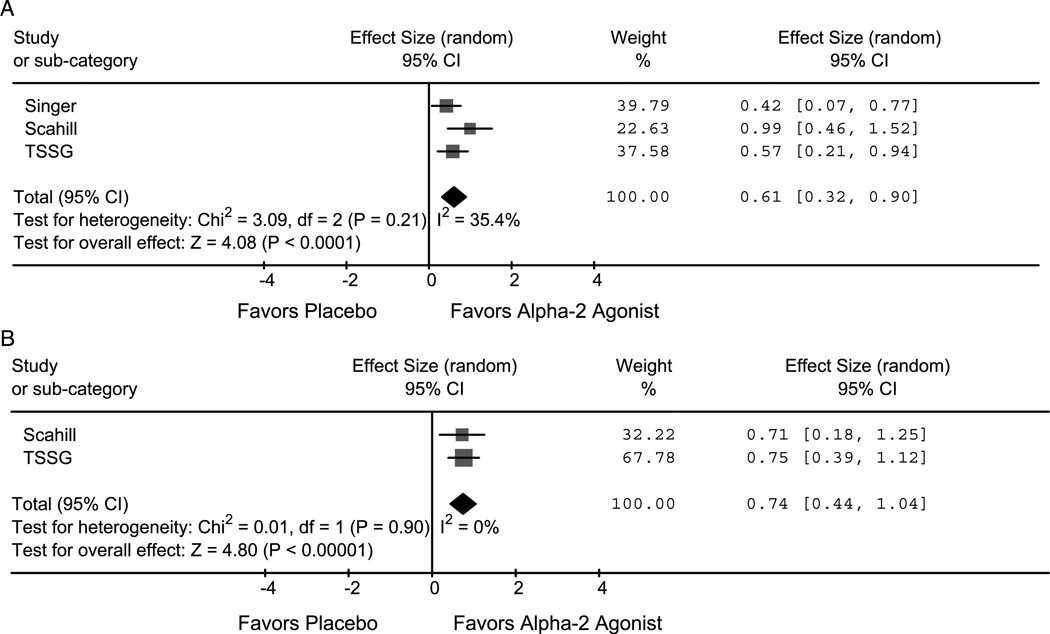
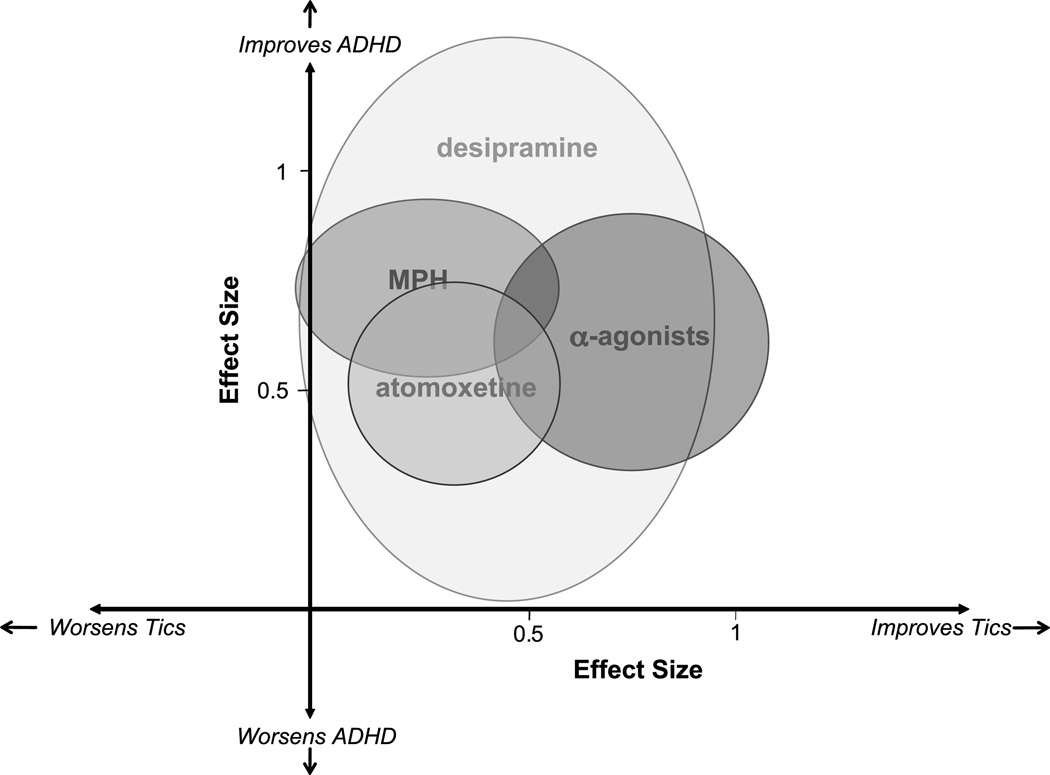
Results: Our meta-analysis included nine studies involving 477 subjects. We assessed the efficacy of six medications-dextroamphetamine, methylphenidate, alpha-2 agonists (clonidine and guanfacine), desipramine, atomoxetine, and deprenyl. Methylphenidate, alpha-2 agonists, desipramine, and atomoxetine demonstrated efficacy in improving ADHD symptoms in children with comorbid tics. Alpha-2 agonists and atomoxetine significantly improved comorbid tic symptoms. Although there was evidence that supratherapeutic doses of dextroamphetamine worsens tics, there was no evidence that methylphenidate worsened tic severity in the short term.
Conclusions: Methylphenidate seems to offer the greatest and most immediate improvement of ADHD symptoms and does not seem to worsen tic symptoms. Alpha-2 agonists offer the best combined improvement in both tic and ADHD symptoms. Atomoxetine and desipramine offer additional evidence-based treatments of ADHD in children with comorbid tics. Supratherapeutic doses of dextroamphetamine should be avoided.
Conflict of interest statement
Disclosure: Dr. Leckman has received funding from and provided consultation to the National Institutes of Health. The other authors report no conflicts of interest.
Figures
References
-
- Physicians’ Desk Reference. 61st ed. Montvale, NJ: Thomson PDR; 2007.
-
- Robertson MM, Eapen V. Pharmacologic controversy of CNS stimulants in Gilles de la Tourette’s syndrome. Clin Neuropharmacol. 1992;15:408–425. - PubMed
-
- Khalifa N, von Knorring AL. Psychopathology in a Swedish population of school children with tic disorders. J Am Acad Child Adolesc Psychiatry. 2006;45:1346–1353. - PubMed
-
- Spencer T, Biederman J, Harding M, et al. Disentangling the overlap between Tourette’s disorder and ADHD. J Child Psychol Psychiatry. 1998;39:1037–1044. - PubMed
-
- Sukhodolsky DG, Scahill L, Zhang H, et al. Disruptive behavior in children with Tourette’s syndrome: association with ADHD comorbidity, tic severity, and functional impairment. J Am Acad Child Adolesc Psychiatry. 2003;42:98–105. - PubMed
Publication types
MeSH terms
Substances
Grants and funding
LinkOut - more resources
Full Text Sources
Other Literature Sources
Medical
