Endogenous bradykinin contributes to increased plasminogen activator inhibitor 1 antigen following hemodialysis
- PMID: 19628666
- PMCID: PMC2754101
- DOI: 10.1681/ASN.2009050505
Endogenous bradykinin contributes to increased plasminogen activator inhibitor 1 antigen following hemodialysis
Abstract
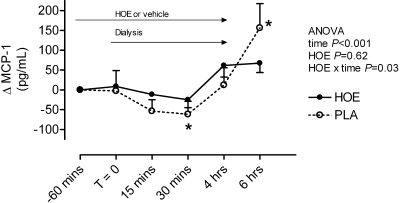
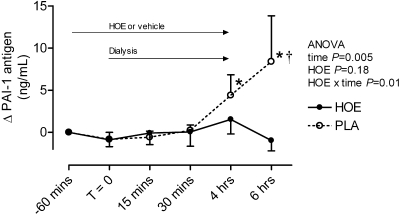
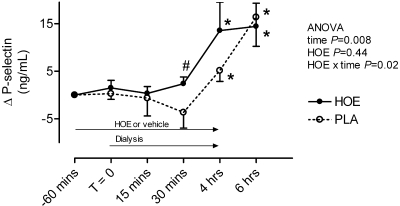
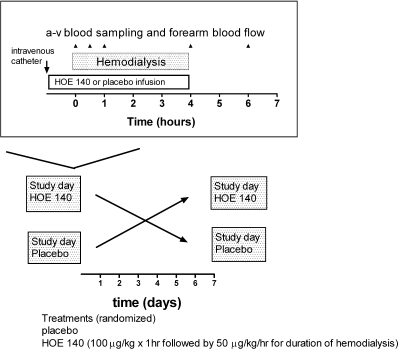
Oxidative stress and inflammation predict cardiovascular events in chronic hemodialysis patients. Hemodialysis activates the kallikrein-kinin system, increasing bradykinin. Bradykinin promotes inflammation but also stimulates endothelial release of tissue-plasminogen activator and inhibits platelet aggregation. Understanding the detrimental and beneficial effects of endogenous bradykinin during hemodialysis has implications for the treatment of cardiovascular disease in the hemodialysis population. To test the hypothesis that bradykinin contributes to the inflammatory and fibrinolytic responses to dialysis, we conducted a double-blind, randomized, placebo-controlled crossover study comparing the effect of the bradykinin B(2) receptor blocker HOE-140 with vehicle on markers of oxidative stress, inflammation, fibrinolysis, and coagulation in nine hemodialysis patients without coronary artery disease. Bradykinin receptor antagonism did not affect the mean arterial pressure or heart rate response to dialysis. Monocyte chemoattractant protein 1 (MCP-1) peaked postdialysis; HOE-140 blunted the increase in MCP-1 (5.9 +/- 5.9 versus 25.6 +/- 20.1 pg/ml, P = 0.01). HOE-140 also abolished the increase in plasminogen activator inhibitor 1 (PAI-1) antigen observed at the end of dialysis. In contrast, HOE-140 significantly accentuated the effect of dialysis on F(2)-isoprostanes and P-selectin. Taken together, these results suggest that endogenous bradykinin contributes to increases in MCP-1 and PAI-1 antigen after hemodialysis via its B(2) receptor. Factors that increase the production of bradykinin or decrease its degradation may enhance the inflammatory response to hemodialysis.
Figures
References
-
- Go AS, Chertow GM, Fan D, McCulloch CE, Hsu CY: Chronic kidney disease and the risks of death, cardiovascular events, and hospitalization. N Engl J Med 351: 1296–1305, 2004 - PubMed
-
- Stenvinkel P: Interactions between inflammation, oxidative stress, and endothelial dysfunction in end-stage renal disease. J Ren Nutr 13: 144–148, 2003 - PubMed
-
- Liu Y, Coresh J, Eustace JA, Longenecker JC, Jaar B, Fink NE, Tracy RP, Powe NR, Klag MJ: Association between cholesterol level and mortality in dialysis patients: Role of inflammation and malnutrition. JAMA 291: 451–459, 2004 - PubMed
-
- Himmelfarb J, Hakim RM: Oxidative stress in uremia. Curr Opin Nephrol Hypertens 12: 593–598, 2003 - PubMed
-
- Horl WH: Hemodialysis membranes: Interleukins, biocompatibility, and middle molecules. J Am Soc Nephrol 13[Suppl 1]: S62–S71, 2002 - PubMed
Publication types
MeSH terms
Substances
Grants and funding
LinkOut - more resources
Full Text Sources
Medical
Research Materials
Miscellaneous