


Interindividual variability in pharmacokinetics of generic nucleoside reverse transcriptase inhibitors in TB/HIV-coinfected Ghanaian patients: UGT2B7*1c is associated with faster zidovudine clearance and glucuronidation
- PMID: 19628728
- PMCID: PMC2749505
- DOI: 10.1177/0091270009338482
Interindividual variability in pharmacokinetics of generic nucleoside reverse transcriptase inhibitors in TB/HIV-coinfected Ghanaian patients: UGT2B7*1c is associated with faster zidovudine clearance and glucuronidation
Abstract
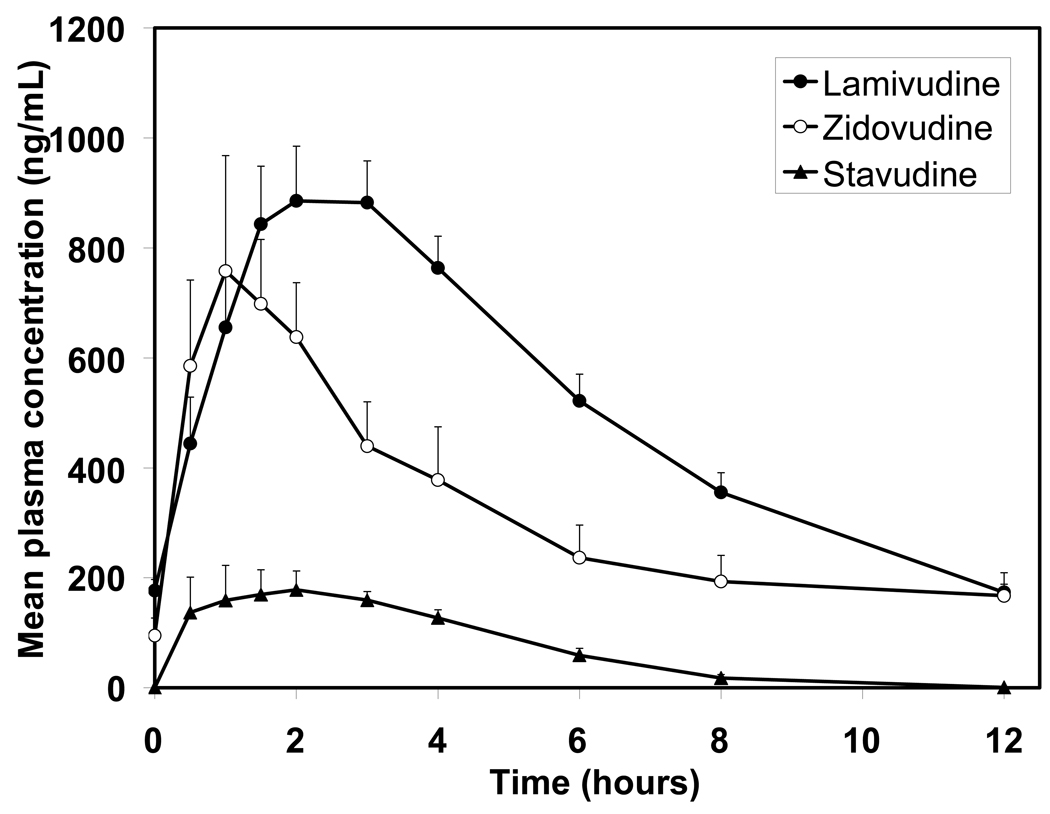
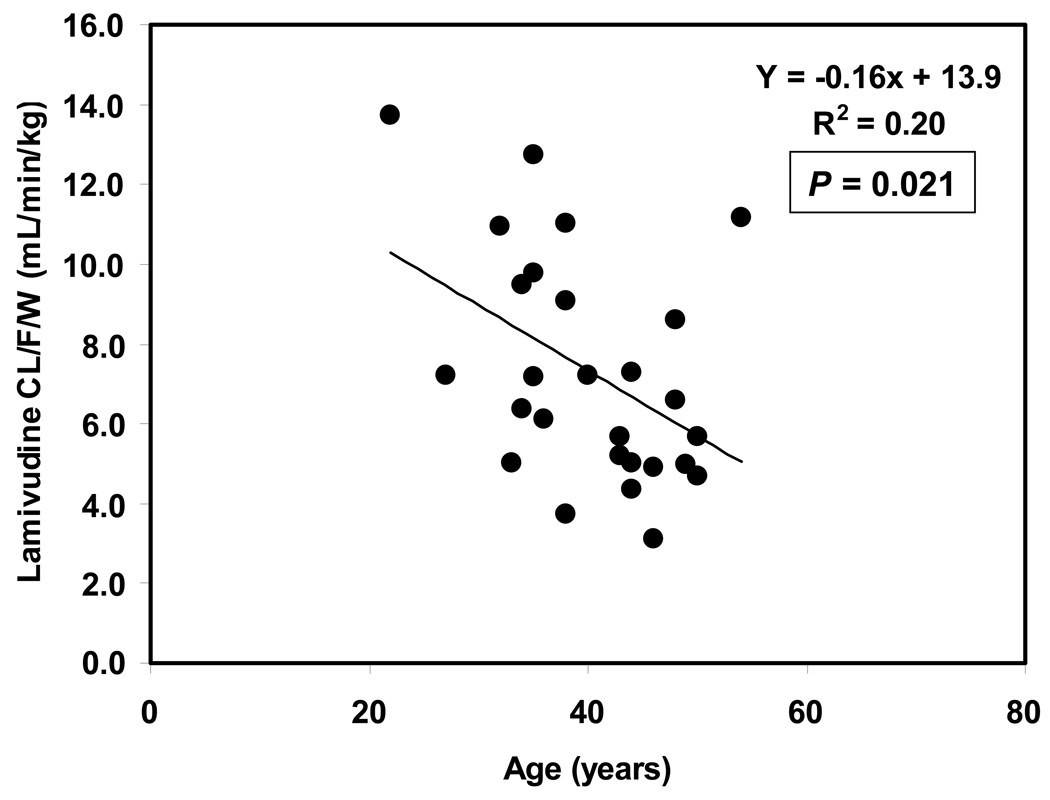
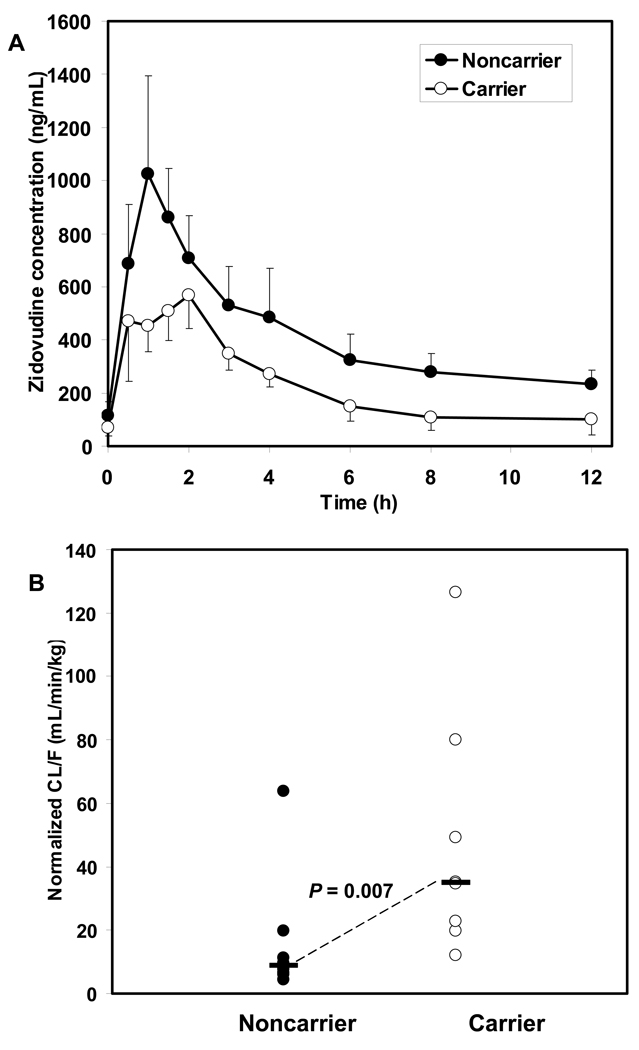
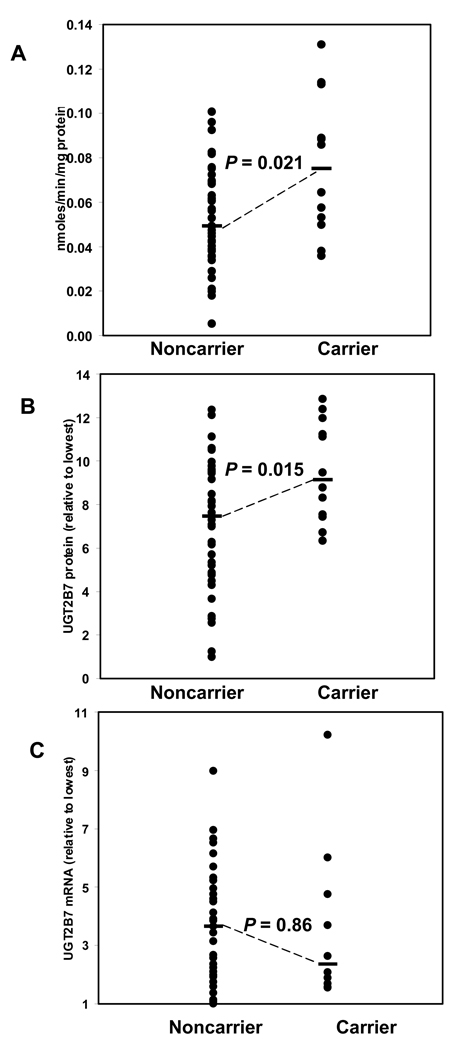
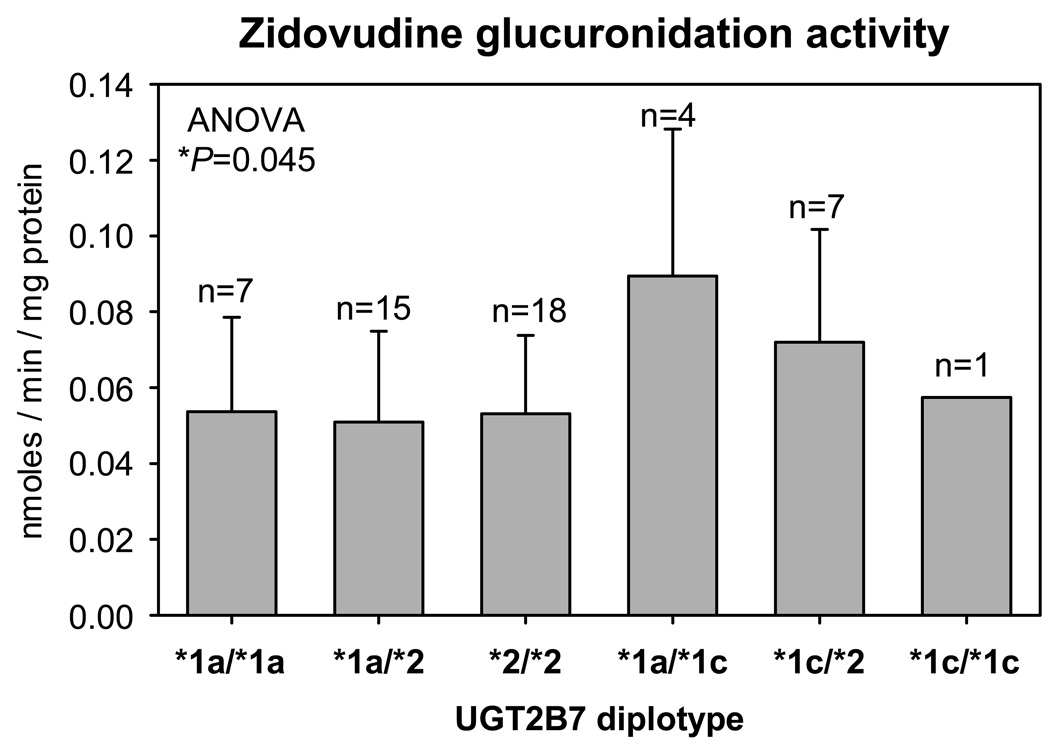
There are limited data on the pharmacokinetics of generic nucleoside reverse transcriptase inhibitors (NRTIs) in native African populations, in whom they are commonly used. The authors characterized the pharmacokinetics of lamivudine (n = 27), zidovudine (n = 16), and stavudine (n = 11) in human immunodeficiency virus (HIV)/tuberculosis (TB)-coinfected Ghanaians and evaluated associations between zidovudine metabolism and UDP-glucuronosyltransferase (UGT) 2B7 polymorphisms. Lamivudine, zidovudine, and stavudine apparent oral clearance (CL/F) values (mean +/- SD [% coefficient of variation [CV]) were 7.3 +/- 2.8 (39%), 31.9 +/- 33.6 (106%), and 16.4 +/- 5.8 (35%) mL/min/kg, respectively, whereas half-life values were 4.2 +/- 1.9 (46%), 8.1 +/- 7.9 (98%), and 1.5 +/- 1.0 (65%) hours, respectively. Zidovudine CL/F was 196% higher (P = .004) in UGT2B7*1c (c.735A>G) carriers versus noncarriers. This was confirmed using human liver bank samples (n = 52), which showed 48% higher (P = .020) zidovudine glucuronidation and 33% higher (P = .015) UGT2B7 protein in UGT2B7*1c carriers versus noncarriers. In conclusion, generic NRTI pharmacokinetics in HIV/TB-coinfected Ghanaians are similar to other populations, whereas the UGT2B7*1c polymorphism may explain in part relatively high interindividual variability in zidovudine clearance.
Conflict of interest statement
All authors report no conflict of interest.
Figures
References
-
- DHHS. US Department of Health and Human Services (DHHS) Panel on Antiretroviral Guideline for Adults and Adolescents. Guidelines for the use of antiretroviral agents in HIV-1-infected adults and adolescents. 2008. Nov [Accessed on January 10, 2009]. Available at http://www.aidsinfo.nih.gov/ContentFiles/AdultandAdolescentGL.pdf.
-
- Hammer SM, Eron JJ, Jr, Reiss P, et al. Antiretroviral treatment of adult HIV infection: 2008 recommendations of the International AIDS Society-USA panel. JAMA. 2008;300:555–570. - PubMed
-
- WHO. World Health Organization: Geneva, Switzerland; 2006. [Accessed on January 10, 2009]. Antiretroviral therapy for HIV infection in adults and adolescents in resource-limited settings: towards universal access. Available at http://www.who.int/hiv/pub/guidelines/artadultguidelines.pdf.
-
- Anderson PL, Lamba J, Aquilante CL, Schuetz E, Fletcher CV. Pharmacogenetic characteristics of indinavir, zidovudine, and lamivudine therapy in HIV-infected adults: a pilot study. J Acquir Immune Defic Syndr. 2006;42:441–449. - PubMed
Publication types
MeSH terms
Substances
Grants and funding
LinkOut - more resources
Full Text Sources
Molecular Biology Databases
