


Spinal ceramide and neuronal apoptosis in morphine antinociceptive tolerance
- PMID: 19631718
- PMCID: PMC2754041
- DOI: 10.1016/j.neulet.2009.07.051
Spinal ceramide and neuronal apoptosis in morphine antinociceptive tolerance
Abstract
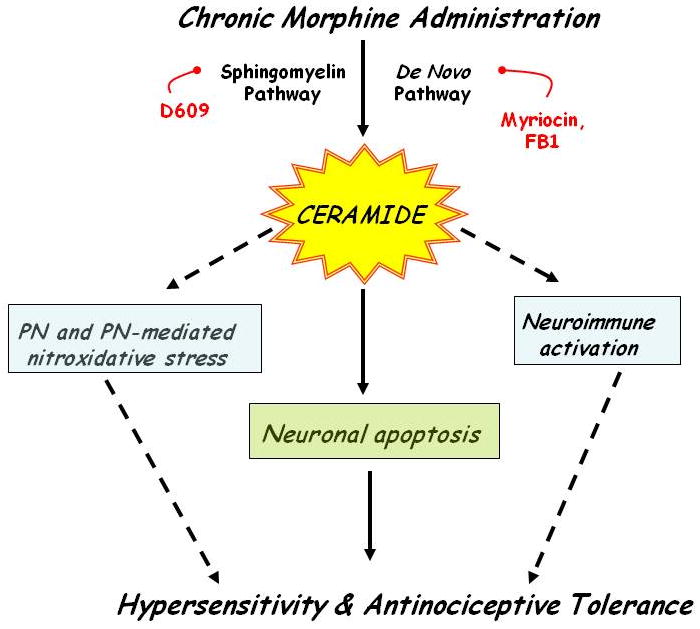
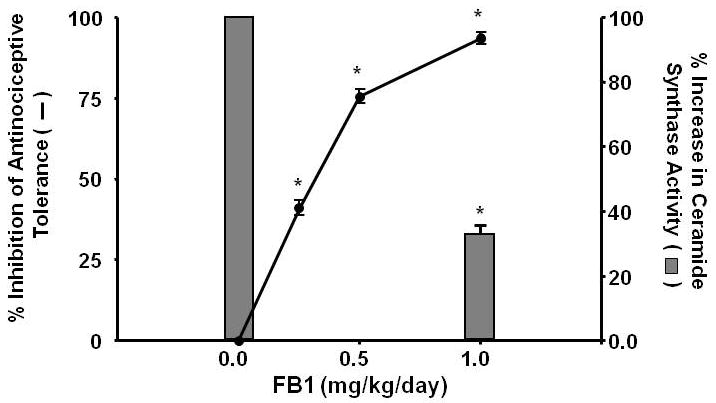
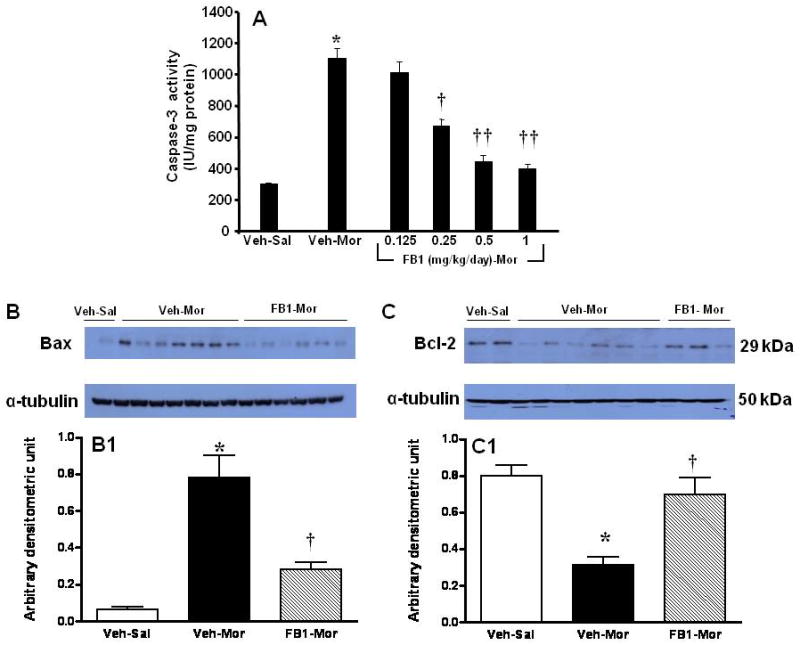
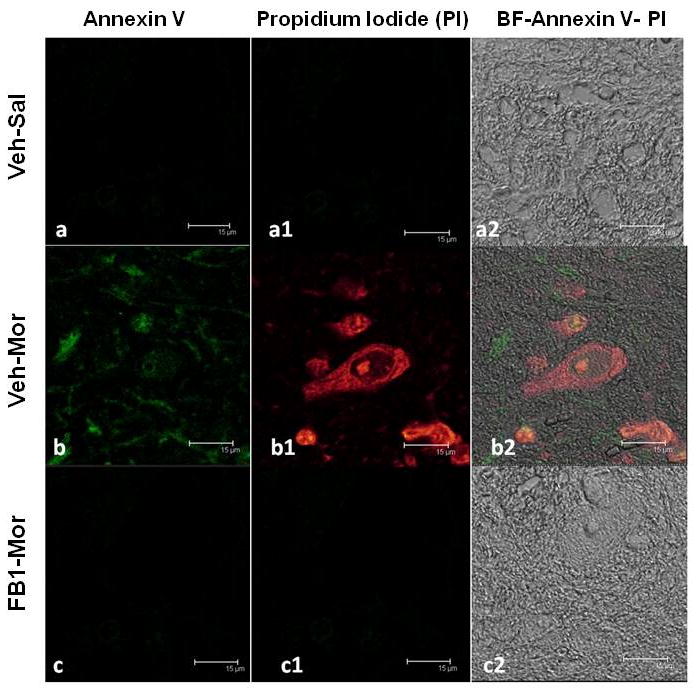
Opiates, like morphine, are the most effective analgesics for treating acute and chronic severe pain, but their use is limited by the development of analgesic tolerance and hypersensitivity to innocuous and noxious stimuli. Because opioids are a mainstay of pain management, restoring their efficacy has great clinical importance. We have recently demonstrated that spinal ceramide, a sphingolipid signaling molecule plays a central role in the development of morphine antinociceptive tolerance. We now report that ceramide upregulation in dorsal horn tissues in response to chronic morphine administration is associated with significant neuronal apoptosis. Inhibition of ceramide biosynthesis attenuated both the increase in neuronal apoptosis and the development of antinociceptive tolerance. These findings indicate that spinal ceramide upregulation is a key pro-apoptotic event that occurs upstream of the development of morphine antinociceptive tolerance and support the rationale for development of inhibitors of ceramide biosynthesis as adjuncts to opiates for the management of chronic pain.
Figures
References
-
- Arai T, Bhunia AK, Chatterjee S, Bulkley GB. Lactosylceramide stimulates human neutrophils to upregulate Mac-1, adhere to endothelium, and generate reactive oxygen metabolites in vitro. Circulation research. 1998;82:540–547. - PubMed
-
- Arena S, Pattarozzi A, Thellung S, Villa V, Corsaro A, Massa A, Diana F, Spoto G, Forcella S, Damonte G, Filocamo M, Benatti U, Schettini G, Florioa T. Nitric oxide production stimulated by the basic fibroblast growth factor requires the synthesis of ceramide. Ann N Y Acad Sci. 2002;973:94–104. - PubMed
-
- Batinic-Haberle I, Ndengele MM, Cuzzocrea S, Reboucas JS, Spasojevic I, Salvemini D. Lipophilicity is a critical parameter that dominates the efficacy of metalloporphyrins in blocking the development of morphine antinociceptive tolerance through peroxynitrite-mediated pathways. Free Radic Biol Med. 2009;46:212–219. - PMC - PubMed
-
- D'Amour F. A method for determining loss of pain sensation. J Pharmacol xp Ther. 1941;72:74–79.
-
- Dawkins JL, Hulme DJ, Brahmbhatt SB, Auer-Grumbach M, Nicholson GA. Mutations in SPTLC1, encoding serine palmitoyltransferase, long chain base subunit-1, cause hereditary sensory neuropathy type I. Nat Genet. 2001;27:309–312. - PubMed
Publication types
MeSH terms
Substances
Grants and funding
LinkOut - more resources
Full Text Sources
Other Literature Sources
