


Bridging IRES elements in mRNAs to the eukaryotic translation apparatus
- PMID: 19631772
- PMCID: PMC2783899
- DOI: 10.1016/j.bbagrm.2009.07.004
Bridging IRES elements in mRNAs to the eukaryotic translation apparatus
Abstract
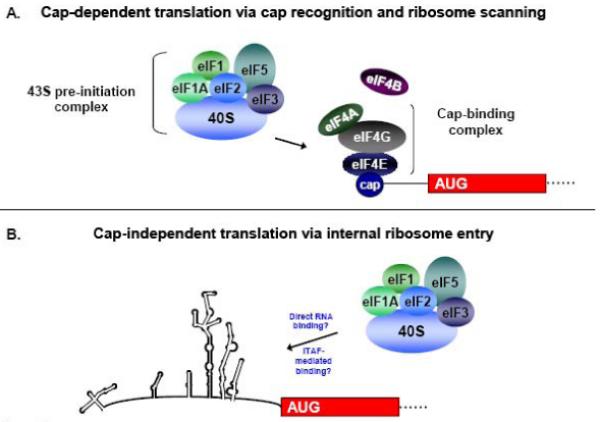
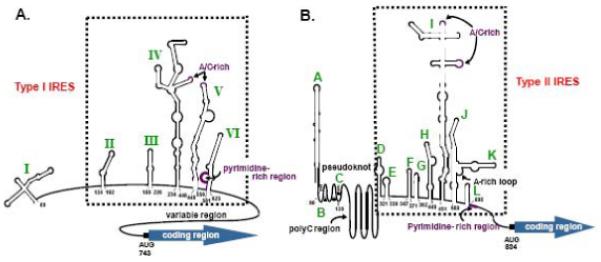
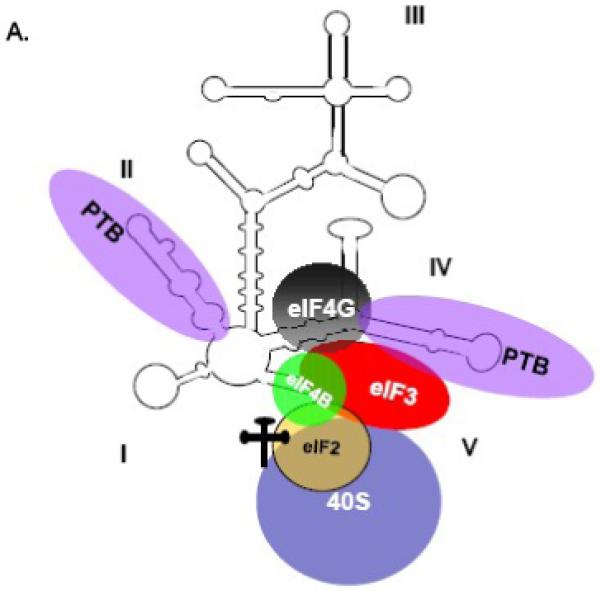
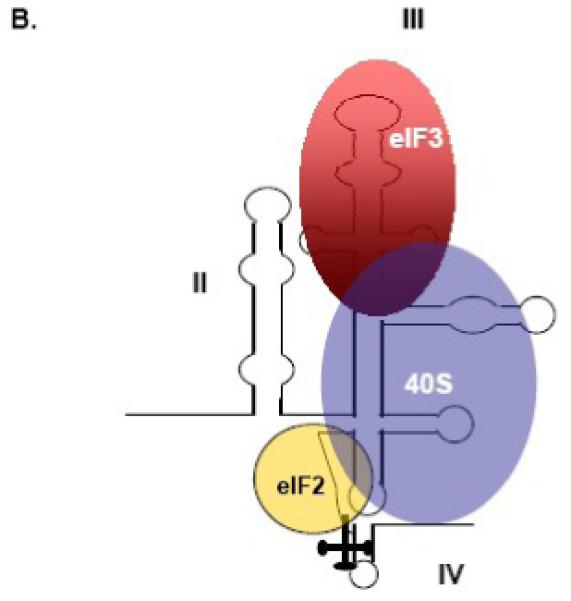
IRES elements are highly structured RNA sequences that function to recruit ribosomes for the initiation of translation. In contrast to the canonical cap-binding, ribosome-scanning model, the mechanism of IRES-mediated translation initiation is not well understood. IRES elements, first discovered in viral RNA genomes, were subsequently found in a subset of cellular RNAs as well. Interestingly, these cellular IRES-containing mRNAs appear to play important roles during conditions of cellular stress, development, and disease (e.g., cancer). It has been shown for viral IRESes that some require specific IRES trans-acting factors (ITAFs), while others require few if any additional proteins and can bind ribosomes directly. Current studies are aimed at elucidating the mechanism of IRES-mediated translation initiation and features that may be common or differ greatly among cellular and viral IRESes. This review will explore IRES elements as important RNA structures that function in both cellular and viral RNA translation and the significance of these structures in providing an alternative mechanism of eukaryotic translation initiation.
Figures
References
-
- Jackson RJ. Alternative mechanisms of initiating translation of mammalian mRNAs. Biochem. Soc. Trans. 2005;33:1231. - PubMed
Publication types
MeSH terms
Substances
Grants and funding
LinkOut - more resources
Full Text Sources
Other Literature Sources
Miscellaneous
