Salicylate intolerance: pathophysiology, clinical spectrum, diagnosis and treatment
- PMID: 19633779
- PMCID: PMC2696737
- DOI: 10.3238/arztebl.2008.0137
Salicylate intolerance: pathophysiology, clinical spectrum, diagnosis and treatment
Abstract
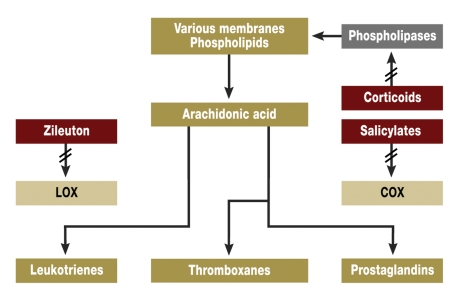
Introduction: Acetylic salicylic acid (aspirin) intolerance relates to altered generation and metabolism of arachidonic acid and eicosanoids, and prostaglandins and leukotrienes ingestion of salicylates or COX-inhibitors.
Methods: Selective review of literature in PubMed and the Cochrane Library.
Results: Rhinitis, asthma and nasal polyposis are typical presentations, but urticaria and gut inflammation are also described. The mechanism involves a specific reaction to COX inhibitor substances in analgesics, cosmetics or plants resulting in an abnormal pattern of eicosanoids (prostaglandins and leucotrienes). The diagnosis is based on symptoms occurring immediately following ingestion of these substances or on refractory polyp formation. Blood tests may be helpful in unclear cases. Avoidance of triggering agents is helpful. Corticosteroids are the mainstay of pharmacological treatment. Biological, desensitization treatment involving the administration of increasing amounts of acetylic salicylic acid may also be used.
Discussion: Asthma, rhinitis and nasal polyps, as well as chronic gastrointestinal irritation and urticaria following acetylic salicylic acid ingestion may suggest intolerance.
Keywords: allergies; asthma; desensitization; nasal polyps; salicylate intolerance.
Figures
References
-
- Willis AL, Smith DL. Metabolism of arachidonic acid. In: Cunningham FM, editor. The handbook of immunopharmacology and lipid mediators. London: Academic Press; 1994. pp. 1–32.
-
- Szczeklik A, Stevenson DD. Aspirin-induced asthma: advances in pathogenesis, diagnosis and management. J Allergy Clin Immunol. 2003;111:913–920. - PubMed
-
- Farooque S, Lee T. Mechanisms of aspirin-sensitive respiratory disease - as two component Model. Int Arch Allergy Immunol. 2007;142:59–63. - PubMed
-
- Schäfer D. Testing and typing of eicosanoid-patterns. J Physiol Pharmacol. 2006;57:47–64. - PubMed
-
- Kaldenbach T, Schäfer D, Gosepath J, Bittinger F, Klimek L, Mann WJ. Die Bedeutung eosinophiler Granulozyten in Beziehung zu Allergie und Aspirin-Intoleranz bei Patienten mit Sinusitis polyposa. Laryngo-Rhino-Otol. 1999;17:429–434. - PubMed
LinkOut - more resources
Full Text Sources