


Human glucocorticoid receptor isoform beta: recent understanding of its potential implications in physiology and pathophysiology
- PMID: 19633971
- PMCID: PMC2796272
- DOI: 10.1007/s00018-009-0098-z
Human glucocorticoid receptor isoform beta: recent understanding of its potential implications in physiology and pathophysiology
Abstract
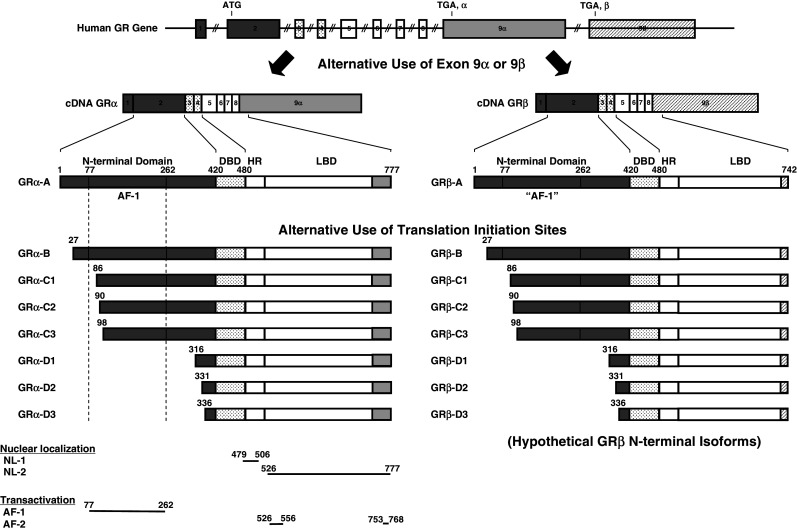
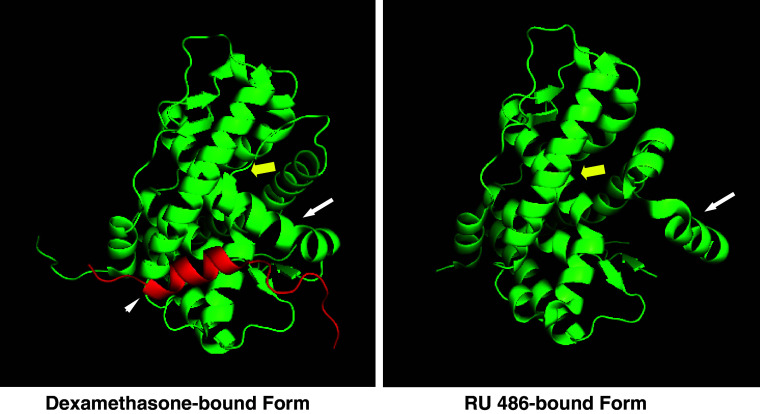
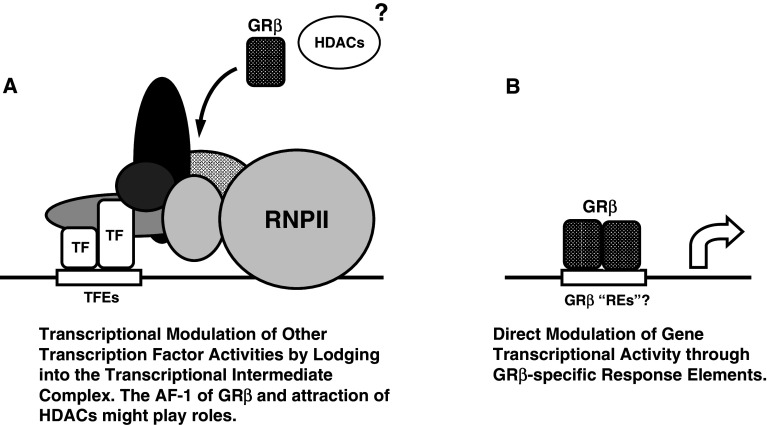
The human glucocorticoid receptor (GR) gene expresses two splicing isoforms alpha and beta through alternative use of specific exons 9alpha and 9beta. In contrast to the classic receptor GRalpha, which mediates most of the known actions of glucocorticoids, the functions of GRbeta have been largely unexplored. Owing to newly developed methods, for example microarrays and the jellyfish fluorescence proteins, we and others have recently revealed novel functions of GRbeta. Indeed, this enigmatic GR isoform influences positively and negatively the transcriptional activity of large subsets of genes, most of which are not responsive to glucocorticoids, in addition to its well-known dominant negative effect against GRalpha-mediated transcriptional activity. A recent report suggested that the "ligand-binding domain" of GRbeta is active, forming a functional ligand-binding pocket associated with the synthetic compound RU 486. In this review, we discuss the functions of GRbeta, its mechanisms of action, and its pathologic implications.
Figures
References
-
- Kino T, Chrousos GP. Glucocorticoid effect on gene expression. In: Steckler T, Kalin NH, Reul JMHM, editors. Handbook on stress and the brain. Amsterdam: Elsevier; 2005. pp. 295–312.
-
- Chrousos GP. Glucocorticoid therapy. In: Felig P, Frohman LA, editors. Endocrinology & metabolism. New York: McGraw–Hill; 2001. pp. 609–632.
-
- Chrousos GP, Kino T (2005) Intracellular glucocorticoid signaling: a formerly simple system turns stochastic. Sci STKE 2005, pe48 - PubMed
Publication types
MeSH terms
Substances
Grants and funding
LinkOut - more resources
Full Text Sources
