


Cognitive ontologies for neuropsychiatric phenomics research
- PMID: 19634038
- PMCID: PMC2752634
- DOI: 10.1080/13546800902787180
Cognitive ontologies for neuropsychiatric phenomics research
Abstract
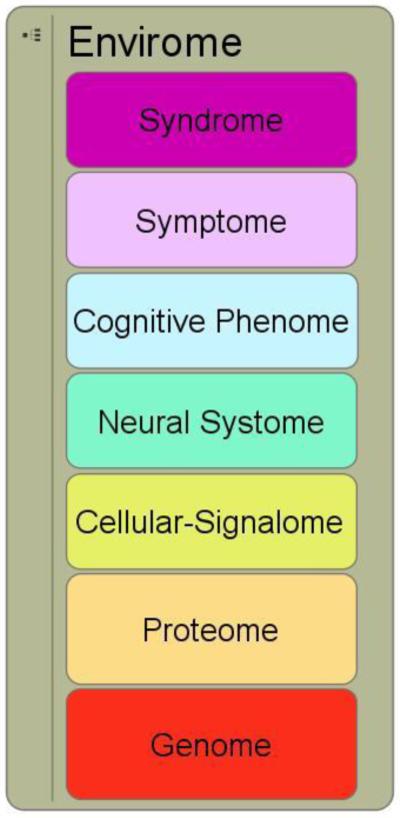
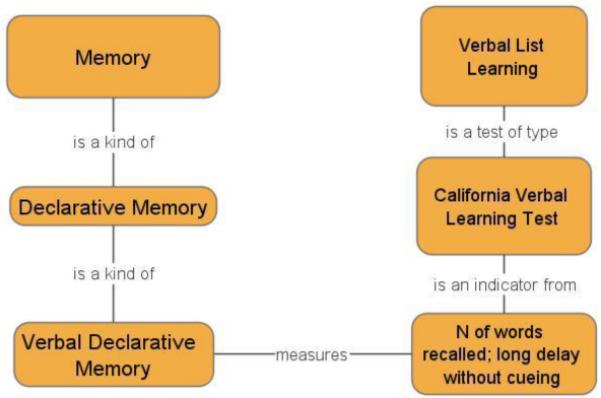
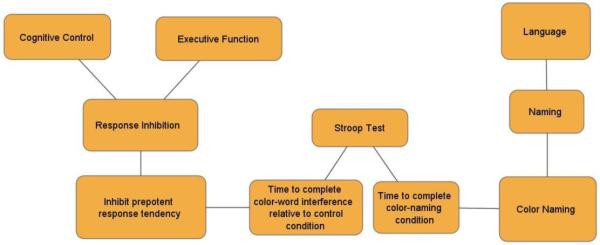
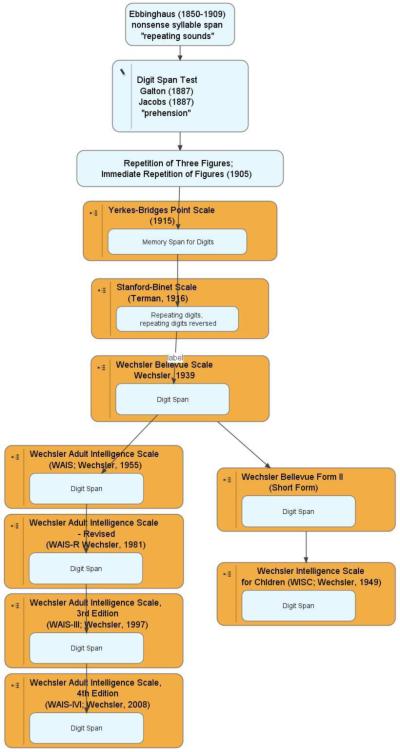
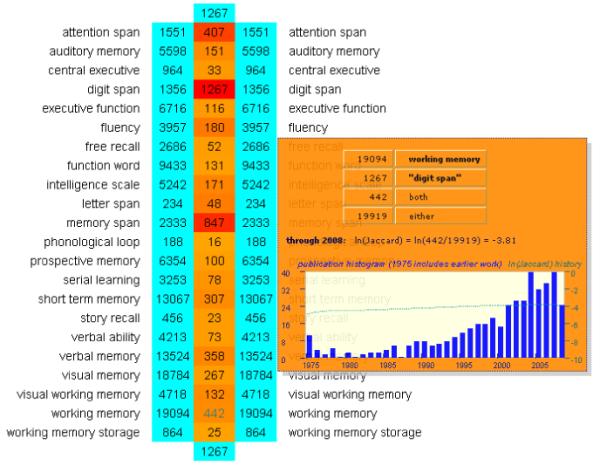
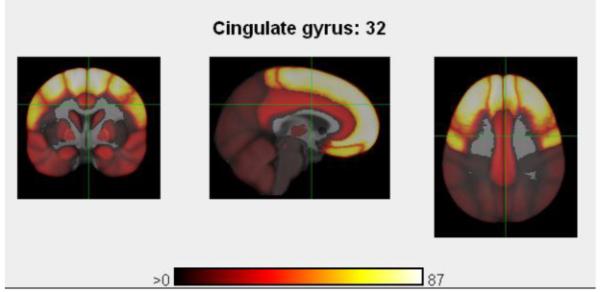
Now that genome-wide association studies (GWAS) are dominating the landscape of genetic research on neuropsychiatric syndromes, investigators are being faced with complexity on an unprecedented scale. It is now clear that phenomics, the systematic study of phenotypes on a genome-wide scale, comprises a rate-limiting step on the road to genomic discovery. To gain traction on the myriad paths leading from genomic variation to syndromal manifestations, informatics strategies must be deployed to navigate increasingly broad domains of knowledge and help researchers find the most important signals. The success of the Gene Ontology project suggests the potential benefits of developing schemata to represent higher levels of phenotypic expression. Challenges in cognitive ontology development include the lack of formal definitions of key concepts and relations among entities, the inconsistent use of terminology across investigators and time, and the fact that relations among cognitive concepts are not likely to be well represented by simple hierarchical "tree" structures. Because cognitive concept labels are labile, there is a need to represent empirical findings at the cognitive test indicator level. This level of description has greater consistency, and benefits from operational definitions of its concepts and relations to quantitative data. Considering cognitive test indicators as the foundation of cognitive ontologies carries several implications, including the likely utility of cognitive task taxonomies. The concept of cognitive "test speciation" is introduced to mark the evolution of paradigms sufficiently unique that their results cannot be "mated" productively with others in meta-analysis. Several projects have been initiated to develop cognitive ontologies at the Consortium for Neuropsychiatric Phenomics (www.phenomics.ucla.edu), in the hope that these ultimately will enable more effective collaboration, and facilitate connections of information about cognitive phenotypes to other levels of biological knowledge. Several free web applications are available already to support examination and visualisation of cognitive concepts in the literature (PubGraph, PubAtlas, PubBrain) and to aid collaborative development of cognitive ontologies (Phenowiki and the Cognitive Atlas). It is hoped that these tools will help formalise inference about cognitive concepts in behavioural and neuroimaging studies, and facilitate discovery of the genetic bases of both healthy cognition and cognitive disorders.
Figures
References
-
- American Psychiatric A . Diagnostic and Statistical Manual of Mental Disorders (DSM-IV) American Psychiatric Association; Washington, DC: 1994.
-
- Bada M, Stevens R, Goble C, Gil Y, Ashburner M, Blake JA, Cherry JM, Harris M, Lewis S. (A short study on the success of the Gene Ontology. J Web Semantics. 2004;1:235–240.
-
- Baddeley AD, Hitch G. Working memory. In: Bower GH, editor. The psychology of learning and motivation: Advances in research and theory. Vol. 8. Academic Press; New York: 1974. pp. 47–89.
-
- Bilder RM, Volavka J, Czobor P, Malhotra AK, Kennedy JL, Ni X, Goldman RS, Hoptman MJ, Sheitman B, Lindenmayer JP, Citrome L, McEvoy JP, Kunz M, Chakos M, Cooper TB, Lieberman JA. Neurocognitive correlates of the COMT Val(158)Met polymorphism in chronic schizophrenia. Biological psychiatry. 2002;52:701–707. - PubMed
Publication types
MeSH terms
Grants and funding
LinkOut - more resources
Full Text Sources
Medical
