Impaired timing precision produced by striatal D2 receptor overexpression is mediated by cognitive and motivational deficits
- PMID: 19634929
- PMCID: PMC2791672
- DOI: 10.1037/a0016503
Impaired timing precision produced by striatal D2 receptor overexpression is mediated by cognitive and motivational deficits
Abstract
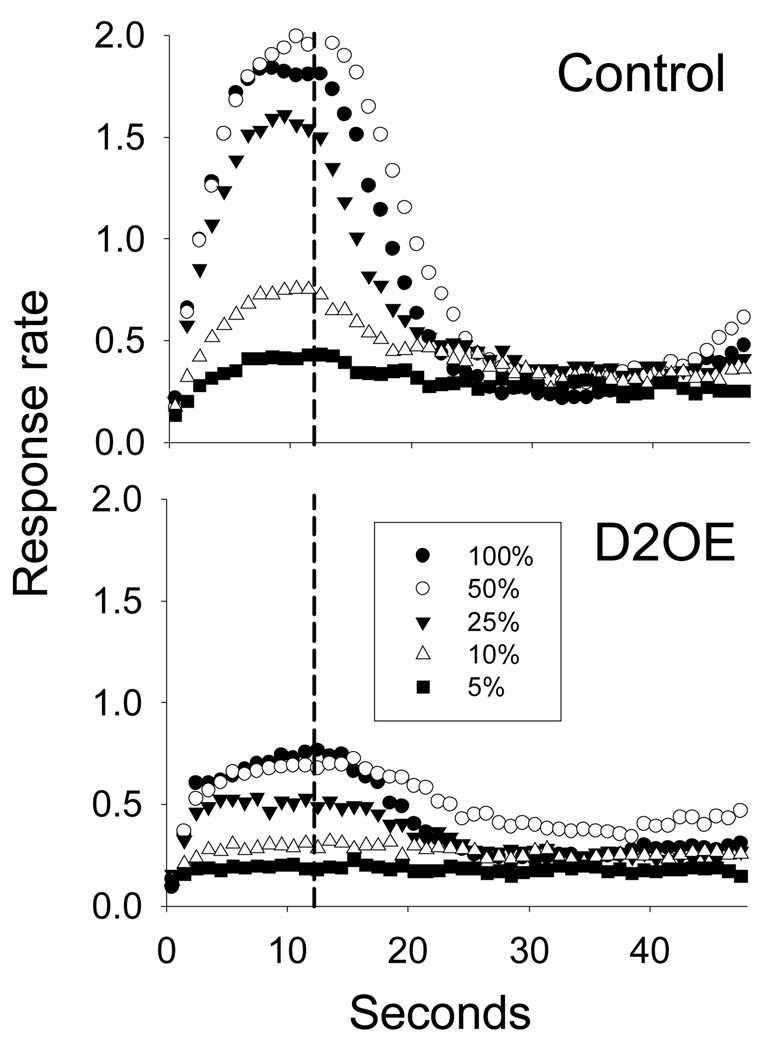
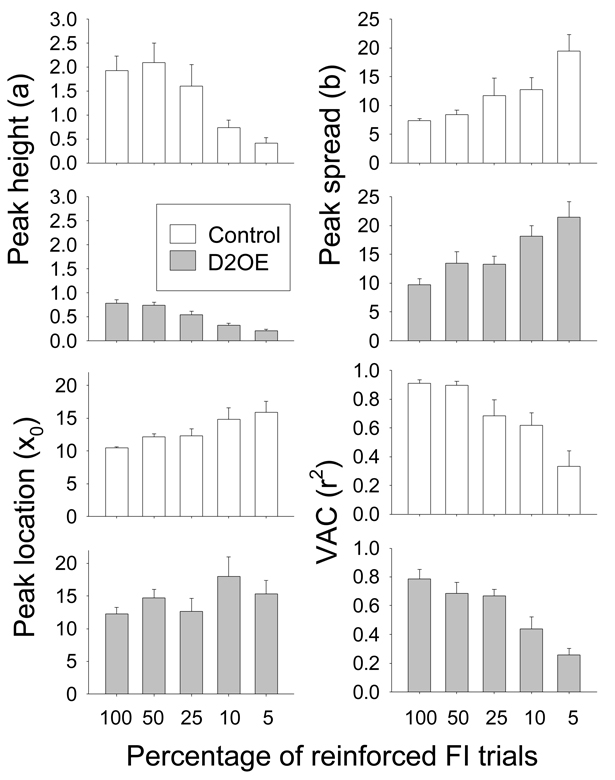
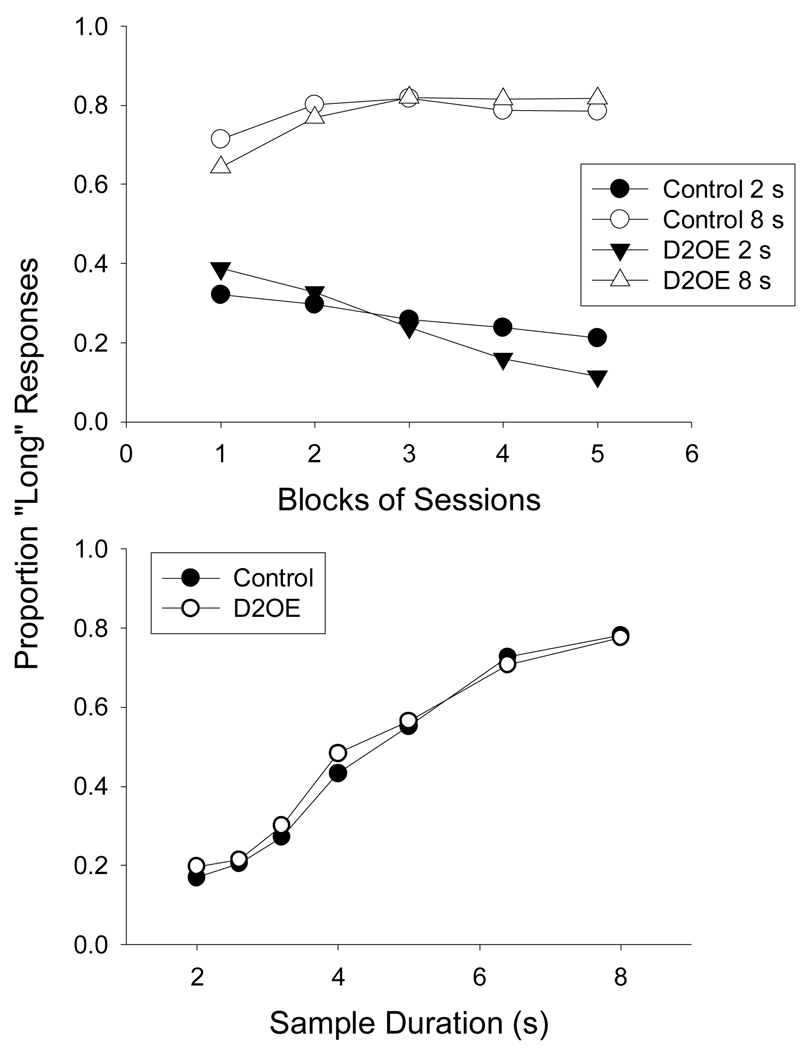
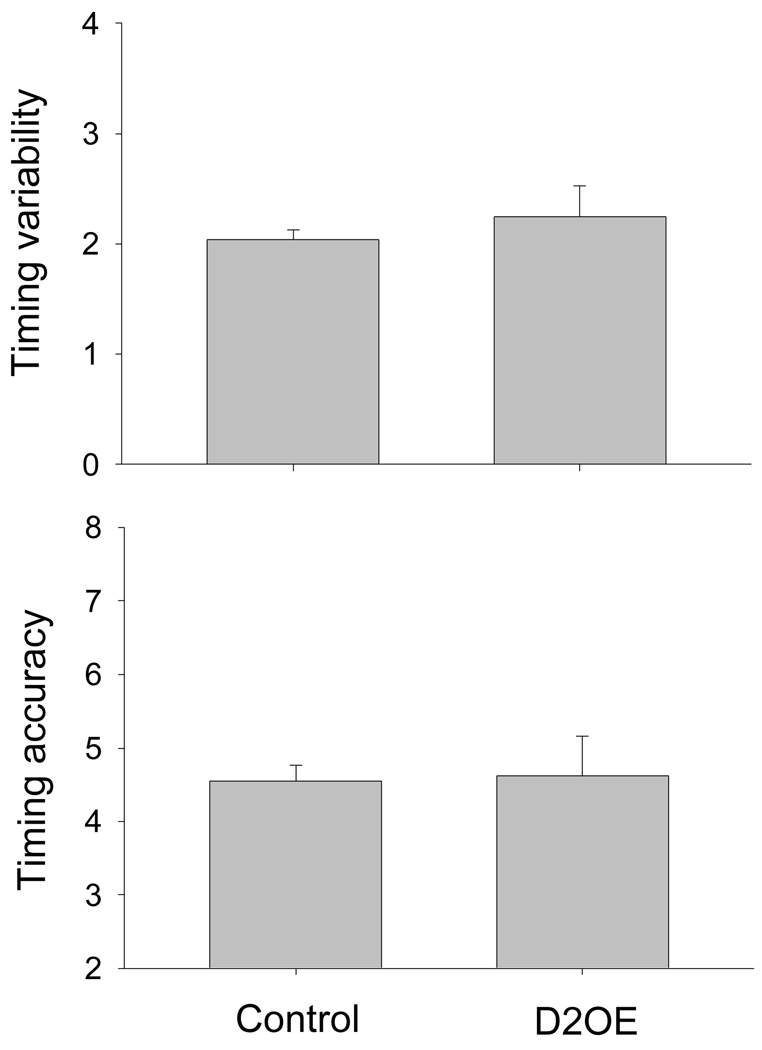
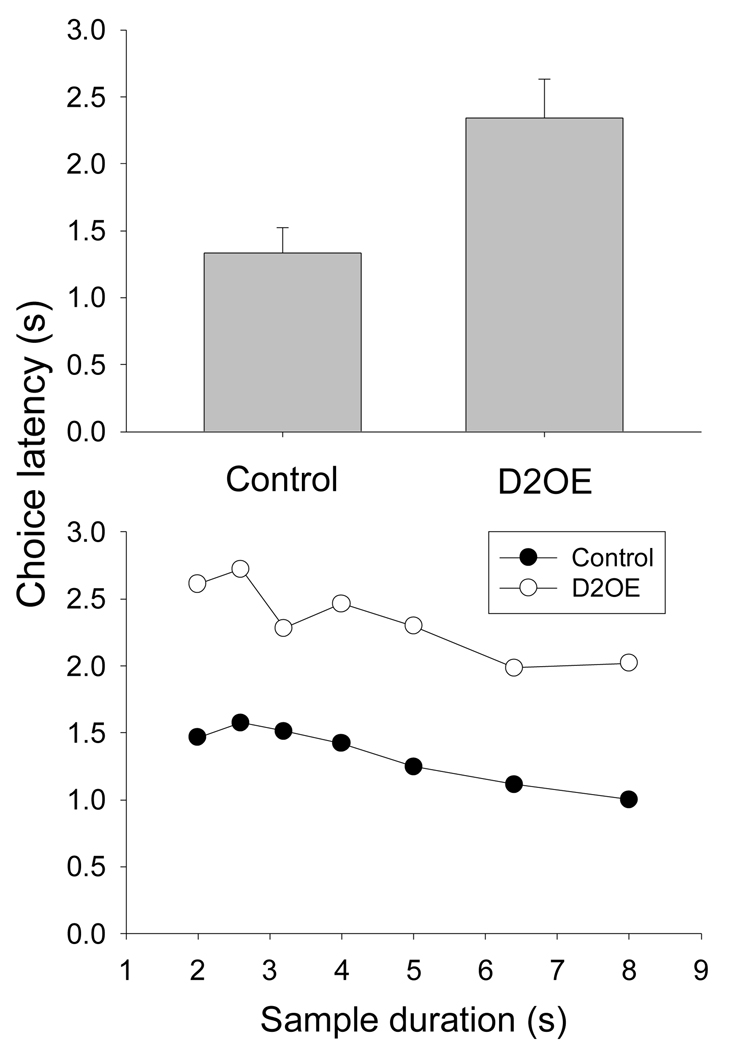
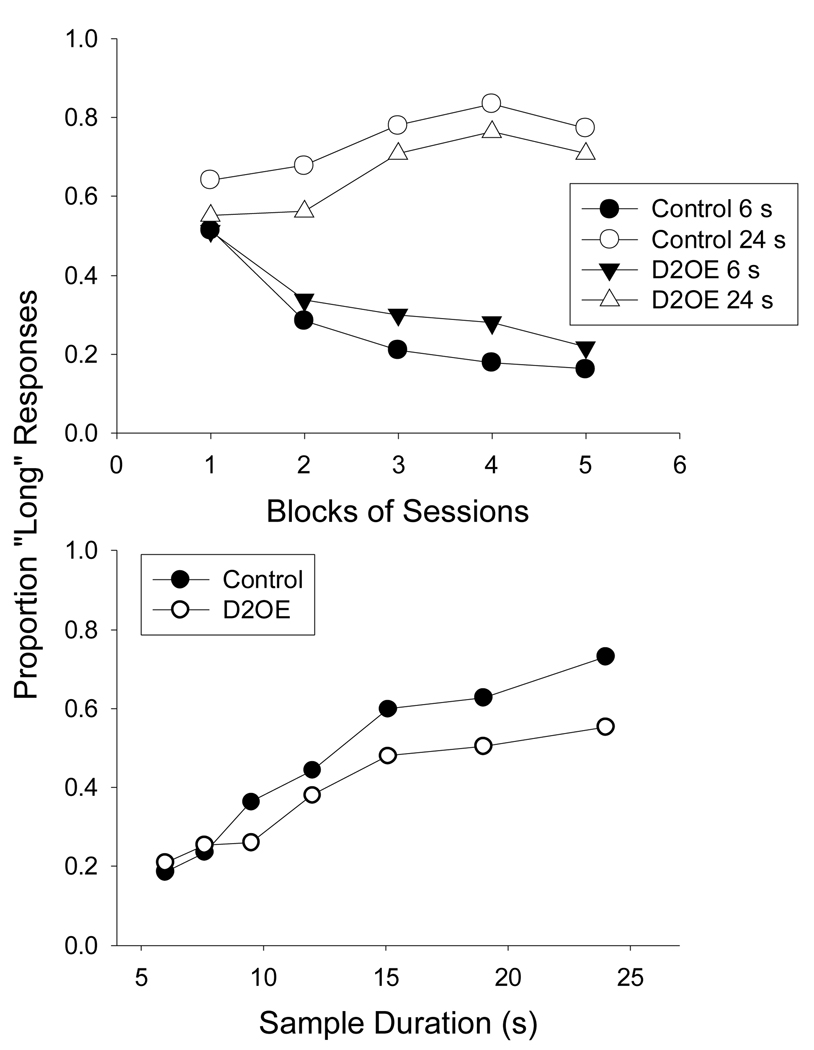
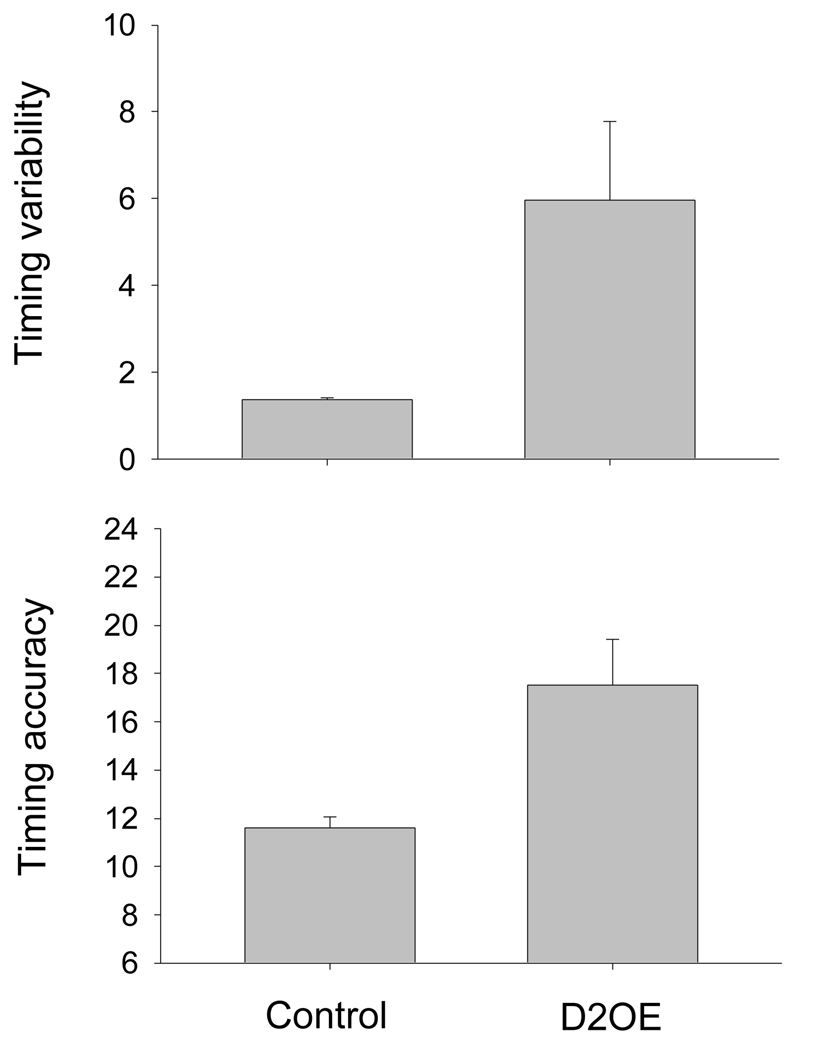
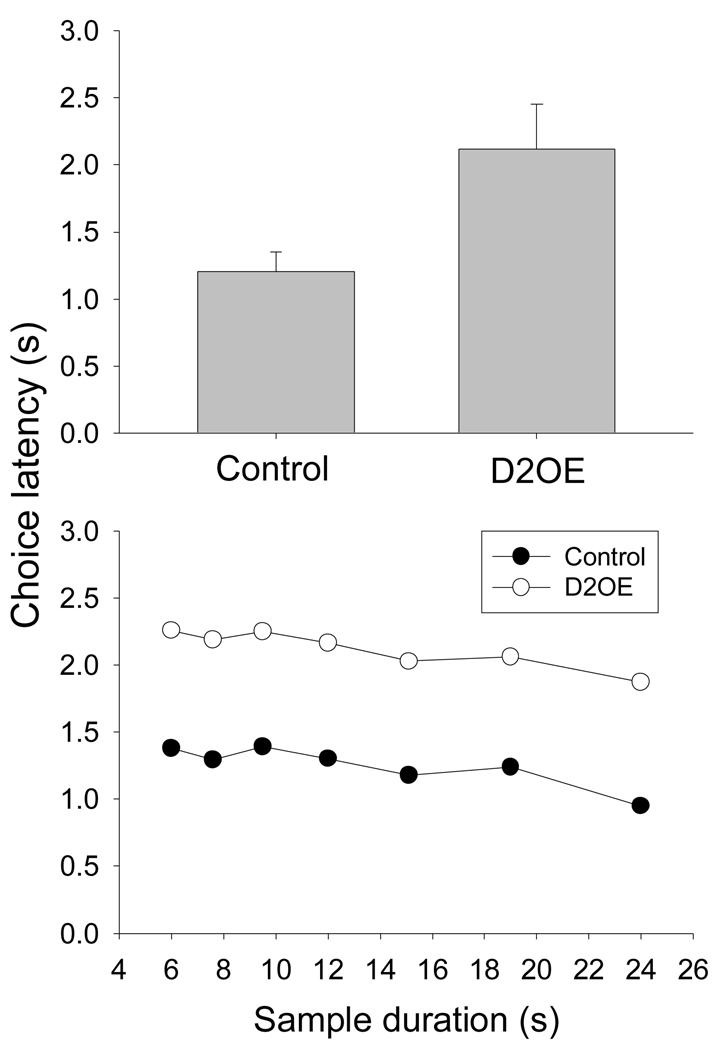
Increased striatal dopamine D2 receptor activity is thought to contribute to the pathophysiology of schizophrenia. To model this condition in mice, Kellendonk et al. (2006) generated transgenic mice that selectively overexpress the D2 receptor in striatum (D2OE). Drew et al. (2007) reported that D2OE mice display deficits in interval timing and motivation. The present study further explored the impaired timing in D2OE mice. Experiment 1 assessed the role of motivation in producing timing deficits in the peak procedure and found that performance in D2OE mice was improved by increasing motivation. In addition, performance was impaired in control mice when motivation was decreased. In Experiment 2, we found that D2OE mice have no timing impairment when tested using the bisection task, a procedure in which the measure of timing performance is less influenced by motivation to respond. In Experiment 3, we also used the bisection task and found selective impairment in timing of long durations in D2OE mice. These results suggest that striatal D2 overexpression impairs timing by decreasing motivation and through its impact on working memory and/or sustained attention.
2009 APA, all rights reserved
Figures
References
-
- Abi-Dargham A, Gil R, Krystal J, Baldwin RM, Seibyl JP, Bowers M, van Dyck CH, Charney DS, Innis RB, Laruelle M. Increased striatal dopamine transmission in schizophrenia: Confirmation in a second cohort. American Journal of Psychiatry. 1998;155:761–767. - PubMed
-
- Berridge KC. The debate over dopamine’s role in reward: The case for incentive salience. Psychopharmacology. 2007;191:391–431. - PubMed
-
- Buhusi CV, Meck WH. Timing for the absence of a stimulus: The gap paradigm reversed. Journal of Experimental Psychology: Animal Behavior Processes. 2000;26:305–322. - PubMed
MeSH terms
Substances
Grants and funding
LinkOut - more resources
Full Text Sources
Other Literature Sources