General and persistent effects of high-intensity sweeteners on body weight gain and caloric compensation in rats
- PMID: 19634935
- PMCID: PMC2785491
- DOI: 10.1037/a0016139
General and persistent effects of high-intensity sweeteners on body weight gain and caloric compensation in rats
Abstract
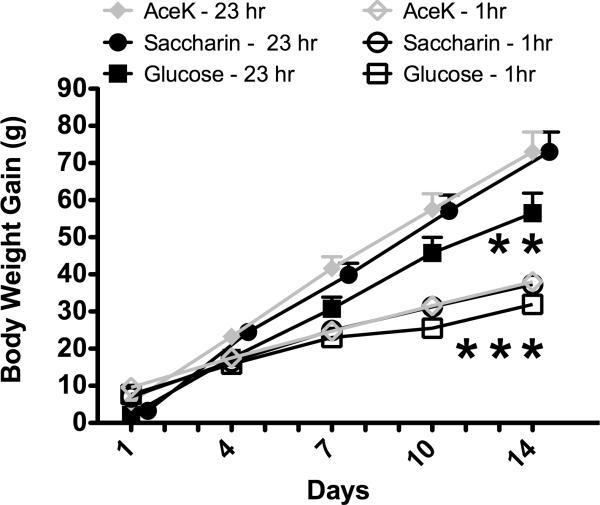
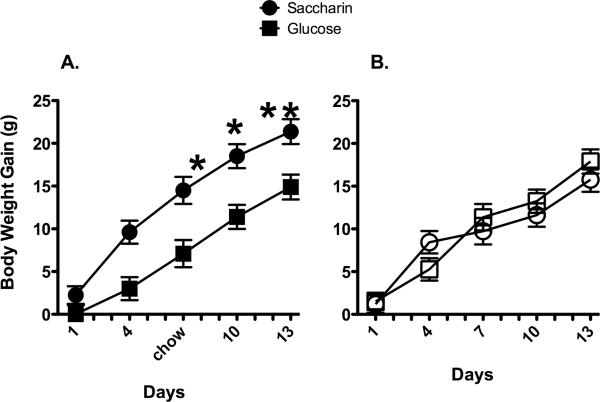
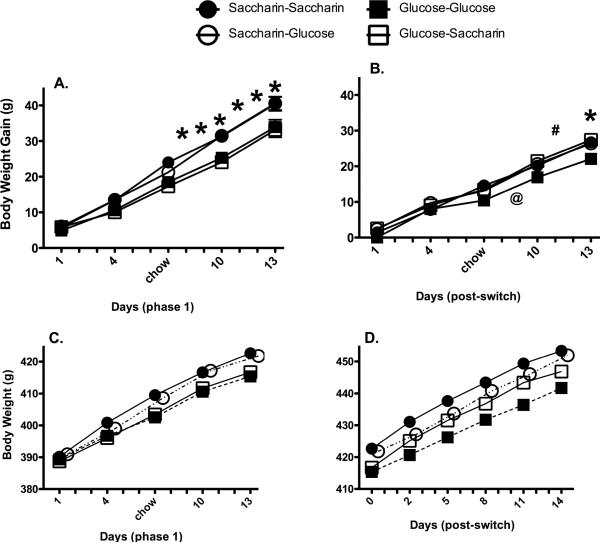
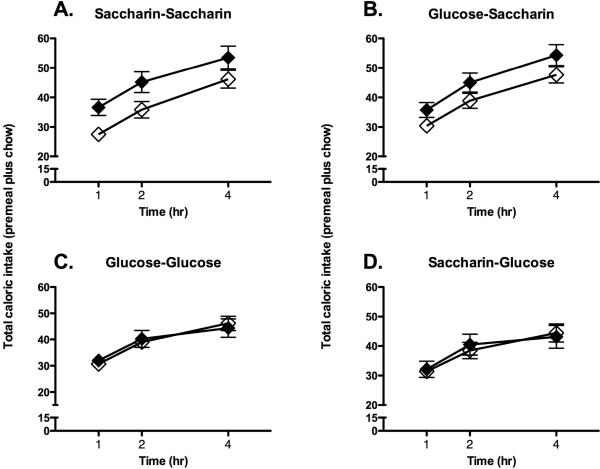
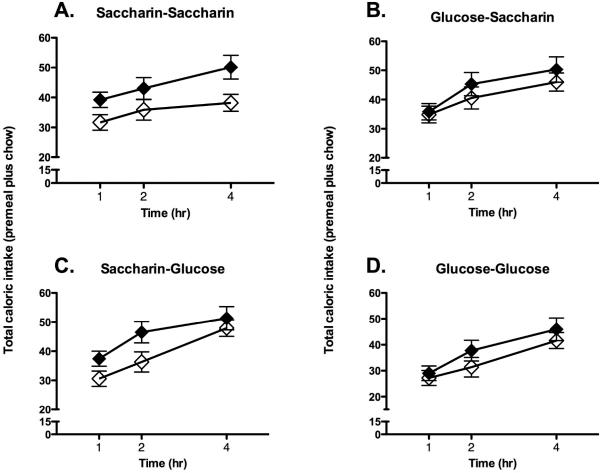
In an earlier work (S. E. Swithers & T. L. Davidson, 2008), rats provided with a fixed amount of a yogurt diet mixed with saccharin gained more weight and showed impaired caloric compensation relative to rats given the same amount of yogurt mixed with glucose. The present 4 experiments examined the generality of these findings and demonstrated that increased body weight gain was also demonstrated when animals consumed a yogurt diet sweetened with an alternative high-intensity sweetener (acesulfame potassium; AceK) as well as in animals given a saccharin-sweetened base diet (refried beans) that was calorically similar but nutritionally distinct from low-fat yogurt. These studies also extended earlier findings by showing that body weight differences persist after saccharin-sweetened diets are discontinued and following a shift to a diet sweetened with glucose. In addition, rats first exposed to a diet sweetened with glucose still gain additional weight when subsequently exposed to a saccharin-sweetened diet. The results of these experiments add support to the hypothesis that exposure to weak or nonpredictive relationships between sweet tastes and caloric consequences may lead to positive energy balance.
2009 APA, all rights reserved
Figures
References
-
- Abou-Donia MB, El-Masry EM, Abdel-Rahman AA, McLendon RE, Schiffman SS. Splenda alters gut microflora and increases intestinal p-glycoprotein and cytochrome p-450 in male rats. J Toxicol Environ Health A. 2008;71(21):1415–1429. - PubMed
-
- Appleton KM, Blundell JE. Habitual high and low consumers of artificially-sweetened beverages: effects of sweet taste and energy on short-term appetite. Physiol Behav. 2007;92(3):479–486. - PubMed
-
- Blaak EE, Saris WH. Postprandial thermogenesis and substrate utilization after ingestion of different dietary carbohydrates. Metabolism. 1996;45(10):1235–1242. - PubMed
-
- Davidson TL, Swithers SE. Food viscosity influences caloric intake compensation and body weight in rats. Obes Res. 2005;13(3):537–544. - PubMed
-
- de Araujo IE, Oliveira-Maia AJ, Sotnikova TD, Gainetdinov RR, Caron MG, Nicolelis MA, Simon SA. Food reward in the absence of taste receptor signaling. Neuron. 2008;57(6):930–941. - PubMed