


Nonalcoholic steatohepatitis in children: a multicenter clinicopathological study
- PMID: 19637190
- PMCID: PMC2775705
- DOI: 10.1002/hep.23133
Nonalcoholic steatohepatitis in children: a multicenter clinicopathological study
Abstract
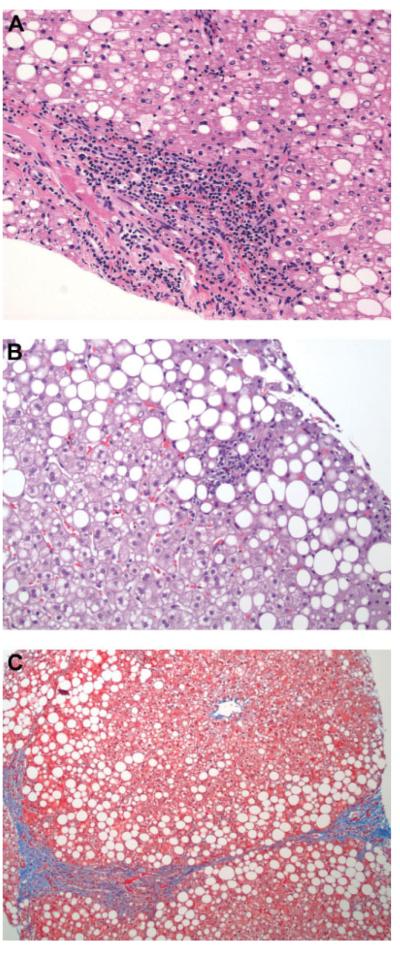
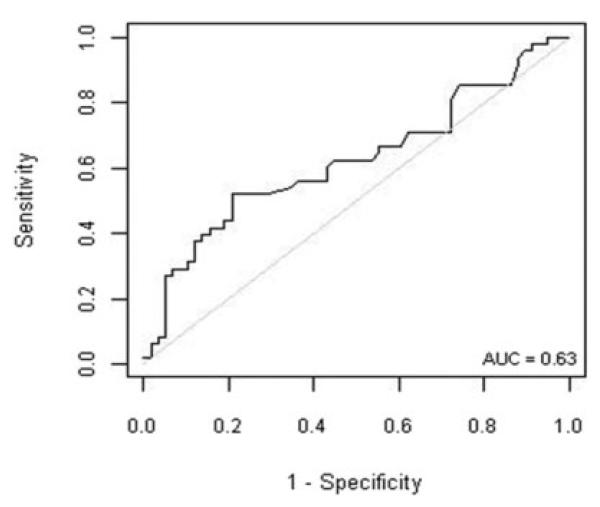
Nonalcoholic fatty liver disease (NAFLD) may have distinct histological features in children and adults, but to date limited data are available on the spectrum and significance of histological lesions in pediatric patients. We conducted a multicenter study of children with well-characterized, biopsy-proven NAFLD to (1) assess the presence and significance of a constellation of histological lesions and (2) identify clinical and laboratory predictors of disease severity. One hundred thirty children with NAFLD seen from 1995 to 2007 in five centers in the United States and Canada were studied. Clinical and laboratory data were collected. Slides stained with hematoxylin-eosin and trichrome were evaluated by two liver pathologists. The NAFLD activity score (NAS) and the pattern of liver injury (type 1 or adult versus type 2 or pediatric nonalcoholic steatohepatitis [NASH]) were recorded. Fibrosis was staged using a published 7-point scale. The median age was 12 years (range, 4-18 years); 63% were boys, and 52% were Caucasian. Fibrosis was present in 87% of patients; of these, stage 3 (bridging fibrosis) was present in 20%. No patient had cirrhosis. The median NAS was 4. Overlapping features of both type 1 (adult pattern) and type 2 (pediatric pattern) NASH were found in 82% of patients. Compared with patients with no or mild fibrosis, those with significant fibrosis were more likely to have higher lobular and portal inflammation scores (P < 0.01), perisinusoidal fibrosis (P < 0.001), and NAS > or =5 (P < 0.005). Serum aspartate aminotransferase levels were the only clinical or laboratory data that independently predicted severity of fibrosis (P = 0.003).
Conclusion: Our results highlight the limitations of published proposals to classify pediatric NAFLD, and identified histological lesions associated with progressive disease.
Figures
References
-
- Angulo P. Nonalcoholic fatty liver disease. N Engl J Med. 2002;346:1221–1231. - PubMed
-
- Wieckowska A, Feldstein AE. Nonalcoholic fatty liver disease in the pediatric population: a review. Curr Opin Pediatr. 2005;17:636–641. - PubMed
-
- Browning JD, Szczepaniak LS, Dobbins R, Nuremberg P, Horton JD, Cohen JC, et al. Prevalence of hepatic steatosis in an urban population in the United States: impact of ethnicity. HEPATOLOGY. 2004;40:1387–1395. - PubMed
-
- Schwimmer JB, Deutsch R, Kahen T, Lavine JE, Stanley C, Behling C. Prevalence of fatty liver in children and adolescents. Pediatrics. 2006;118:1388–1393. - PubMed
-
- Brunt EM. Pathology of fatty liver disease. Mod Pathol. 2007;20(Suppl 1):S40–S48. - PubMed
Publication types
MeSH terms
Substances
Grants and funding
LinkOut - more resources
Full Text Sources
Medical