


Sulindac metabolism and synergy with tumor necrosis factor-alpha in a drug-inflammation interaction model of idiosyncratic liver injury
- PMID: 19638570
- PMCID: PMC2766217
- DOI: 10.1124/jpet.109.156331
Sulindac metabolism and synergy with tumor necrosis factor-alpha in a drug-inflammation interaction model of idiosyncratic liver injury
Abstract
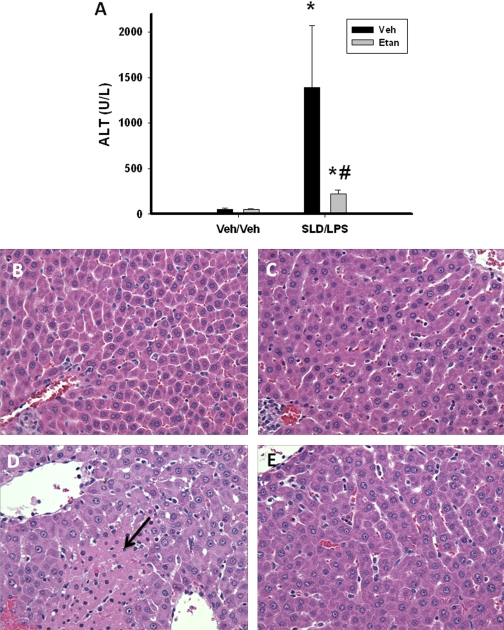
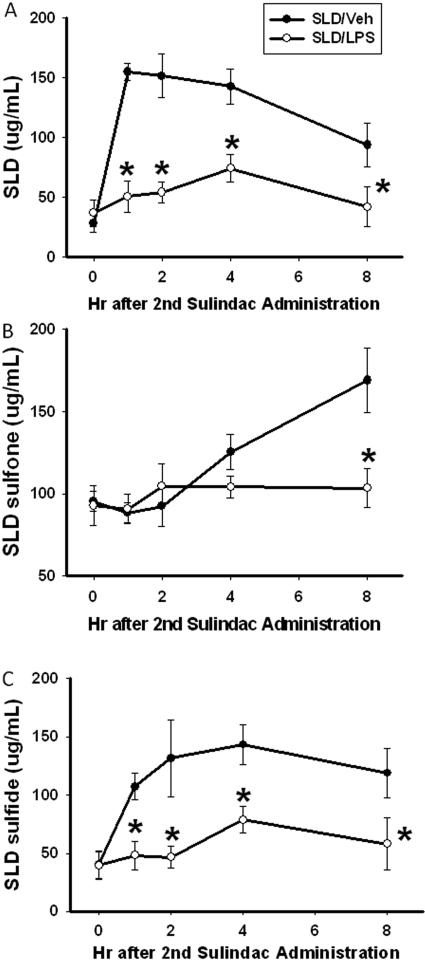
Sulindac (SLD) is a nonsteroidal anti-inflammatory drug (NSAID) that has been associated with a greater incidence of idiosyncratic hepatotoxicity in human patients than other NSAIDs. In previous studies, cotreatment of rats with SLD and a modestly inflammatory dose of lipopolysaccharide (LPS) led to liver injury, whereas neither SLD nor LPS alone caused liver damage. In studies presented here, further investigation of this animal model revealed that the concentration of tumor necrosis factor-alpha (TNF-alpha) in plasma was significantly increased by LPS at 1 h, and SLD enhanced this response. Etanercept, a soluble TNF-alpha receptor, reduced SLD/LPS-induced liver injury, suggesting a role for TNF-alpha. SLD metabolites in plasma and liver were determined by LC/MS/MS. Cotreatment with LPS did not increase the concentrations of SLD or its metabolites, excluding the possibility that LPS contributed to liver injury through enhanced exposure to SLD or its metabolites. The cytotoxicities of SLD and its sulfide and sulfone metabolites were compared in primary rat hepatocytes and HepG2 cells; SLD sulfide was more toxic in both types of cells than SLD or SLD sulfone. TNF-alpha augmented the cytotoxicity of SLD sulfide in primary hepatocytes and HepG2 cells. These results suggest that TNF-alpha can enhance SLD sulfide-induced hepatotoxicity, thereby contributing to liver injury in SLD/LPS-cotreated rats.
Figures



References
-
- Adamson GM, Billings RE. ( 1992) Tumor necrosis factor induced oxidative stress in isolated mouse hepatocytes. Arch Biochem Biophys 294: 223–229 - PubMed
-
- Adamson GM, Billings RE. ( 1993) Cytokine toxicity and induction of NO synthase activity in cultured mouse hepatocytes. Toxicol Appl Pharmacol 119: 100–107 - PubMed
-
- Beg AA, Baltimore D. ( 1996) An essential role for NF-kappaB in preventing TNF-alpha-induced cell death. Science 274: 782–784 - PubMed
-
- Bock JM, Menon SG, Goswami PC, Sinclair LL, Bedford NS, Jackson RE, Trask DK. ( 2007) Differential activity of sulindac metabolites against squamous cell carcinoma of the head and neck is mediated by p21waf1/cip1 induction and cell cycle inhibition. Cancer Biol Ther 6: 30–39 - PubMed
Publication types
MeSH terms
Substances
Grants and funding
LinkOut - more resources
Full Text Sources
Medical
