Microarray analysis suggests that burn injury results in mitochondrial dysfunction in human skeletal muscle
- PMID: 19639232
- PMCID: PMC3207251
- DOI: 10.3892/ijmm_00000244
Microarray analysis suggests that burn injury results in mitochondrial dysfunction in human skeletal muscle
Abstract
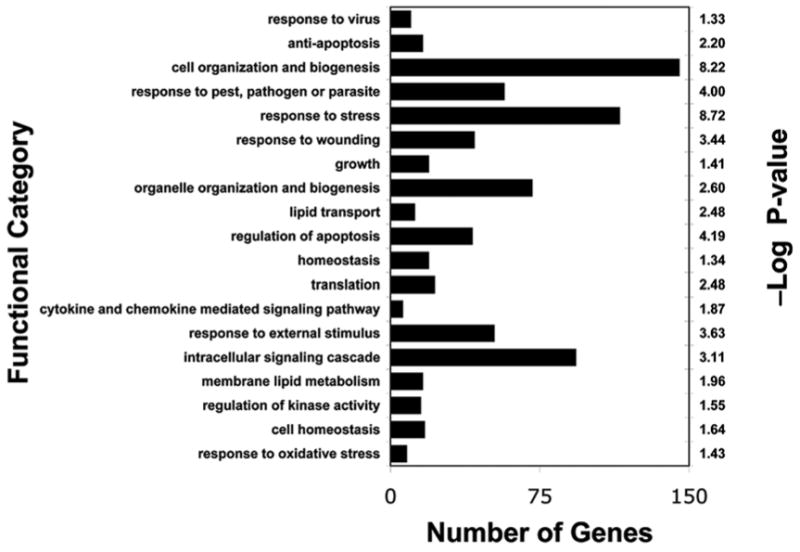
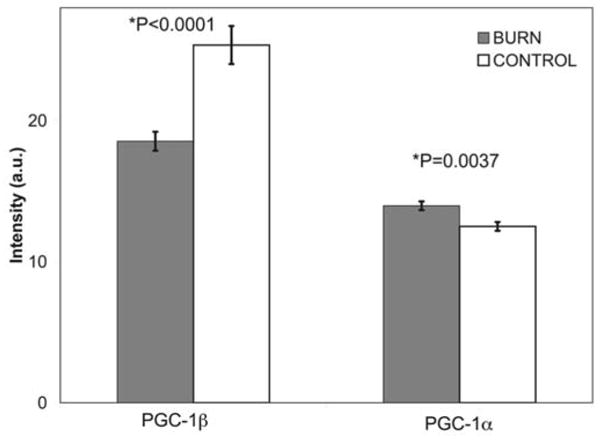
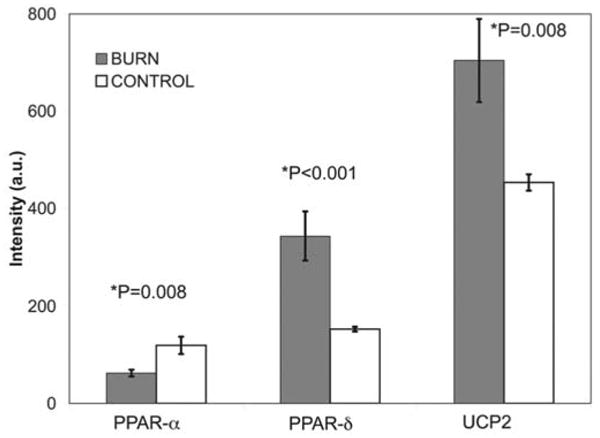
Burn injuries to extensive areas of the body are complicated by muscle catabolism. Elucidating the molecular mechanisms that mediate this catabolism may facilitate the development of a medical intervention. Here, we assessed the functional classification of genes that were differentially expressed in skeletal muscle following burn injury in 19 children (5.2+/-4.0 years of age), (64+/-15% total burn surface area, TBSA) relative to 13 healthy controls (11.9+/-6.0 years of age). Microarray analysis of samples taken within 10 days of burn injury revealed altered expression of a variety of genes, including some involved in cell and organelle organization and biogenesis, stress response, wound response, external stimulus response, regulation of apoptosis and intracellular signaling. The genes that encode peroxisome proliferator-activated receptors (PPARs; 3 isotypes PPARalpha, PPARgamma and PPARdelta also known as PPARbeta or PPARbeta/delta), which may serve as transcriptional nodal points and therapeutic targets for metabolic syndromes, were among those affected. In particular, expression of the main mitochondrial biogenesis factor PPARgamma-1beta (or PGC-1beta) was downregulated (P<0.0001), while the expression of PPARdelta was upregulated (P<0.001). Expression of PGC-1alpha, the closest homolog of PGC-1beta was upregulated (P=0.0037), and expression of the gene encoding mitochodrial uncoupling protein 2 (UCP2) was also upregulated (P=0.008). These results suggest that altered PPAR and mitochondrial gene expression soon after burn injury may lead to metabolic and mitochondrial dysfunction in human skeletal muscle.
Figures
References
-
- Sheridan RL, Tompkins RG. What's new in burns and metabolism. J Am Coll Surg. 2004;198:243–263. - PubMed
-
- Yu YM, Tompkins RG, Ryan CM, Young VR. The metabolic basis of the increase in energy expenditure in severely burned patients. JPEN J Parenter Enteral Nutr. 1999;23:160–168. - PubMed
-
- Barret JP, Herndon DN. Modulation of inflammatory and catabolic responses in severely burned children by early burn wound excision in the first 24 hours. Arch Surg. 2003;138:127–132. - PubMed
-
- Brown JD, Plutzky J. Peroxisome proliferator-activated receptors as transcriptional nodal points and therapeutic targets. Circulation. 2007;115:518–533. - PubMed
Publication types
MeSH terms
Substances
Grants and funding
LinkOut - more resources
Full Text Sources
Other Literature Sources
Medical