


The Health Behaviour in School-aged Children (HBSC) study: methodological developments and current tensions
- PMID: 19639259
- PMCID: PMC2732766
- DOI: 10.1007/s00038-009-5405-9
The Health Behaviour in School-aged Children (HBSC) study: methodological developments and current tensions
Abstract
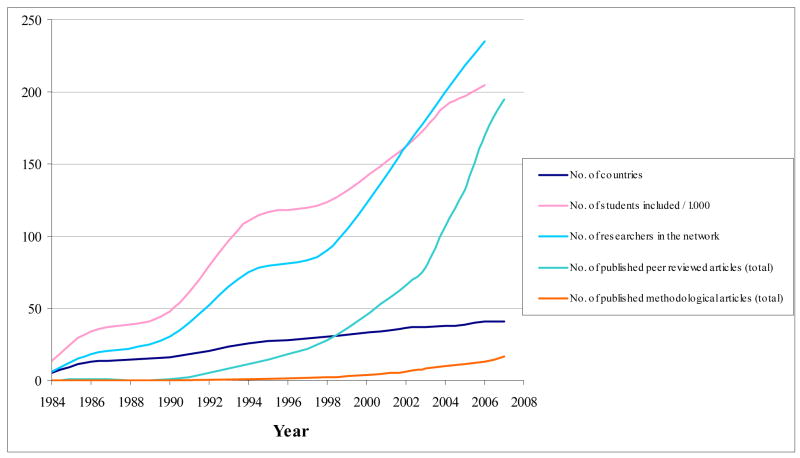
Objectives: To describe the methodological development of the HBSC survey since its inception and explore methodological tensions that need to be addressed in the ongoing work on this and other large-scale cross-national surveys.
Methods: Using archival data and conversations with members of the network, we collaboratively analysed our joint understandings of the survey's methodology.
Results: We identified four tensions that are likely to be present in upcoming survey cycles: (1) maintaining quality standards against a background of rapid growth, (2) continuous improvement with limited financial resources, (3) accommodating analysis of trends with the need to improve and adapt questionnaire content, and (4) meeting the differing requirements of scientific and policy audiences.
Conclusions: While these challenges are not trivial, the structure of the HBSC network and its long-term experience in working through such challenges renders it likely that HBSC can provide a model of other similar studies facing these tensions.
Figures
References
-
- Aaro LE, Wold B, Kannas L, Rimpela M. Health behaviour in school-children. A WHO cross-national survey. Health Promotion. 1986;1:17–33.
-
- Smith C, Wold B, Moore L. Health behaviour research with adolescents: a perspective from the WHO cross-national Health Behaviour in School-aged Children study. Health Promotion Journal of Australia. 1992;2:41–44.
-
- UNICEF. Innocenti Research Centre Report Card 7. Florence: UNICEF, Innocenti Research Centre; 2007. Child poverty in perspective: An overview of child well-being in rich countries. A comprehensive assessment of the lives and well-being of children and adolescents in the economically advanced nations.
-
- Bradshaw J, Hoelscher P, Richardson D. An index of child well-being in the European Union. Social Indicators Research. 2007;80:133–177.
-
- Association of Public Health Observatories. Indications of Public Health in the English Regions. 5: Child Health. Association of Public Health Observatories; 2006.
MeSH terms
Grants and funding
LinkOut - more resources
Full Text Sources
