


Prevalent hypertension and stroke in the Sleep Heart Health Study: association with an ECG-derived spectrographic marker of cardiopulmonary coupling
- PMID: 19639752
- PMCID: PMC2706909
Prevalent hypertension and stroke in the Sleep Heart Health Study: association with an ECG-derived spectrographic marker of cardiopulmonary coupling
Abstract
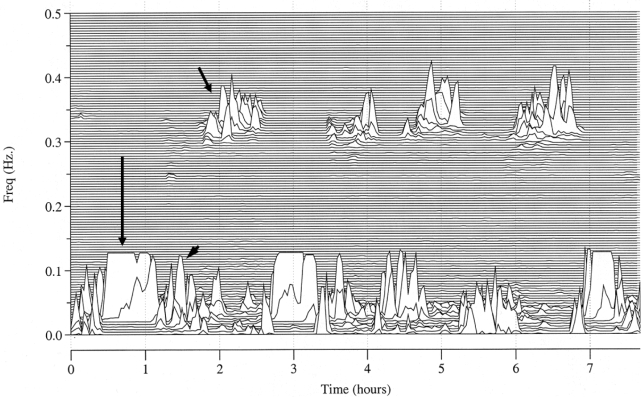
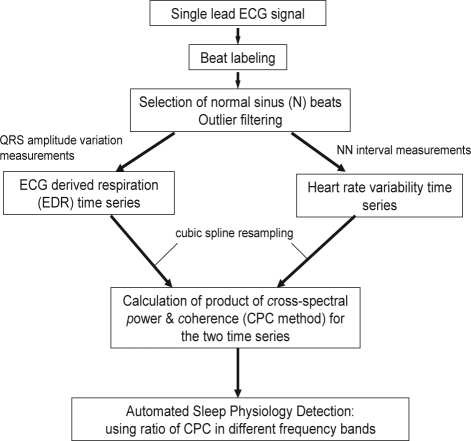
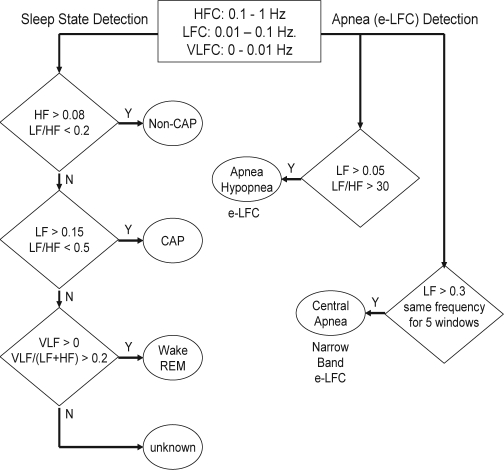
Study objectives: The electrocardiogram (ECG)-based sleep spectrogram generates a map of cardiopulmonary coupling based on heart rate variability and respiration derived from QRS amplitude variations. A distinct spectrographic phenotype, designated as narrow-band elevated low frequency coupling (e-LFC(NB)), has been associated with central apneas and periodic breathing and predicts sleep laboratory failure of continuous positive airway pressure therapy. This study assesses, at a population level, the associations of this spectrographic biomarker with prevalent cardiovascular disease using the Sleep Heart Health Study (SHHS)-I dataset.
Design: Retrospective analysis of the Sleep Heart Health Study-I dataset.
Setting: Laboratory for complex physiologic signals analysis.
Measurements and results: The fully-automated ECG-derived sleep spectrogram technique was applied to 5247 (of the original 6441) polysomnograms from the SHHS-I. Associations were estimated with use of various drugs and pathologies including prevalent hypertension and cardiovascular and cerebrovascular disease. Increasing with age and more common in males, e-LFC(NB) is also associated with greater severity of sleep apnea and fragmented sleep. After adjustment for potential confounders, an independent association with prevalent hypertension and stroke was found.
Conclusions: An ECG-derived spectrographic marker related to low frequency cardiopulmonary coupling is associated with greater sleep apnea severity. Whether this biomarker is solely a sign of more severe disease or whether it reflects primary alterations in sleep apnea pathophysiology (which may either cause or result from sleep apnea) is unknown. This ECG-based spectral marker is associated with a higher prevalence of hypertension and stroke.
Figures
References
-
- Terzano MG, Parrino L, Smerieri A, et al. Atlas, rules, and recording techniques for the scoring of cyclic alternating pattern (CAP) in human sleep. Sleep Med. 2002;3:187–99. - PubMed
-
- Thomas RJ. Cyclic alternating pattern in the electroencephalogram: what is its clinical utility? Sleep. 2007;30:553–5. - PubMed
-
- Thomas RJ, Mietus JE, Peng CK, Goldberger AL. An electrocardiogram-based technique to assess cardiopulmonary coupling during sleep. Sleep. 2005;28:1151–61. - PubMed
-
- Quan SF, Howard BV, Iber C, et al. The Sleep Heart Health Study: design, rationale, and methods. Sleep. 1997;20:1077–85. - PubMed
Publication types
MeSH terms
Grants and funding
LinkOut - more resources
Full Text Sources
Medical