


Rapid semiautomated subtyping of influenza virus species during the 2009 swine origin influenza A H1N1 virus epidemic in Milwaukee, Wisconsin
- PMID: 19641066
- PMCID: PMC2738075
- DOI: 10.1128/JCM.00999-09
Rapid semiautomated subtyping of influenza virus species during the 2009 swine origin influenza A H1N1 virus epidemic in Milwaukee, Wisconsin
Abstract
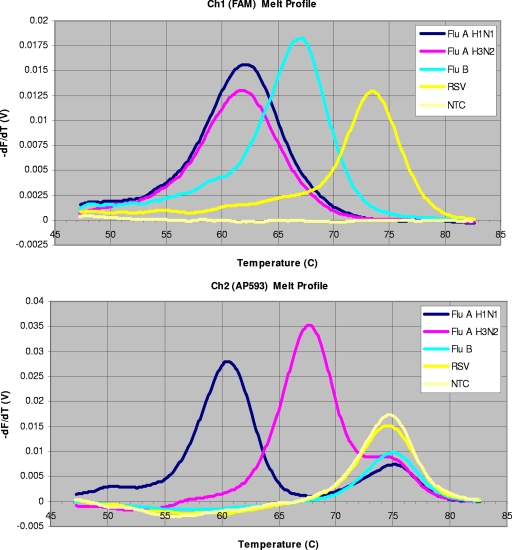
In the spring of 2009, a novel influenza A (H1N1) virus (swine origin influenza virus [S-OIV]) emerged and began causing a large outbreak of illness in Milwaukee, WI. Our group at the Midwest Respiratory Virus Program laboratory developed a semiautomated real-time multiplex reverse transcription-PCR assay (Seasonal), employing the NucliSENS easyMAG system (bioMérieux, Durham, NC) and a Raider thermocycler (HandyLab Inc., Ann Arbor, MI), that typed influenza A virus, influenza B virus, and respiratory syncytial virus (RSV) and subtyped influenza A virus into the currently circulating H1 and H3 subtypes, as well as a similar assay that identified H1 of S-OIV. The Seasonal and H1 S-OIV assays demonstrated analytical limits of detection of <50 50% tissue culture infective doses/ml and 3 to 30 input copies, respectively. Testing of the analytical specificities revealed no cross-reactivity with 41 and 26 different common organisms and demonstrated outstanding reproducibility of results. Clinical testing showed 95% sensitivity for influenza A virus and influenza B virus and 95 and 97% specificity compared to tissue culture. Comparisons of results from other molecular tests showed levels of positive agreement with the Seasonal and H1 S-OIV assay results of 99 and 100% and levels of negative agreement of 98 and 100%. This study has demonstrated the use of a semiautomated system for sensitive, specific, and rapid detection of influenza A virus, influenza B virus, and RSV and subtyping of influenza A virus into human H1 and H3 and S-OIV strains. This assay/system performed well in clinical testing of regular seasonal influenza virus subtypes and was outstanding during the 2009 Milwaukee S-OIV infection outbreak. This recent outbreak of infection with a novel influenza A (H1N1) virus also demonstrates the importance of quickly distributing information on new agents and of having rapid influenza virus subtyping assays widely available for clinical and public health decisions.
Figures
References
-
- CDC. 2009. Swine influenza A (H1N1) infection in two children—Southern California, March-April 2009. MMWR Morb. Mortal. Wkly. Rep. 58400-402. - PubMed
-
- CDC. 2009. Swine-origin influenza A (H1N1) virus infections in a school—New York City, April 2009. MMWR Morb. Mortal. Wkly. Rep. 58470-472. - PubMed
-
- CDC. 2009. Update: infections with a swine-origin influenza A (H1N1) virus—United States and other countries, April 28, 2009. MMWR Morb. Mortal. Wkly. Rep. 58431-433. - PubMed
-
- Fan, J., K. J. Henrickson, and L. L. Savatski. 1998. Rapid simultaneous diagnosis of RSV A, B, influenza A, B, human parainfluenza virus type 1, 2, and 3 infection by multiplex quantitative RT-PCR enzyme hybridization (Hexaplex) assay. Clin. Infect. Dis. 261397-1402. - PubMed
Publication types
MeSH terms
Substances
Grants and funding
LinkOut - more resources
Full Text Sources
Other Literature Sources
Medical
