


Navigating the ribosome's metastable energy landscape
- PMID: 19647434
- PMCID: PMC2914510
- DOI: 10.1016/j.tibs.2009.04.004
Navigating the ribosome's metastable energy landscape
Abstract
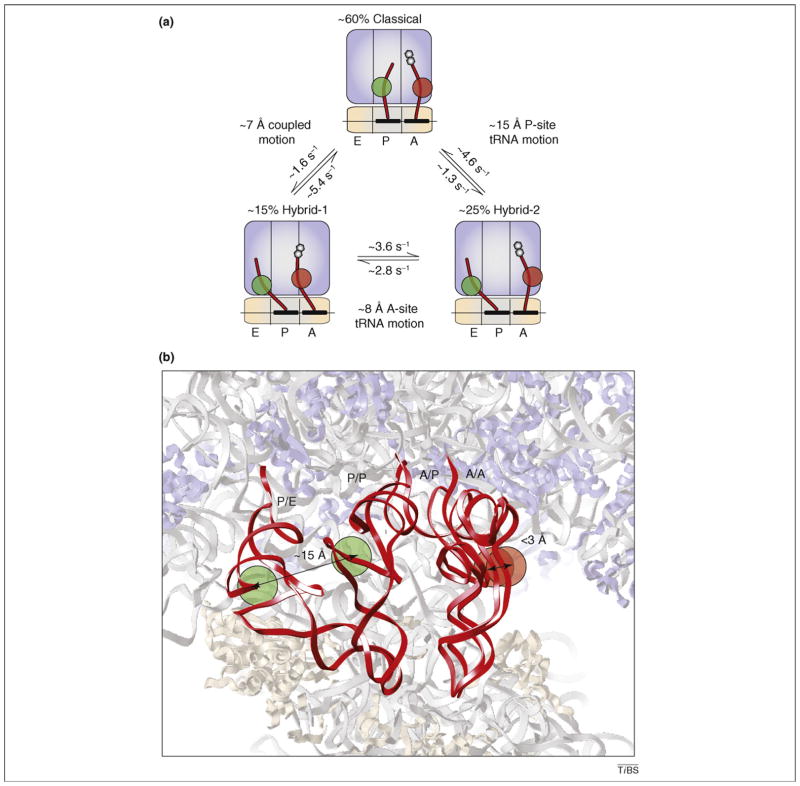
The molecular mechanisms by which tRNA molecules enter and transit the ribosome during mRNA translation remains elusive. However, recent genetic, biochemical and structural studies offer important new findings into the ordered sequence of events underpinning the translocation process that help place the molecular mechanism within reach. In particular, new structural and kinetic insights have been obtained regarding tRNA movements through 'hybrid state' configurations. These dynamic views reveal that the macromolecular ribosome particle, like many smaller proteins, has an intrinsic capacity to reversibly sample an ensemble of similarly stable native states. Such perspectives suggest that substrates, factors and environmental cues contribute to translation regulation by helping the dynamic system navigate through a highly complex and metastable energy landscape.
Figures
References
-
- Ramakrishnan V. What we have learned from ribosome structures. Biochem Soc Trans. 2008;36:567–574. - PubMed
-
- Berk V, Cate JH. Insights into protein biosynthesis from structures of bacterial ribosomes. Curr Opin Struct Biol. 2007;17:302–309. - PubMed
-
- Wilson DN, Nierhaus KH. The weird and wonderful world of bacterial ribosome regulation. Crit Rev Biochem Mol Biol. 2007;42:187– 219. - PubMed
-
- Herbert TP, Proud CG. Regulation of translational elongation and the cotranslational protein targeting pathway. In: Mathews MB, et al., editors. Translational Control in Biology and Medicine. Cold Spring Harbor Laboratory Press; 2007. pp. 601–624.
Publication types
MeSH terms
Substances
Grants and funding
LinkOut - more resources
Full Text Sources
Other Literature Sources
