


N-acetylcysteine inhibits post-impact chondrocyte death in osteochondral explants
- PMID: 19651946
- PMCID: PMC2714809
- DOI: 10.2106/JBJS.H.00545
N-acetylcysteine inhibits post-impact chondrocyte death in osteochondral explants
Abstract
Background: Chondrocyte death has been linked to injury-induced oxidative damage, suggesting that antioxidants could substantially improve viability. However, since reactive oxygen species play roles in normal physiology, there are concerns that antioxidants may have deleterious side effects. To address these issues, we studied the effects of N-acetylcysteine, a potent free radical scavenger, on chondrocyte viability and cartilage proteoglycan content in an in vitro cartilage injury model. We hypothesized that treatment with N-acetylcysteine soon after an impact injury would have significant chondrocyte-sparing effects and would prevent injury-induced proteoglycan losses.
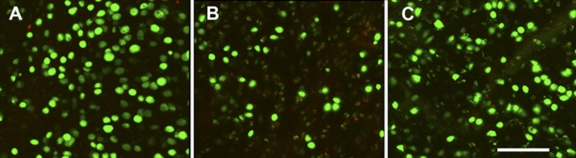
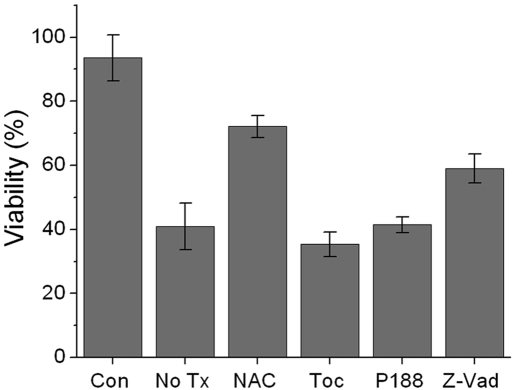
Methods: Bovine osteochondral explants were subjected to a single impact load with use of a drop-tower device. Chondrocyte viability was measured at multiple time points post-impact with use of fluorescent probes and confocal microscopy. Forty-eight hours after impact, the effects on viability of immediate post-impact treatment with N-acetylcysteine were compared with the effects of the caspase inhibitor N-CBZ-Val-Ala-Asp(O-Me) fluoromethyl ketone and those of the cell-membrane-stabilizing surfactant poloxamer 188. The effect of N-acetylcysteine on proteoglycan content was determined at seven and fourteen days post-impact.
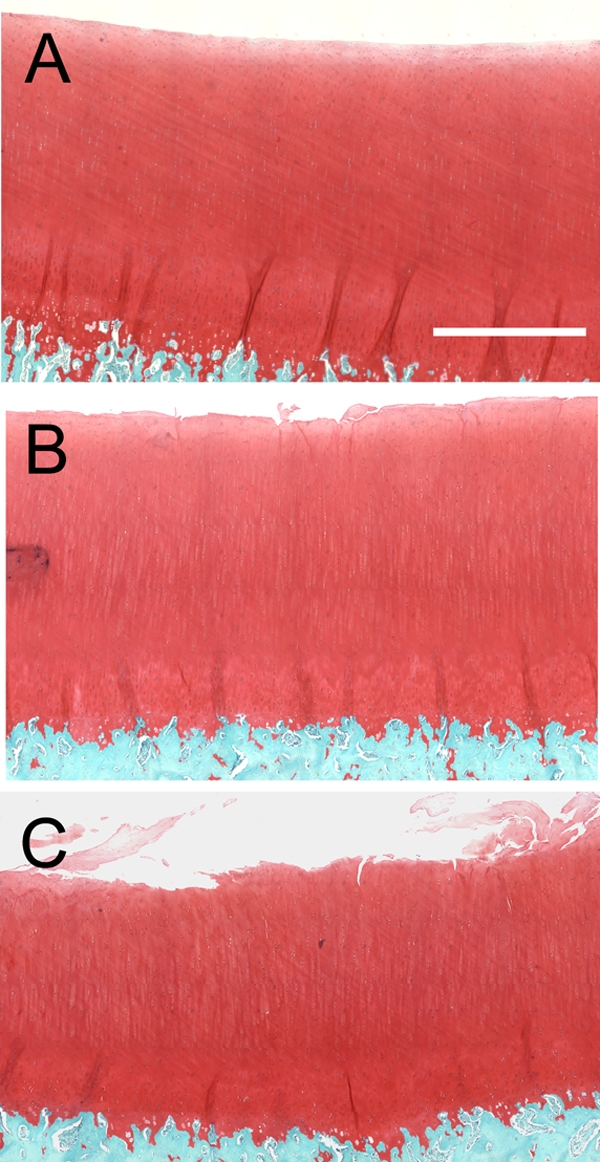
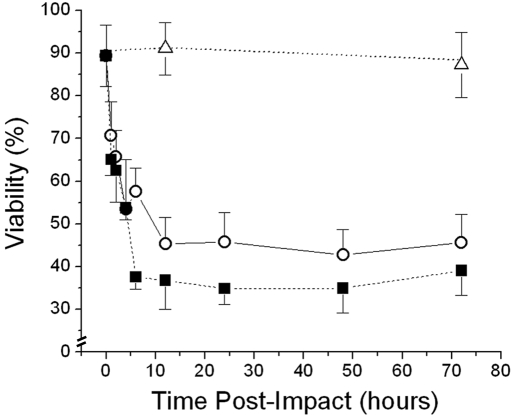
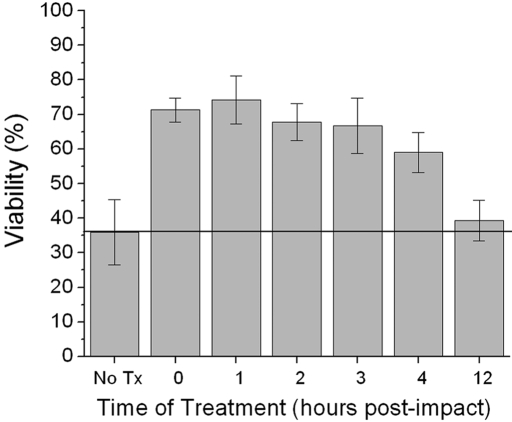
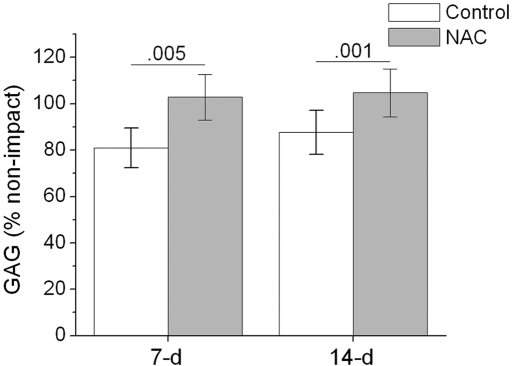
Results: Chondrocyte viability declined sharply within an hour and reached a steady state within six to twelve hours after impact. Immediate treatment with N-acetylcysteine doubled the number of viable chondrocytes assayed forty-eight hours after impact, and this effect was significantly greater than that of N-CBZ-Val-Ala-Asp(O-Me) fluoromethyl ketone. Even when N-acetylcysteine treatment was delayed for up to four hours after injury, it still had significant positive effects on cell viability at forty-eight hours. Moreover, N-acetylcysteine treatment significantly improved proteoglycan content at the impact sites at both seven and fourteen days after injury.
Conclusions: Treatment with N-acetylcysteine soon after a blunt impact injury can reduce chondrocyte death and proteoglycan loss measured seven to fourteen days after injury.
Figures
References
-
- Borrelli J Jr. Chondrocyte apoptosis and posttraumatic arthrosis. J Orthop Trauma. 2006;20:726-31. - PubMed
-
- Borrelli J Jr, Ricci WM. Acute effects of cartilage impact. Clin Orthop Relat Res. 2004;423:33-9. - PubMed
-
- Torzilli PA, Grigiene R, Borrelli J Jr, Helfet DL. Effect of impact load on articular cartilage: cell metabolism and viability, and matrix water content. J Biomech Eng. 1999;121:433-41. - PubMed
-
- Jeffrey J, Gregory D, Aspden R. Matrix damage and chondrocyte viability following a single impact load on articular cartilage. Arch Biochem Biophys. 1995;322:87-96. - PubMed
-
- Jeffrey JE, Aspden RM. The biophysical effects of a single impact load on human and bovine articular cartilage. Proc Inst Mech Eng [H]. 2006;220:677-86. - PubMed
Publication types
MeSH terms
Substances
Grants and funding
LinkOut - more resources
Full Text Sources
Other Literature Sources
