


Effect of local cold-pack application on systemic anabolic and inflammatory response to sprint-interval training: a prospective comparative trial
- PMID: 19652995
- PMCID: PMC2762537
- DOI: 10.1007/s00421-009-1138-y
Effect of local cold-pack application on systemic anabolic and inflammatory response to sprint-interval training: a prospective comparative trial
Abstract
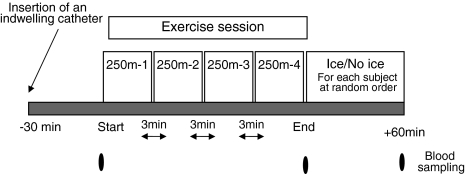
We evaluated the effect of cold ice-pack application following a brief sprint-interval training on the balance between anabolic mediators [growth hormone (GH), insulin-like growth factor-I (IGF-I), testosterone], catabolic markers (cortisol, IGFBP-1), and circulating pro [Interlukin-6 (IL-6) and IL-1beta]- and anti-inflammatory cytokines [IL-1 receptor antagonist (IL-1ra)]. Twelve males, elite junior handball players performed 4 x 250 m treadmill run, at 80% of each individual's maximal speed, followed by a rest period with and without local cold-pack application. Pre, immediately post, and 60-min post-exercise blood samples were drawn. Exercise was associated with a significant increase in IL-6, GH, IGFBP-3, and testosterone levels. Local cold-pack application was associated with significant decreases in IL-1beta, IL-1ra, IGF-I, and IGFBP-3 and a greater increase of IGFBP-1 during recovery. Local ice therapy immediately following sprint-interval training was associated with greater decreases in both pro- and anti-inflammatory cytokines and anabolic hormones supporting some clinical evidence for possible negative effects on athletic performance.
Figures

References
-
- Enwemeka CS, Allen C, Avila P, Bina J, Konrade J, Munns S. Soft tissue thermodynamics before, during, and after cold pack therapy. Med Sci Sports Exerc. 2002;34:45–50. - PubMed
Publication types
MeSH terms
Substances
LinkOut - more resources
Full Text Sources
Miscellaneous
