


Genetics and irritable bowel syndrome: from genomics to intermediate phenotype and pharmacogenetics
- PMID: 19655247
- PMCID: PMC2903621
- DOI: 10.1007/s10620-009-0903-4
Genetics and irritable bowel syndrome: from genomics to intermediate phenotype and pharmacogenetics
Abstract
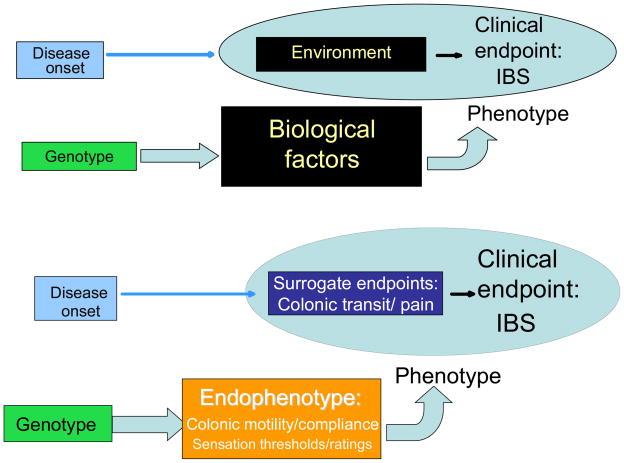
Purpose: Familial aggregation and sibling pair studies suggest there is a genetic contribution to the development of irritable bowel syndrome (IBS). The aim of this study was to review the evidence of genetics in IBS based on genetic epidemiology, studies of association with intermediate phenotypes and pharmacogenetics.
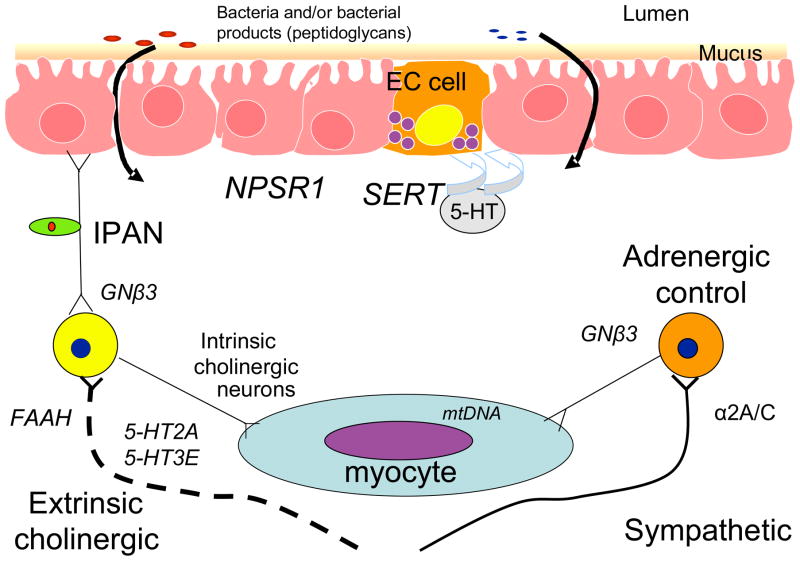
Results: Genetic association studies with IBS symptom phenotype have generally provided inconsistent results for many candidate genes investigated, such as SLC6A4, GNB3, and IL-10. There have been no genome-wide association studies in IBS to date. Studies of associations of candidate genes with intermediate phenotypes suggest associations with pathophysiological mechanisms of motor and sensory functions; however, these results also require replication. Pharmacogenetics studies illustrate the potential of genetics to impact on response to therapy, as observed with SLC6A4 and responses to the 5-HT3 antagonist alosetron and the 5-HT4 agonist, tegaserod.
Conclusions: While the heritable component and genetics in the complex disorder of IBS are still poorly understood, studies of the associations of spontaneous genetic variations and altered functions may provide novel insights of the mechanisms contributing to the disease.
Figures
References
-
- Morris-Yates A, Talley NJ, Boyce PM, et al. Evidence of a genetic contribution to functional bowel disorder. Am J Gastroenterol. 1998;93:1311–1317. - PubMed
-
- Levy RL, Jones KR, Whitehead WE, et al. Irritable bowel syndrome in twins: heredity and social learning both contribute to etiology. Gastroenterology. 2001;121:799–804. - PubMed
-
- Mohammed I, Cherkas LF, Riley SA, et al. Genetic influences in irritable bowel syndrome: a twin study. Am J Gastroenterol. 2005;100:1340–1344. - PubMed
Publication types
MeSH terms
Grants and funding
LinkOut - more resources
Full Text Sources
