Improvement of a dendritic cell-based therapeutic cancer vaccine with components of Toxoplasma gondii
- PMID: 19656994
- PMCID: PMC2756855
- DOI: 10.1128/CVI.00199-09
Improvement of a dendritic cell-based therapeutic cancer vaccine with components of Toxoplasma gondii
Abstract
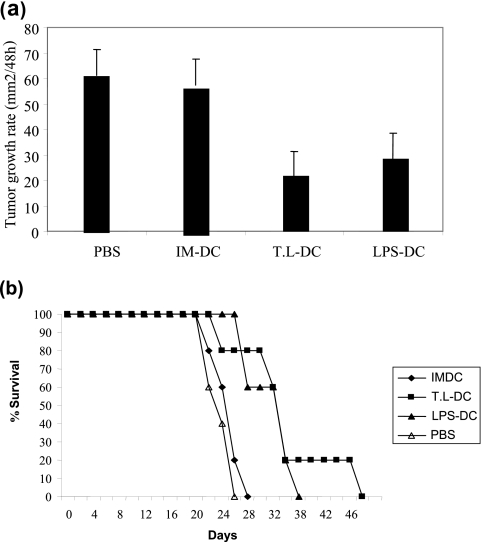
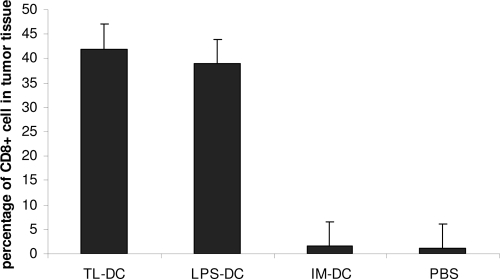
The use of dendritic cells (DCs) as a cellular adjuvant is a promising approach to the immunotherapy of cancer. It has previously been demonstrated that DCs pulsed ex vivo with Toxoplasma gondii antigens trigger a systemic Th1-biased specific immune response and induce protective and specific antitoxoplasma immunity. In the present study, we demonstrate that tumor antigen-pulsed DCs matured in the presence of Toxoplasma gondii components induce a potent antitumor response in a mouse model of fibrosarcoma. Bone-marrow derived DCs (BMDCs) were cultured in the presence of granulocyte-macrophage colony-stimulating factor and interleukin-4. After 5 days, tumor lysates with or without the T. gondii lysate were added to the culture for another 2 days. The cytokine production in the BMDC culture and the coculture supernatants of DCs and splenic cells was evaluated. For immunization, 7 days after tumor challenge, different groups of BALB/c mice received different kinds of DCs subcutaneously around the tumor site. Tumor growth was monitored, and 2 weeks after DC immunotherapy, the cytotoxic activity and the infiltration of CD8(+) T cells were monitored in different groups. According to the findings, immunotherapy with T. gondii-matured DCs led to a significant increase in the activity of cytotoxic T cells and decreased the rate of growth of the tumor in immunized animals. Immature DCs did not cause any change in cytotoxic activity or the tumor growth rate compared to that in the healthy controls. The current study suggests that a specific antitumor immune response can be induced by DCs matured with T. gondii components and provide the basis for the use of T. gondii in DC-targeted clinical therapies.
Figures
References
-
- Akira, S. 2003. Mammalian Toll-like receptors. Curr. Opin. Immunol. 15:5-11. (Erratum, 15:238.) - PubMed
-
- Aosai, F., M. S. Rodriguez Pena, H. S. Mun, H. Fang, T. Mitsunaga, K. Norose, H. K. Kang, Y.-S. Bae, and A. Yano. 2006. Toxoplasma gondii-derived heat shock protein 70 stimulates maturation of murine bone marrow-derived dendritic cells via Toll-like receptor 4. Cell Stress Chaperones 11:13-22. - PMC - PubMed
-
- Banchereau, J., F. Briere, C. Caux, J. Davoust, S. Lebecque, Y. J. Liu, B. Pulendran, and K. Palucka. 2000. Immunobiology of dendritic cells. Annu. Rev. Immunol. 18:767-811. - PubMed
-
- Banchereau, J., and R. M. Steinman. 1998. Dendritic cells and the control of immunity. Nature 392:245-252. - PubMed
-
- Barton, G. M., and R. Medzhitov. 2002. Control of adaptive immune responses by Toll-like receptors. Curr. Opin. Immunol. 14:380-383. - PubMed
Publication types
MeSH terms
Substances
LinkOut - more resources
Full Text Sources
Other Literature Sources
Research Materials