


A serum amyloid P-binding hydrogel speeds healing of partial thickness wounds in pigs
- PMID: 19660048
- PMCID: PMC2850269
- DOI: 10.1111/j.1524-475X.2009.00482.x
A serum amyloid P-binding hydrogel speeds healing of partial thickness wounds in pigs
Abstract
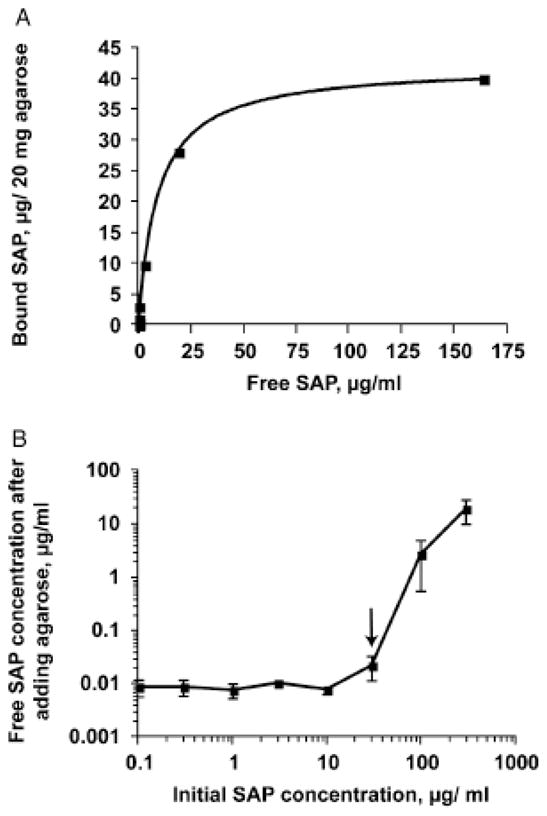
During wound healing, some circulating monocytes enter the wound, differentiate into fibroblast-like cells called fibrocytes, and appear to then further differentiate into myofibroblasts, cells that play a key role in collagen deposition, cytokine release, and wound contraction. The differentiation of monocytes into fibrocytes is inhibited by the serum protein serum amyloid P (SAP). Depleting SAP at a wound site thus might speed wound healing. SAP binds to some types of agarose in the presence of Ca(2+). We found that human SAP binds to an agarose with a K(D) of 7 x 10(-8) M and a B(max) of 2.1 microg SAP/mg wet weight agarose. Mixing this agarose 1 : 5 w/v with 30 microg/mL human SAP (the average SAP concentration in normal serum) in a buffer containing 2 mM Ca(2+) reduced the free SAP concentration to approximately 0.02 microg/mL, well below the concentration that inhibits fibrocyte differentiation. Compared with a hydrogel dressing and a foam dressing, dressings containing this agarose and Ca(2+) significantly increased the speed of wound healing in partial thickness wounds in pigs. This suggests that agarose/Ca(2+) dressings may be beneficial for wound healing in humans.
Figures
References
-
- Quan TE, Cowper S, Wu SP, Bockenstedt LK, Bucala R. Circulating fibrocytes: collagen-secreting cells of the peripheral blood. Int J Biochem Cell Biol. 2004;36:598–606. - PubMed
-
- Postlethwaite AE, Shigemitsu H, Kanangat S. Cellular origins of fibroblasts: possible implications for organ fibrosis in systemic sclerosis. Curr Opin Rheumatol. 2004;16:733–8. - PubMed
Publication types
MeSH terms
Substances
Grants and funding
LinkOut - more resources
Full Text Sources
Medical
Miscellaneous
