


Phenotypic variation of colonic motor functions in chronic constipation
- PMID: 19660461
- PMCID: PMC2813378
- DOI: 10.1053/j.gastro.2009.07.057
Phenotypic variation of colonic motor functions in chronic constipation
Abstract
Background & aims: Colonic motor disturbances in chronic constipation (CC) are heterogeneous and incompletely understood; the relationship between colonic transit and motor activity is unclear. We sought to characterize the phenotypic variability in chronic constipation.
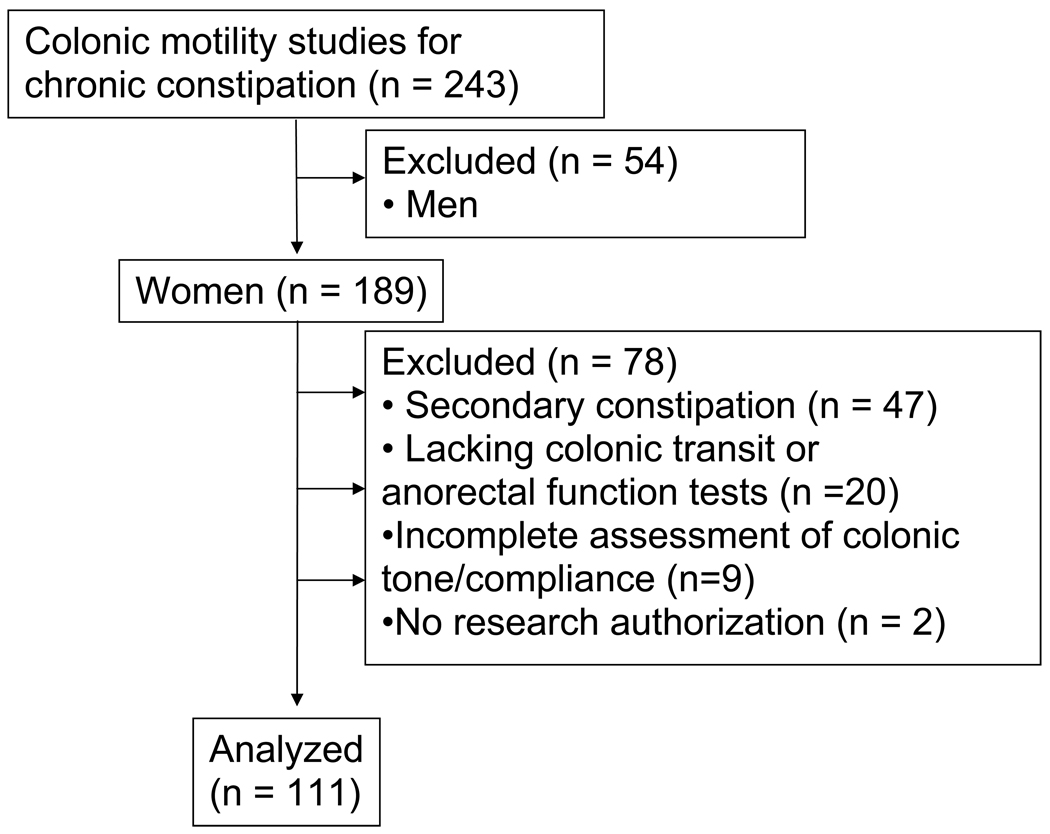
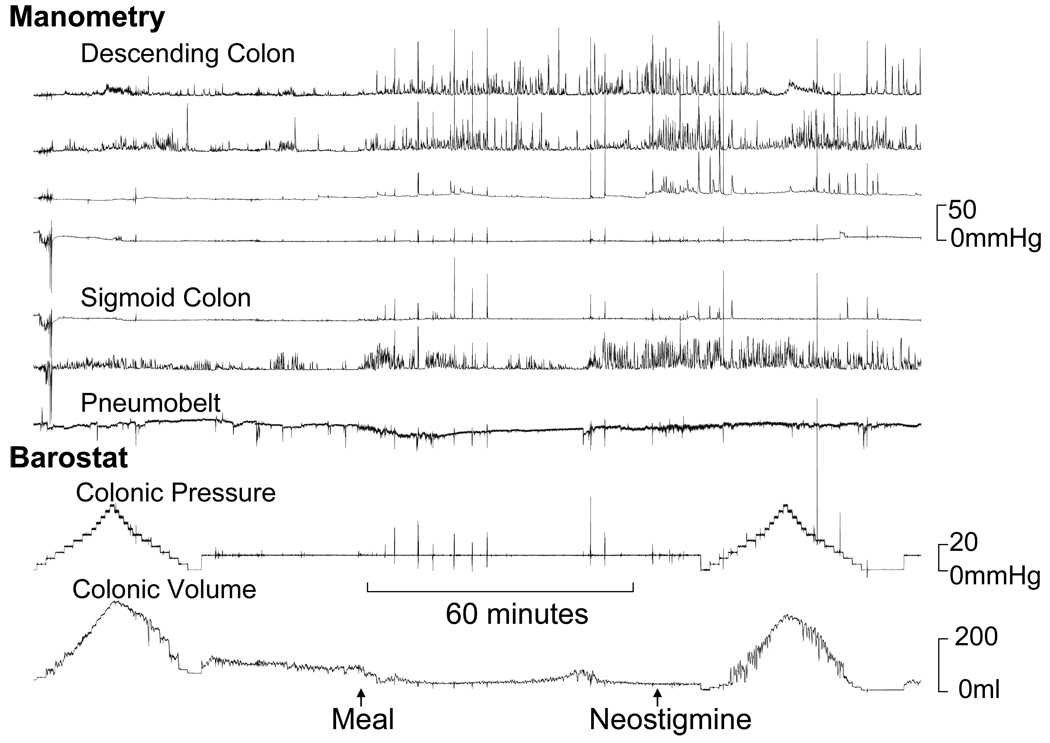
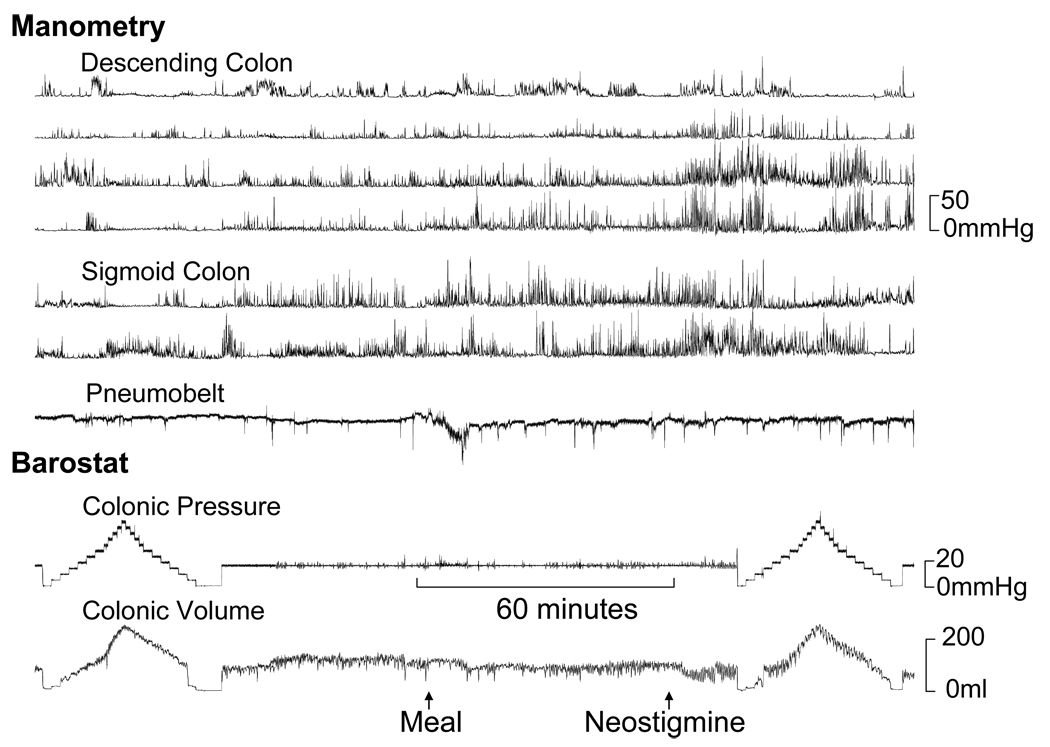
Methods: Fasting and postprandial colonic tone and phasic activity and pressure-volume relationships were assessed by a barostat manometric assembly in 35 healthy women and 111 women with CC who had normal colon transit (NTC; n = 25), slow transit (STC; n = 19), and defecatory disorders with normal (DD-normal; n = 34) or slow transit (DD-slow; n = 33). Logistic regression models assessed whether motor parameters could discriminate among these groups. Among CC, phenotypes were characterized by principal components analysis of these measurements.
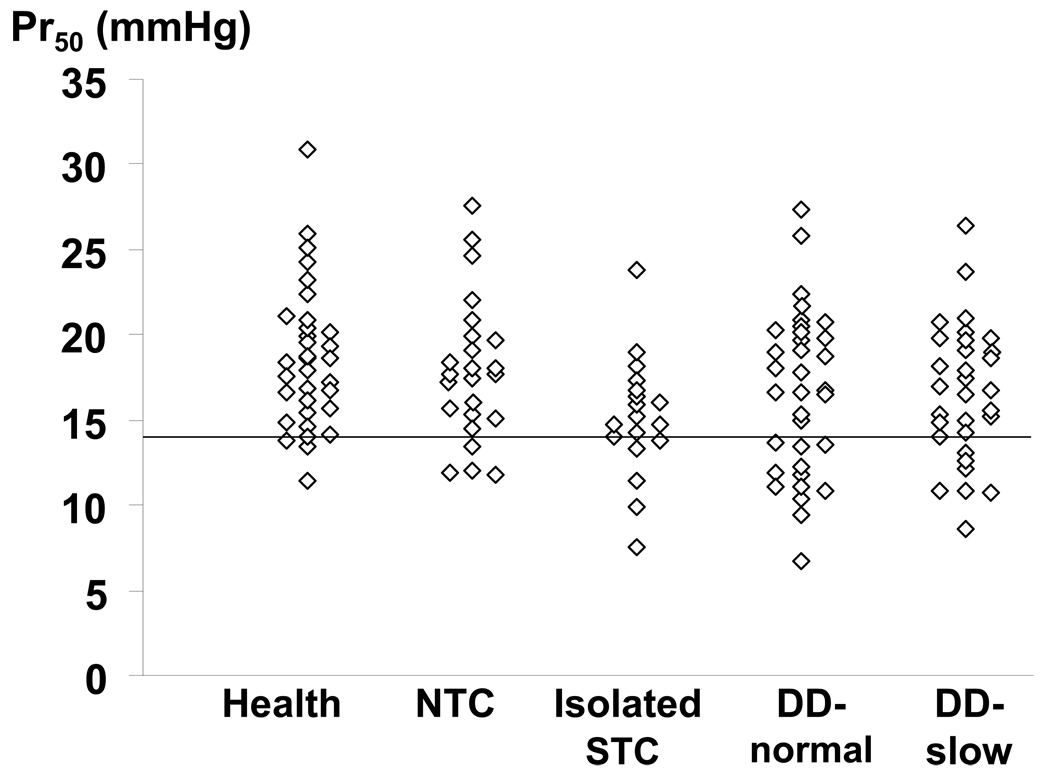
Results: Compared with 10th percentile values in healthy subjects, fasting and/or postprandial colonic tone and/or compliance were reduced in 40% with NTC, 47% with STC, 53% with DD-normal, and 42% with DD-slow transit. Compared with healthy subjects, compliance was reduced (P <or= .05) in isolated STC and DD but not in NTC. Four principal components accounted for 85% of the total variation among patients: factors 1 and 2 were predominantly weighted by fasting and postprandial colonic phasic activity and tone, respectively; factor 3 by postprandial high-amplitude propagated contractions; and factor 4 by postprandial tonic response.
Conclusions: Fasting and/or postprandial colonic tone are reduced, reflecting motor dysfunctions, even in NTC. Colonic motor assessments allow chronic constipation to be characterized into phenotypes. Further studies are needed to evaluate the relationship among these phenotypes, enteric neuropathology, and response to treatment in CC.
Copyright 2010 AGA Institute. Published by Elsevier Inc. All rights reserved.
Conflict of interest statement
None of the authors have conflicts of interests to disclose.
Figures
References
-
- Locke GR, 3rd, Pemberton JH, Phillips SF. AGA technical review on constipation. American Gastroenterological Association. Gastroenterology. 2000;119:1766–1778. - PubMed
-
- Lembo A, Camilleri M. Current concepts: Chronic constipation. New England Journal of Medicine. 2003;349:1360–1368. - PubMed
-
- Bassotti G, Gaburri M. Manometric investigation of high-amplitude propagated contractile activity of the human colon. American Journal of Physiology. 1988;255:G660–G664. - PubMed
-
- Bazzocchi G, Ellis J, Villanueva-Meyer J, Jing J, Reddy SN, Mena I, Snape WJ., Jr Postprandial colonic transit and motor activity in chronic constipation. Gastroenterology. 1990;98:686–693. - PubMed
-
- Rao SS, Sadeghi P, Batterson K, Beaty J. Altered periodic rectal motor activity: a mechanism for slow transit constipation. Neurogastroenterology & Motility. 2001;13:591–598. - PubMed
Publication types
MeSH terms
Substances
Grants and funding
LinkOut - more resources
Full Text Sources
Medical
