


Preliminary evaluation of psychoeducational support interventions on quality of life in rural breast cancer survivors after primary treatment
- PMID: 19661796
- PMCID: PMC2933202
- DOI: 10.1097/NCC.0b013e3181a850e6
Preliminary evaluation of psychoeducational support interventions on quality of life in rural breast cancer survivors after primary treatment
Abstract
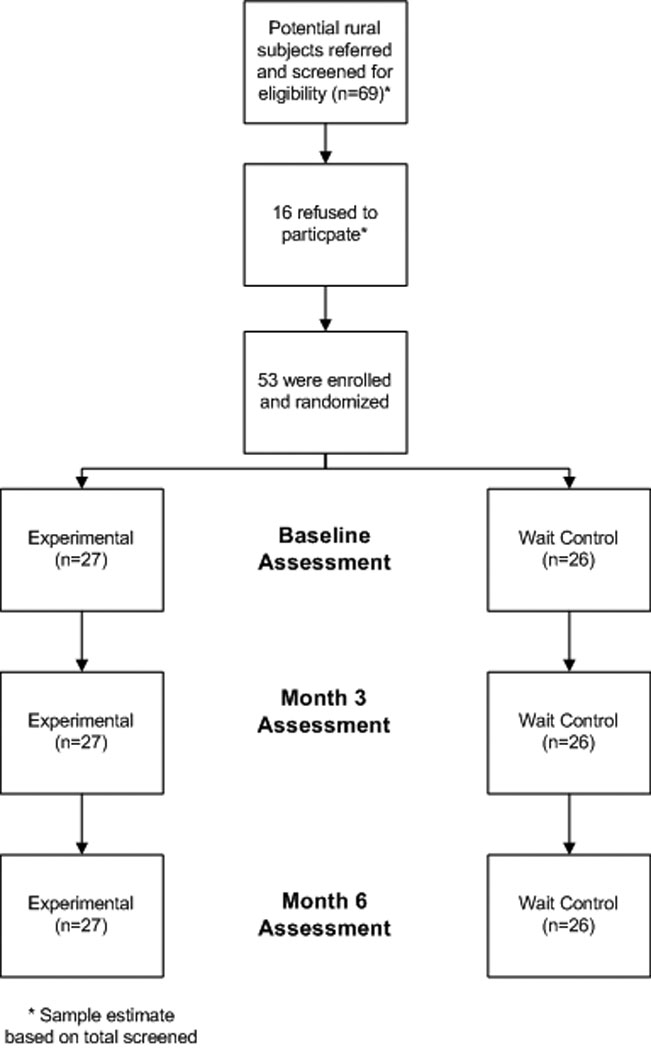
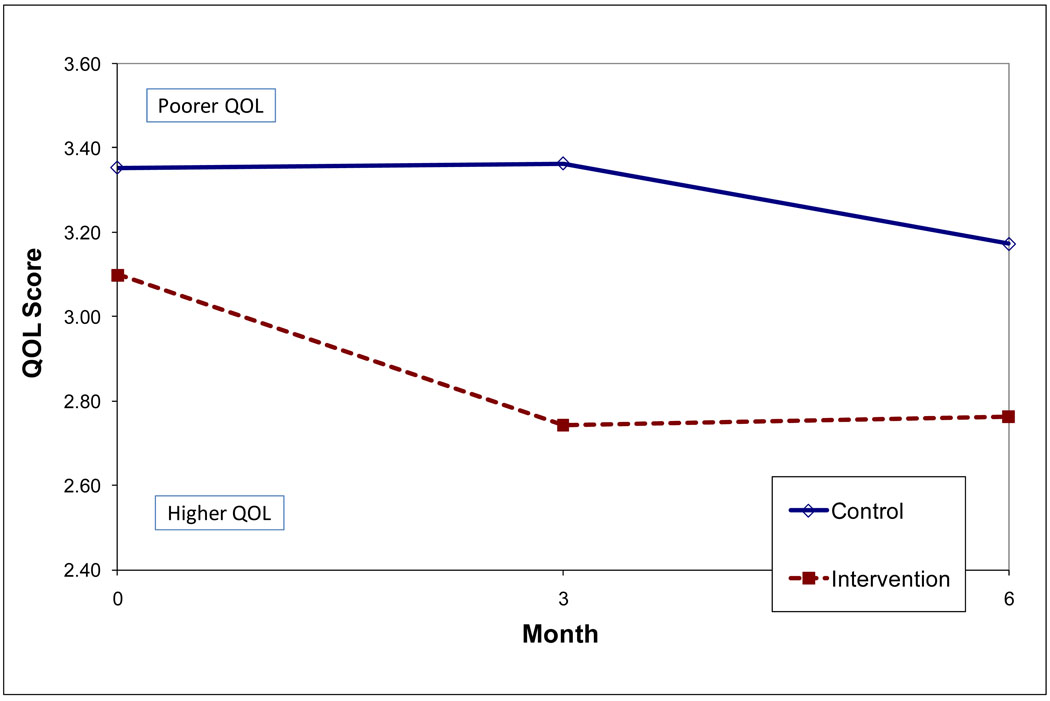
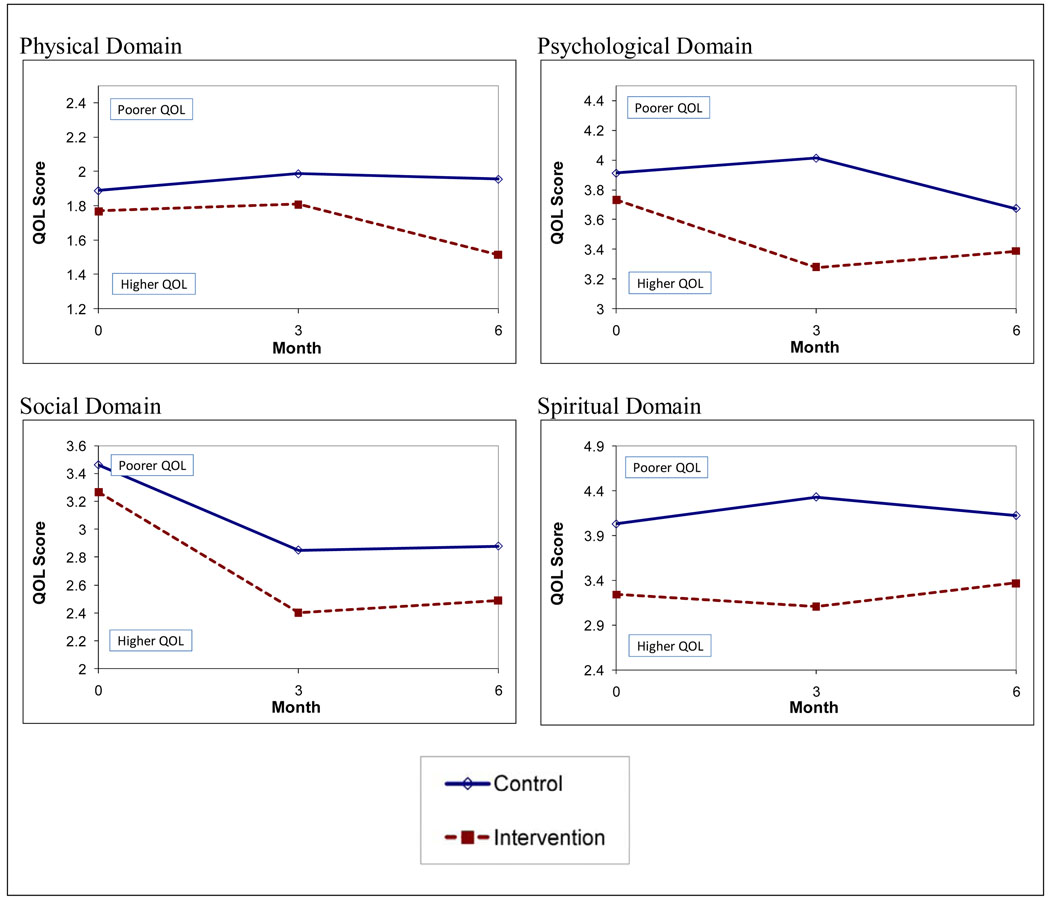
Although most cancer survivors are at risk for being lost in the transition from treatment to survivorship, rural breast cancer survivors face special challenges that might place them at particular risk. This small-scale preliminary study had 2 specific aims: (aim 1) establish the feasibility of rural breast cancer survivors participation in a longitudinal quality of life (QOL) intervention trial and (aim 2) determine the effects of the Breast Cancer Education Intervention (BCEI) on overall QOL. Fifty-three rural breast cancer survivors were randomized to either an experimental (n = 27) or a wait-control arm (n = 26). Participants in the experimental arm received the BCEI consisting of 3 face-to-face education and support sessions and 2 face-to-face and 3 telephone follow-up sessions, along with supplemental written and audiotape materials over a 6-month period. Breast Cancer Education Intervention modules and interventions are organized within a QOL framework. To address the possible effects of attention, wait-control participants received 3 face-to-face sessions and 3 telephone sessions during the first 6 months of participation in the study, but not the BCEI intervention. Research questions addressing aim 1 were as follows: (a) can rural breast cancer survivors be recruited into a longitudinal intervention trial, and (b) can their participation be retained. Research questions for aim 2 were as follows: (a) do participants who received the BCEI show improvement in overall QOL, and (b) is the QOL improvement sustained over time. Data were analyzed using repeated-measures general linear mixed models. Results demonstrated the ability to recruit and retain 53 rural breast cancer survivors, that the experimental arm showed improvement in overall QOL (P = .013), and that there were significant differences in overall QOL between the experimental and wait-control groups at both months 3 and 6. Thus, it appears that at least some rural breast cancer survivors can and will participate in a larger trial and will maintain their participation and that those that do participate experience significant QOL benefit.
Figures

References
-
- Aziz N, Rowland J. Cancer survivorship research among ethnic minority and medically underserved groups. Oncol Nurs Forum. 2002;29:788–801. - PubMed
-
- Cummings DM, Whetstone LM, Earp JA, Mayne L. Disparities in mammography screening in rural areas: analysis of county differences in North Carolina. J Rural Health. 2002 Winter;18(1):77–83. - PubMed
-
- Coughlin SS, Thompson TD, Hall HI, Logan P, Uhler RJ. Breast and cervical carcinoma screening practices among women in rural and nonrural areas of the United States, 1998–1999. Cancer. 2002 Jun 1;94(11):2801–2812. - PubMed
-
- Tropman SE, Ricketts TC, Paskett E, Hatzell TA, Cooper MR, Aldrich T. Rural breast cancer treatment: evidence from the Reaching Communities for Cancer Care (REACH) project. Breast Cancer Res Treat. 1999 Jul;56(1):59–66. - PubMed
Publication types
MeSH terms
Grants and funding
LinkOut - more resources
Full Text Sources
Medical
