


Bio-inspired Synthesis of Mineralized Collagen Fibrils
- PMID: 19662103
- PMCID: PMC2721229
- DOI: 10.1021/cg800252f
Bio-inspired Synthesis of Mineralized Collagen Fibrils
Abstract
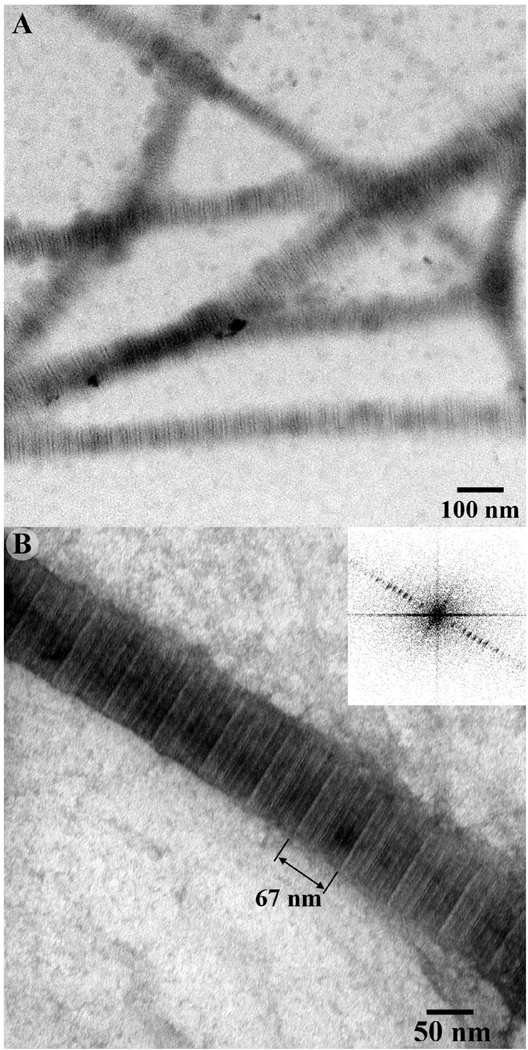
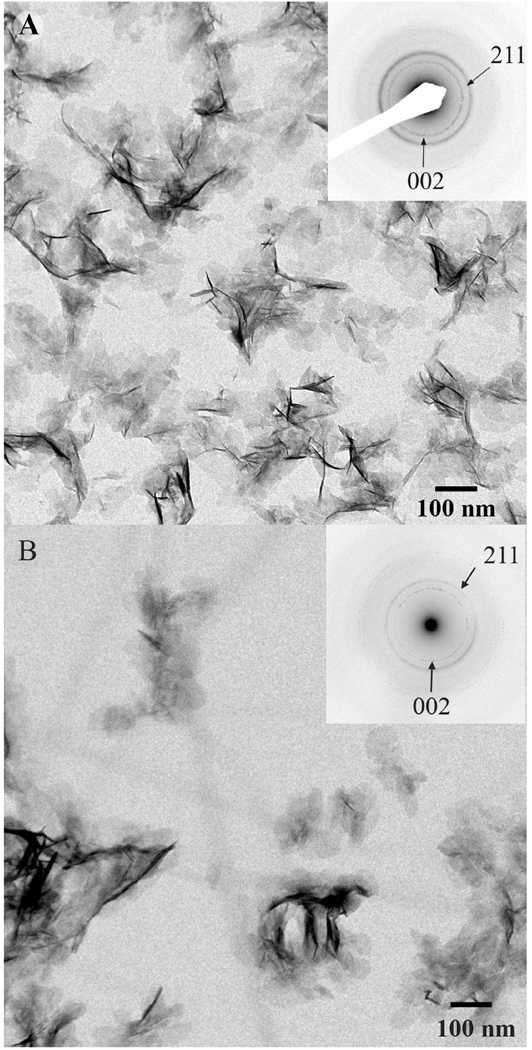
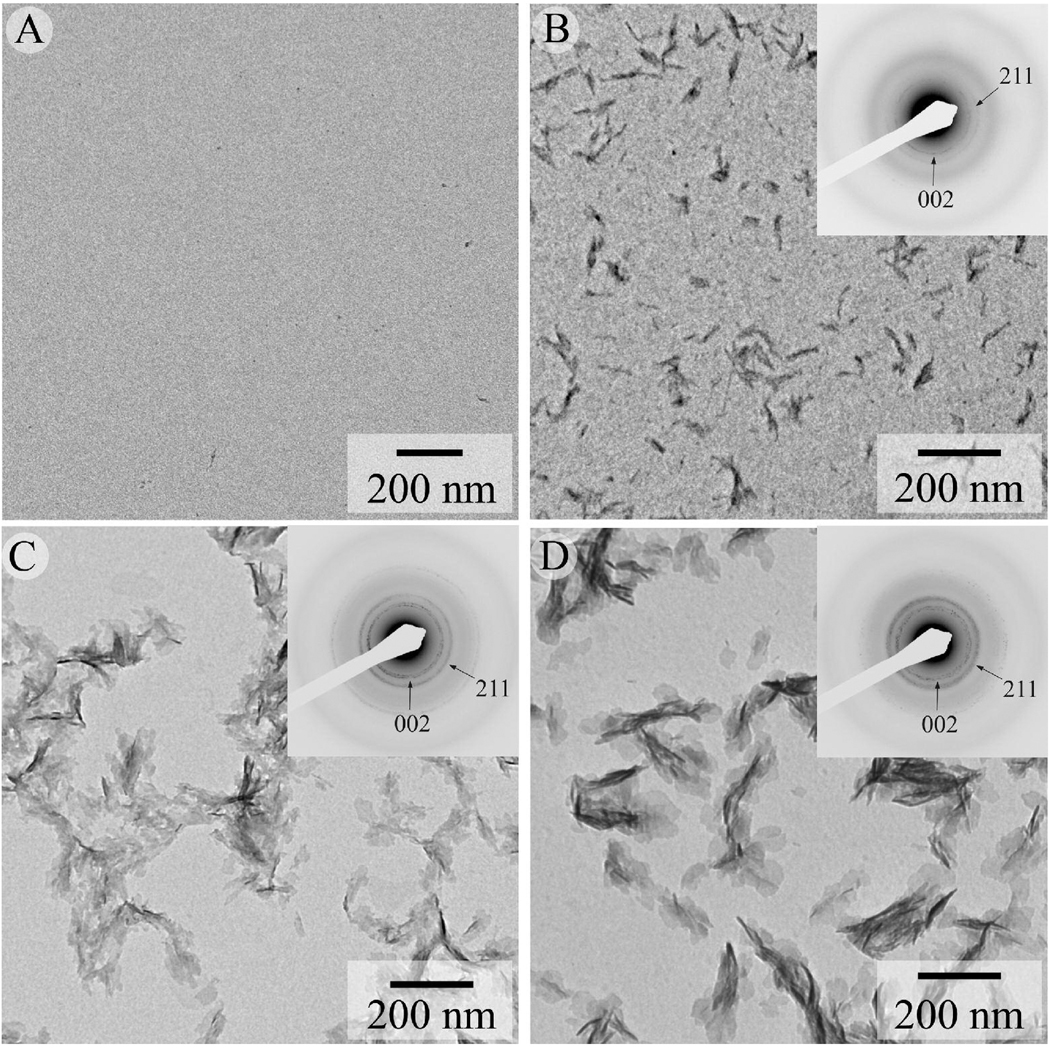
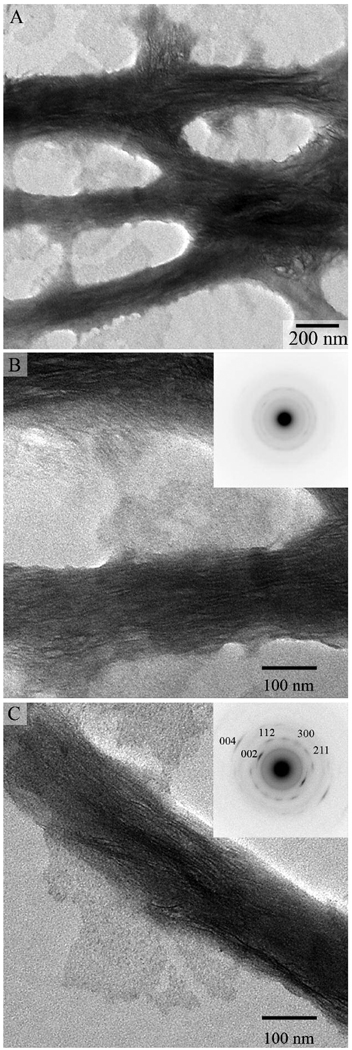
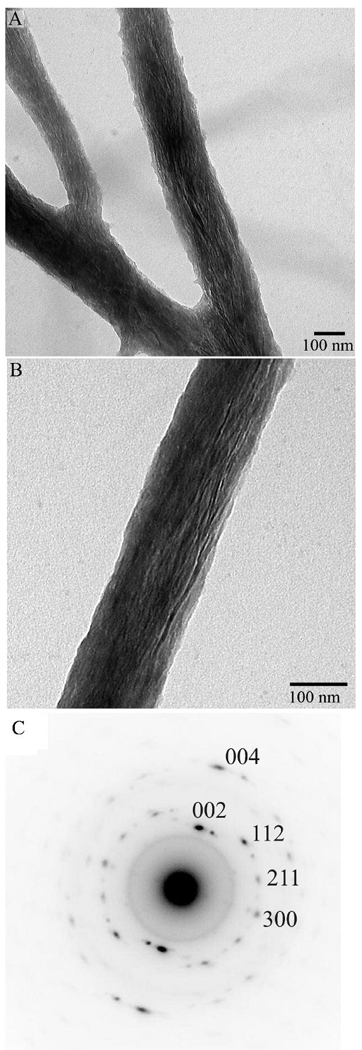
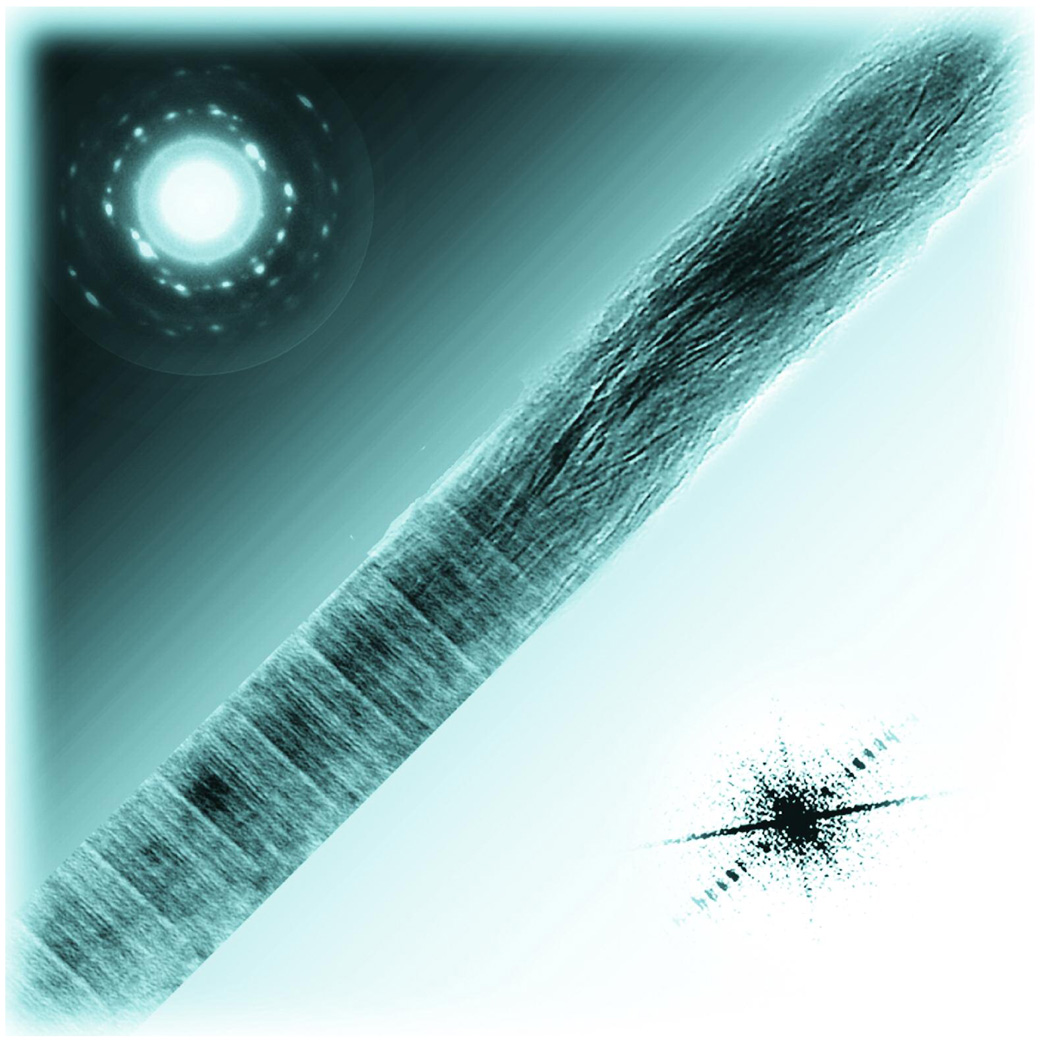
Mineralized collagen fibrils constitute a basic structural unit of collagenous mineralized tissues such as dentin and bone. Understanding of the mechanisms of collagen mineralization is vital for development of new materials for the hard tissue repair. We carried out bio-inspired mineralization of reconstituted collagen fibrils using poly-l-aspartic acid, as an analog of non-collagenous acidic proteins. Transmission electron microscopy and electron diffraction studies of the reaction products revealed stacks of ribbon-shaped apatitic crystals, deposited within the fibrils with their c-axes co-aligned with the fibril axes. Such structural organization closely resembles mineralized collagen of bone and dentin. Initial mineral deposits formed in the fibrils lacked a long range crystallographic order and transformed into crystals with time. Interestingly, the shape and organization of these amorphous deposits was similar to the crystals found in the mature mineralized fibrils. We demonstrate that the interactions between collagen and poly-l-aspartic acid are essential for the mineralized collagen fibrils formation, while collagen alone does not affect mineral formation and poly-l-aspartic acid inhibits mineralization in a concentration dependant manner. These results provide new insights into basic mechanisms of collagen mineralization and can lead to the development of novel bio-inspired nanostructured materials.
Figures
References
Grants and funding
LinkOut - more resources
Full Text Sources
Other Literature Sources