


The effects of a computer-tailored message on secondary prevention in type 2 diabetes: a randomized trial
- PMID: 19663622
- PMCID: PMC3191380
- DOI: 10.1089/pop.2008.0041
The effects of a computer-tailored message on secondary prevention in type 2 diabetes: a randomized trial
Abstract
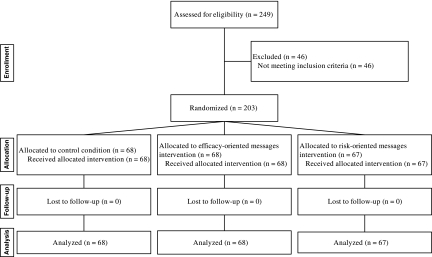
The purpose of this study was to test the effect of computer-generated, tailored feedback on the quality of chronic disease management for type 2 diabetes when provided to a patient prior to a scheduled physician visit. A stand-alone computer application was developed to provide tailored feedback aimed at empowering patients to engage more actively in their diabetes management. Adults with type 2 diabetes (n = 203) were randomly assigned to groups receiving either efficacy (positive) messages (n = 68), risk (negative) messages (n = 67), or to a delayed treatment control group (n = 68). The intervention was delivered prior to a patient's visit with his or her physician so that patients would have the opportunity to discuss the messages at the clinical appointment. Although there were no significant differences in the percentage of participants who received intensified care or routine tests between the control and intervention groups, we learned that more directive messaging may be needed to help patients effectively manage their diabetes. Patients may benefit from directive feedback, providing them with specific questions to ask their physician that can lead to improved care, rather than receiving general and educational informational messages.
References
-
- American Diabetes Association. Diabetes statistics. http://diabetes.org/diabetes-statistics.jsp. http://diabetes.org/diabetes-statistics.jsp
-
- Centers for Disease Control and Prevention. National Diabetes Fact Sheet: General Information and National Estimates on Diabetes in America, 2005. Atlanta, GA: US Department of Health and Human Services, Centers for Disease Control and Prevention; 2005.
-
- American Diabetes Association. Standards of medical care for patients with diabetes mellitus. Diabetes Care. 2002;25:213–229. - PubMed
-
- Fleming B. Greenfield S. Engelgau M. Pogach L. Clauser S. Parrott M. The Diabetes Quality Improvement Project: Moving science into health policy to gain an edge on the diabetes epidemic. Diabetes Care. 2001;24:1815–1820. - PubMed
-
- DeFronzo R. Pharmacologic therapy for type 2 diabetes mellitus. Ann Intern Med. 1999;131(4):281–303. - PubMed
Publication types
MeSH terms
LinkOut - more resources
Full Text Sources
Medical
