


Brain angiogenesis in developmental and pathological processes: mechanism and therapeutic intervention in brain tumors
- PMID: 19664069
- PMCID: PMC2847309
- DOI: 10.1111/j.1742-4658.2009.07177.x
Brain angiogenesis in developmental and pathological processes: mechanism and therapeutic intervention in brain tumors
Abstract
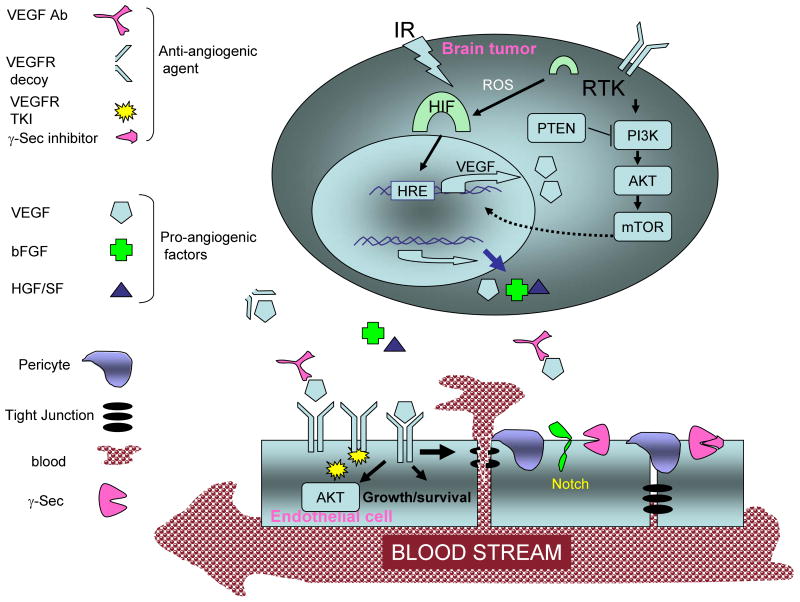
Formation of new blood vessels is required for the growth and metastasis of all solid tumors. New blood vessels are established in tumors mainly through angiogenesis. Brain tumors in particular are highly angiogenic. Therefore, interventions designed to prevent angiogenesis may be effective at controlling brain tumors. Indeed, many recent findings from preclinical and clinical studies of antiangiogenic therapy for brain tumors have shown that it is a promising approach to managing this deadly disease, especially when combined with other cytotoxic treatments. In this minireview, we summarize the basic characteristics of brain tumor angiogenesis and the role of known angiogenic factors in regulating this angiogenesis, which may be targets of antiangiogenic therapy. We also discuss the current status of antiangiogenic therapy for brain tumors, the suggested mechanisms of this therapy and the limitations of this strategy.
Figures
References
-
- Jemal A, Murray T, Ward E, Samuels A, Tiwari RC, Ghafoor A, Feuer EJ, Thun MJ. Cancer statistics, 2005. CA Cancer J Clin. 2005;55:10–30. - PubMed
-
- Furnari FB, Fenton T, Bachoo RM, Mukasa A, Stommel JM, Stegh A, Hahn WC, Ligon KL, Louis DN, Brennan C, Chin L, DePinho RA, Cavenee WK. Malignant astrocytic glioma: genetics, biology, and paths to treatment. Genes Dev. 2007;21:2683–2710. - PubMed
-
- Meyer MA. Malignant gliomas in adults. N Engl J Med. 2008;359:1850. author reply 1850. - PubMed
-
- Behin A, Hoang-Xuan K, Carpentier AF, Delattre JY. Primary brain tumours in adults. Lancet. 2003;361:323–331. - PubMed
Publication types
MeSH terms
Substances
Grants and funding
LinkOut - more resources
Full Text Sources
Medical
