


Microbial load from animal feces at a recreational beach
- PMID: 19664785
- PMCID: PMC2771205
- DOI: 10.1016/j.marpolbul.2009.07.003
Microbial load from animal feces at a recreational beach
Abstract
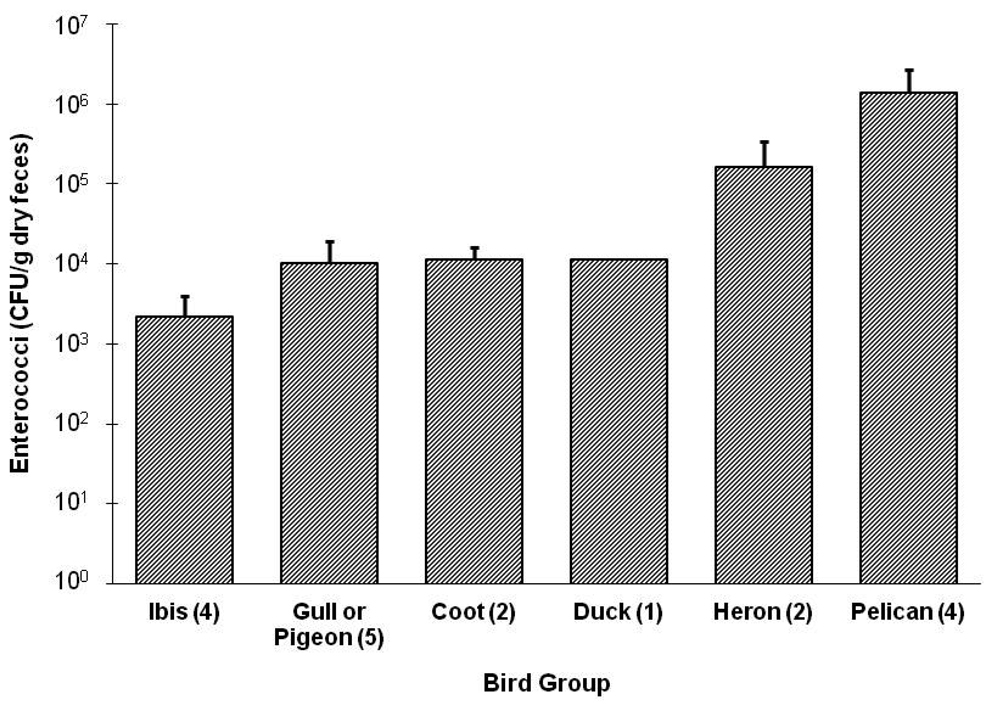
The goal of this study was to quantify the microbial load (enterococci) contributed by the different animals that frequent a beach site. The highest enterococci concentrations were observed in dog feces with average levels of 3.9 x 10(7) CFU/g; the next highest enterococci levels were observed in birds averaging 3.3 x 10(5)CFU/g. The lowest measured levels of enterococci were observed in material collected from shrimp fecal mounds (2.0 CFU/g). A comparison of the microbial loads showed that 1 dog fecal event was equivalent to 6940 bird fecal events or 3.2 x 10(8) shrimp fecal mounds. Comparing animal contributions to previously published numbers for human bather shedding indicates that one adult human swimmer contributes approximately the same microbial load as one bird fecal event. Given the abundance of animals observed on the beach, this study suggests that dogs are the largest contributing animal source of enterococci to the beach site.
Figures
References
-
- Anderson SA, Turner SJ, Lewis GD. Enterococci in the New Zealand environment: implications for water quality monitoring. Water Science and Technology. 1997;35(11–12):325–331.
-
- Bedard J, Therriault JC, Berube J. Assessment of the importance of nutrient recycling by searbirds in the St. Lawrence estuary. Canadian Journal of Fisheries and Aquatic Sciences. 1980;37:583–588.
-
- Boehm AB, Keymer DP, Shellenbarger GG. An analytical model of enterococci inactivation, grazing, and transport in the surf zone of a marine beach. Water Research. 2005;39(2005):3565–3578. - PubMed
-
- Bonilla TD, Nowosielski K, Cuvelier M, Hartz A, Green M, Esiobu N, McCorquodale DS, Fleisher JM, Rogerson A. Prevalence and distribution of fecal indicator organisms in South Florida beach sand and preliminary assessment of health effects associated with beach sand exposure. Marine Pollution Bulletin. 2007;54:1472–1482. - PubMed
Publication types
MeSH terms
Grants and funding
LinkOut - more resources
Full Text Sources
Medical
