


Presumed levothyroxine-induced pseudotumor cerebri in a pediatric patient being treated for congenital hypothyroidism
- PMID: 19668534
- PMCID: PMC2704528
Presumed levothyroxine-induced pseudotumor cerebri in a pediatric patient being treated for congenital hypothyroidism
Abstract
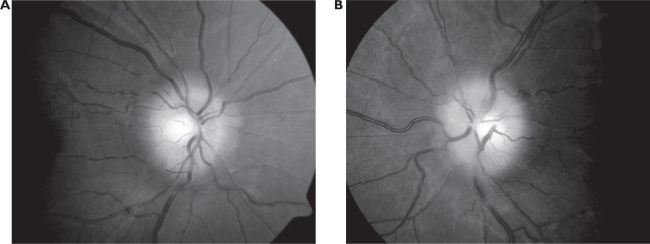
Papilledema is considered a neuro-ophthalmic emergency because of its capacity to induce irreversible end-organ damage and the often grave nature of its precipitating factor. Even more concern is warranted when papilledema presents in a pediatric setting. After excluded the contributions of intracranial masses, congenital malformations, ischemic insults and acute infections, the investigation must focus on determining the contributions of other uncharacteristic causes of pediatric pseudotumor cerebri. Pediatric pseudotumor cerebri is a rare clinical entity which shares few commonalities to the adult condition in regards to its predicating factors or symptoms. Without adequate medical history questioning, funduscopic evaluation and ancillary testing, the possibility of an erroneous diagnosis is plausible. This case report aims to disclose the toxic role levothyroxine sodium tablets (Synthroid((R)), Abbott Laboratories, Abbott Park, IL, USA) played in inducing pseudotumor cerebri in a pediatric patient being treated for congenital hypothyroidism.
Keywords: Synthroid®; hypothyroidism; levothyroxine; papilledema; pseudotumor cerebri.
Figures
References
-
- Baker RS, Carte D, Hendrick EB, et al. Visual loss in pseudotumor cerebri of childhood. Arch Ophthalmol. 1985;103:1681–6. - PubMed
-
- Bourgeois M, Varma S.2004. Congenital hypothyrodism (edited November 30, 2004) [online]. Accessed 9 September 2005. URL: http://www.emedicine.com
-
- Campos SP, Olitsky S. Idiopathic intracranial hypertension after L-thyroxine therapy for acquired primary hypothyroidism. Clin Pediatrics. 1995;34:334–7. - PubMed
-
- Cincirpini G, Donahue S, Borchet M. Idiopathic intracranial hypertension in prepubertal pediatric patients: characteristics, treatment, and outcome. Am J of Ophthalmology. 1999;127:178–82. - PubMed
-
- Huseman CA, Torkelson RD. Pseudotumor cerebri following treatment of hypothalamic and primary hypothyroidism. Am J Dis Child. 1985;138:927–31. - PubMed
Publication types
LinkOut - more resources
Full Text Sources
