


Peptide separations by on-line MudPIT compared to isoelectric focusing in an off-gel format: application to a membrane-enriched fraction from C2C12 mouse skeletal muscle cells
- PMID: 19670906
- PMCID: PMC3712977
- DOI: 10.1021/pr900318k
Peptide separations by on-line MudPIT compared to isoelectric focusing in an off-gel format: application to a membrane-enriched fraction from C2C12 mouse skeletal muscle cells
Abstract
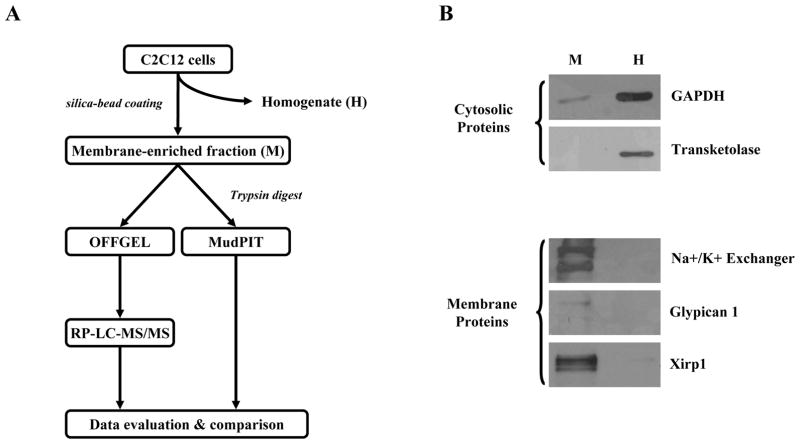
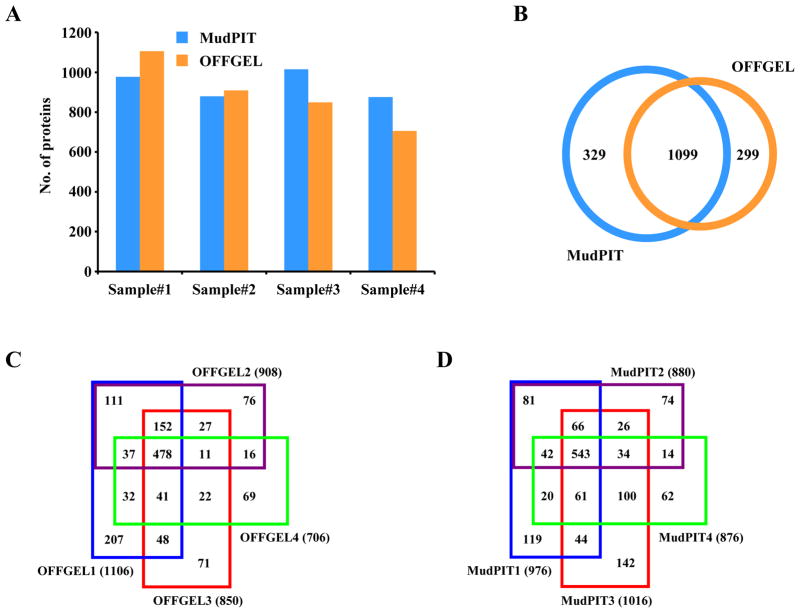
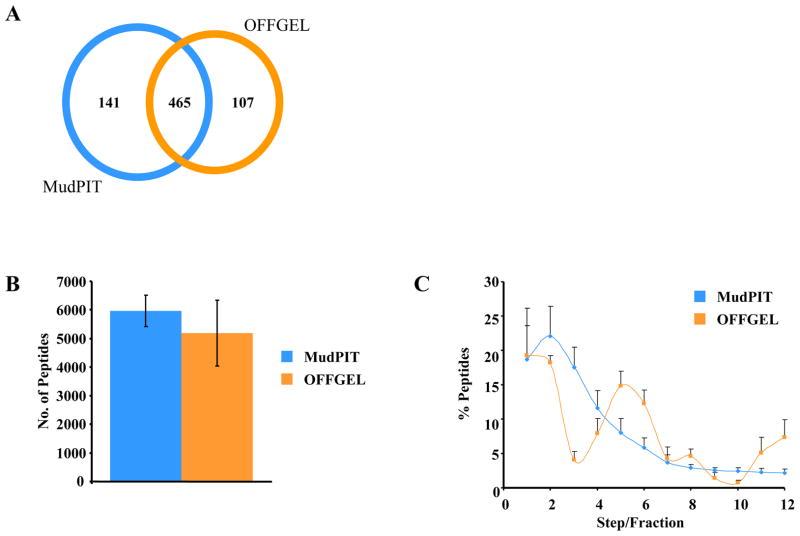
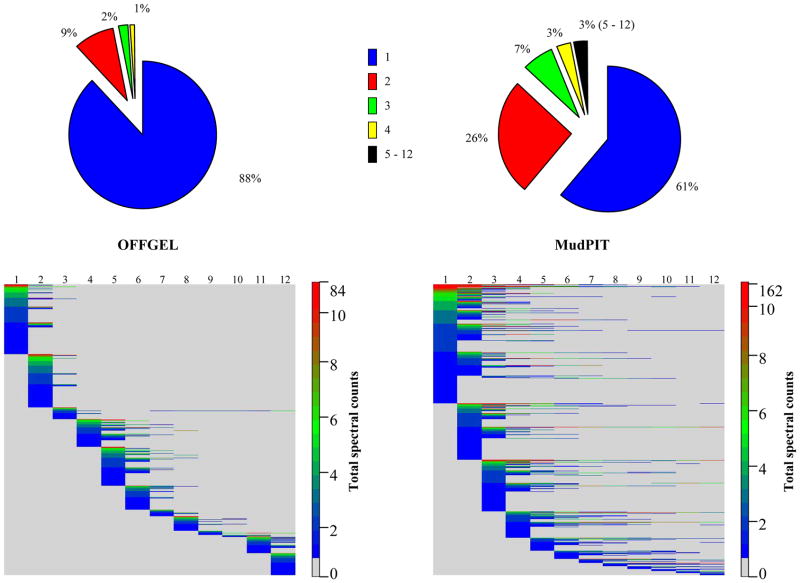
High-resolution peptide separation is pivotal for successful shotgun proteomics. The need for capable techniques propels invention and improvement of ever more sophisticated approaches. Recently, Agilent Technologies has introduced the OFFGEL fractionator, which conducts peptide separation by isoelectric focusing in an off-gel setup. This platform has been shown to accomplish high resolution of peptides for diverse sample types, yielding valuable advantages over comparable separation techniques. In this study, we deliver the first comparison of the newly emerging OFFGEL approach to the well-established on-line MudPIT platform. Samples from a membrane-enriched fraction isolated from murine C2C12 cells were subjected to replicate analysis by OFFGEL (12 fractions, pH 3-10) followed by RP-LC-MS/MS or 12-step on-line MudPIT. OFFGEL analyses yielded 1398 proteins (identified by 10,269 peptides), while 1428 proteins (11,078 peptides) were detected with the MudPIT approach. Thus, our data shows that both platforms produce highly comparable results in terms of protein/peptide identifications and reproducibility for the sample type analyzed. We achieve more accurate peptide focusing after OFFGEL fractionation with 88% of all peptides binned to a single fraction, as compared to 61% of peptides detected in only one step in MudPIT analyses. Our study suggests that both platforms are equally capable of high quality peptide separation of a sample with medium complexity, rendering them comparably valuable for comprehensive proteomic analyses.
Figures
References
-
- Craig R, Beavis RC. TANDEM: matching proteins with tandem mass spectra. Bioinformatics. 2004;20(9):1466–7. - PubMed
-
- Eng JK, McCormack AL, Yates JR. An approach to correlate tandem mass-spectral data of peptides with amino-acid-sequences in a protein database. J Am Soc Mass Spectrom. 1994;11:976–989. - PubMed
-
- Butland G, Peregrin-Alvarez JM, Li J, Yang W, Yang X, Canadien V, Starostine A, Richards D, Beattie B, Krogan N, Davey M, Parkinson J, Greenblatt J, Emili A. Interaction network containing conserved and essential protein complexes in Escherichia coli. Nature. 2005;433(7025):531–7. - PubMed
-
- Cravatt BF, Simon GM, Yates JR., 3rd The biological impact of mass-spectrometry-based proteomics. Nature. 2007;450(7172):991–1000. - PubMed
-
- Kislinger T, Cox B, Kannan A, Chung C, Hu P, Ignatchenko A, Scott MS, Gramolini AO, Morris Q, Hallett MT, Rossant J, Hughes TR, Frey B, Emili A. Global survey of organ and organelle protein expression in mouse: combined proteomic and transcriptomic profiling. Cell. 2006;125(1):173–86. - PubMed
Publication types
MeSH terms
Substances
Grants and funding
LinkOut - more resources
Full Text Sources
