


Unique clinicopathologic features characterize ALK-rearranged lung adenocarcinoma in the western population
- PMID: 19671850
- PMCID: PMC2865649
- DOI: 10.1158/1078-0432.CCR-09-0802
Unique clinicopathologic features characterize ALK-rearranged lung adenocarcinoma in the western population
Erratum in
- Clin Cancer Res. 2009 Nov 15;15(22):7110
Abstract
Purpose: The anaplastic large cell kinase gene (ALK) is rearranged in approximately 5% of lung adenocarcinomas within the Asian population. We evaluated the incidence and the characteristics of ALK-rearranged lung adenocarcinomas within the western population and the optimal diagnostic modality to detect ALK rearrangements in routine clinical practice.
Experimental design: We tested 358 lung adenocarcinomas from three institutions for ALK rearrangements by fluorescent in situ hybridization (FISH) and immunohistochemistry with and without tyramide amplification. The clinicopathologic characteristics of tumors with and without ALK rearrangements were compared.
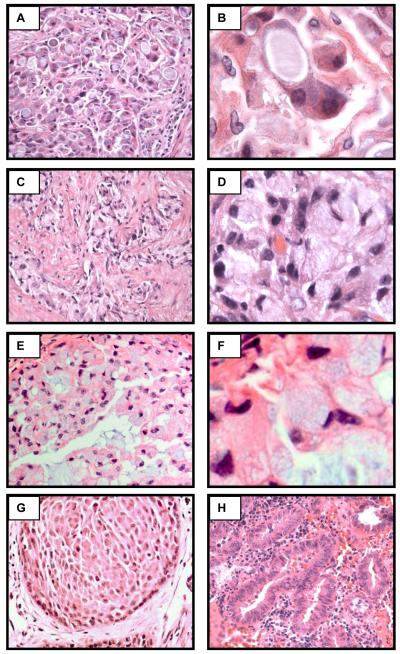
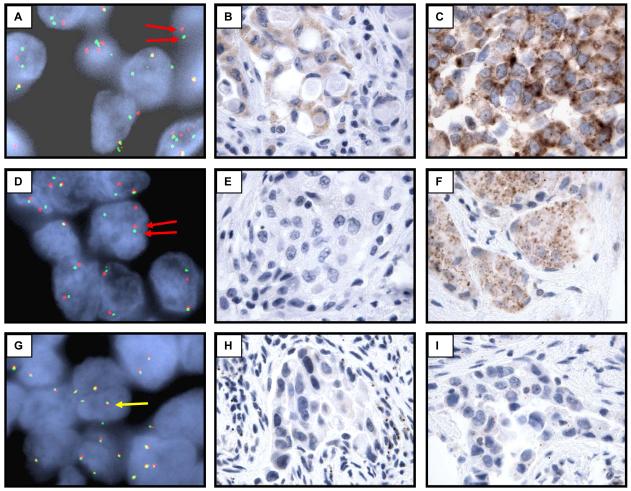
Results: We identified 20 (5.6%) lung adenocarcinomas with ALK rearrangements within our cohort of western patients. ALK rearrangement was associated with younger age (P = 0.0002), never smoking (P < 0.0001), advanced clinical stage (P = 0.0001), and a solid histology with signet-ring cells (P < 0.0001). ALK rearrangement was identified by FISH in 95% of cases and immunohistochemistry with and without tyramide amplification in 80% and 40% of cases, respectively, but neither FISH nor immunohistochemistry alone detected all cases with ALK rearrangement on initial screening. None of the ALK-rearranged tumors harbored coexisting EGFR mutations.
Conclusions: Lung adenocarcinomas with ALK rearrangements are uncommon in the western population and represent a distinct entity of carcinomas with unique characteristics. For suspected cases, dual diagnostic testing, with FISH and immunohistochemistry, should be considered to accurately identify lung adenocarcinomas with ALK rearrangement.
Figures
Comment in
-
CCR 20th Anniversary Commentary: Molecular Pathology of ALK-Rearranged Lung Tumors.Clin Cancer Res. 2015 Dec 1;21(23):5185-7. doi: 10.1158/1078-0432.CCR-14-3130. Clin Cancer Res. 2015. PMID: 26626570
References
-
- Jemal A, Siegel R, Ward E, et al. Cancer statistics, 2008. CA Cancer J Clin. 2008;58:71–96. - PubMed
-
- Alberg AJ, Ford JG, Samet JM. Epidemiology of lung cancer: ACCP evidence-based clinical practice guidelines (2nd edition) Chest. 2007;132:29S–55S. - PubMed
-
- Ettinger DS, Bepler G, Bueno R, et al. Non-small cell lung cancer clinical practice guidelines in oncology. J Natl Compr Canc Netw. 2006;4:548–82. - PubMed
-
- Henschke CI, Yankelevitz DF, Libby DM, Pasmantier MW, Smith JP, Miettinen OS. Survival of patients with stage I lung cancer detected on CT screening. N Engl J Med. 2006;355:1763–71. - PubMed
-
- Greene FL, Sobin LH. The TNM system: our language for cancer care. J Surg Oncol. 2002;80:119–20. - PubMed
Publication types
MeSH terms
Substances
Grants and funding
LinkOut - more resources
Full Text Sources
Other Literature Sources
Medical
Research Materials
Miscellaneous
